
The Quick Sprout
- Eggs contain dietary cholesterol, but cardiovascular risk cannot be judged from one food or one nutrient alone.
- Overall dietary pattern , saturated-fat intake, blood lipids, diabetes, body weight, activity, smoking, family history and other risk factors matter.
- Dietary cholesterol and blood cholesterol are not the same thing; the useful question is how eggs fit into the individual’s overall risk profile.
How to use this: Read this box first for the core message, then continue into the full evidence-based explanation below.
The Egg Is Not the Whole Risk Profile
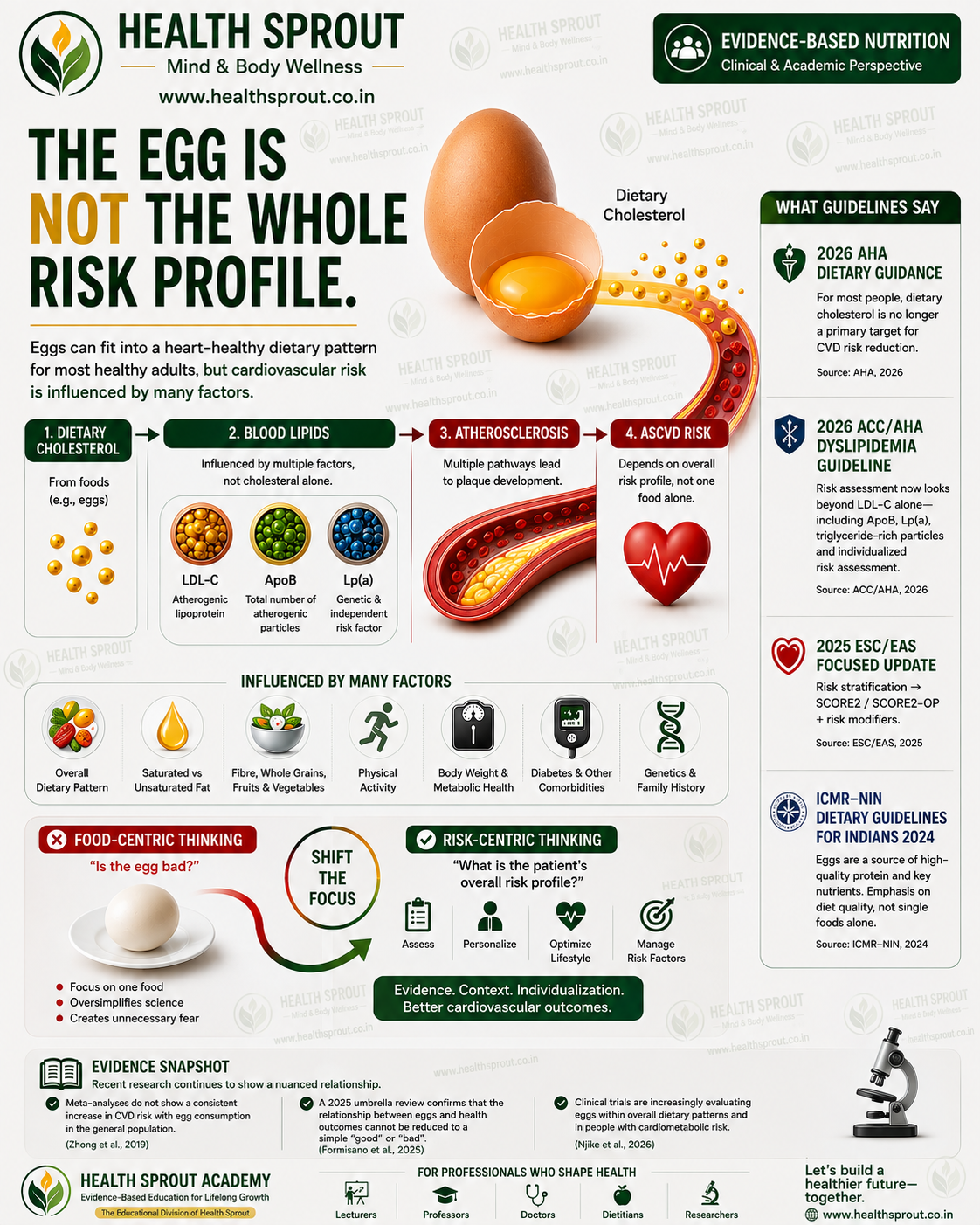
Eggs contain dietary cholesterol, but cardiovascular risk is not determined by one food or one nutrient in isolation. A person's overall dietary pattern, saturated-fat intake, blood lipids, body weight, physical activity, diabetes status, smoking, family history and other risk factors all matter.
The key nutrition question is therefore not simply “Are eggs bad?” but “How do eggs fit into this person's overall dietary pattern and cardiovascular risk profile?”
What Current Guidance Says
The American Heart Association's 2026 dietary guidance emphasizes a heart-healthy dietary pattern: plenty of vegetables and fruits, whole grains, healthy protein sources, replacement of saturated fat s with unsaturated fats, minimally processed foods, limited added sugars and appropriate sodium intake. It states that, for most people, dietary cholesterol is no longer a primary target for cardiovascular-disease risk reduction .
The 2026 ACC/AHA dyslipidemia guideline also places cardiovascular risk assessment in a broader lipid framework, going beyond LDL-C alone to include other atherogenic lipoproteins and individualized risk assessment.
Think beyond one food
Overall dietary quality and the balance of saturated and unsaturated fats are important parts of cardiovascular nutrition.
Think about the person
Existing dyslipidemia, diabetes, family history and other risk factors can change how an individual's diet should be planned.
What Does an Egg Contribute?
Eggs provide high-quality protein and several micronutrients. They also contain cholesterol and fat, so the context in which they are eaten matters.
ICMR–NIN's 2024 Dietary Guidelines include eggs among animal-food choices and note that eggs contain cholesterol while also providing omega-3 and omega-6 fatty acids. The guideline's illustrative food tables include eggs as a protein-food option.
Potential strengths
✓
High-quality protein
✓
Useful micronutrients
✓
Can fit into varied dietary patterns
What needs context?
•
Dietary cholesterol
•
Cooking method
•
Foods eaten alongside the egg
•
Individual lipid and metabolic profile
MYTH BUST: “Eggs Are Bad for Your Heart”
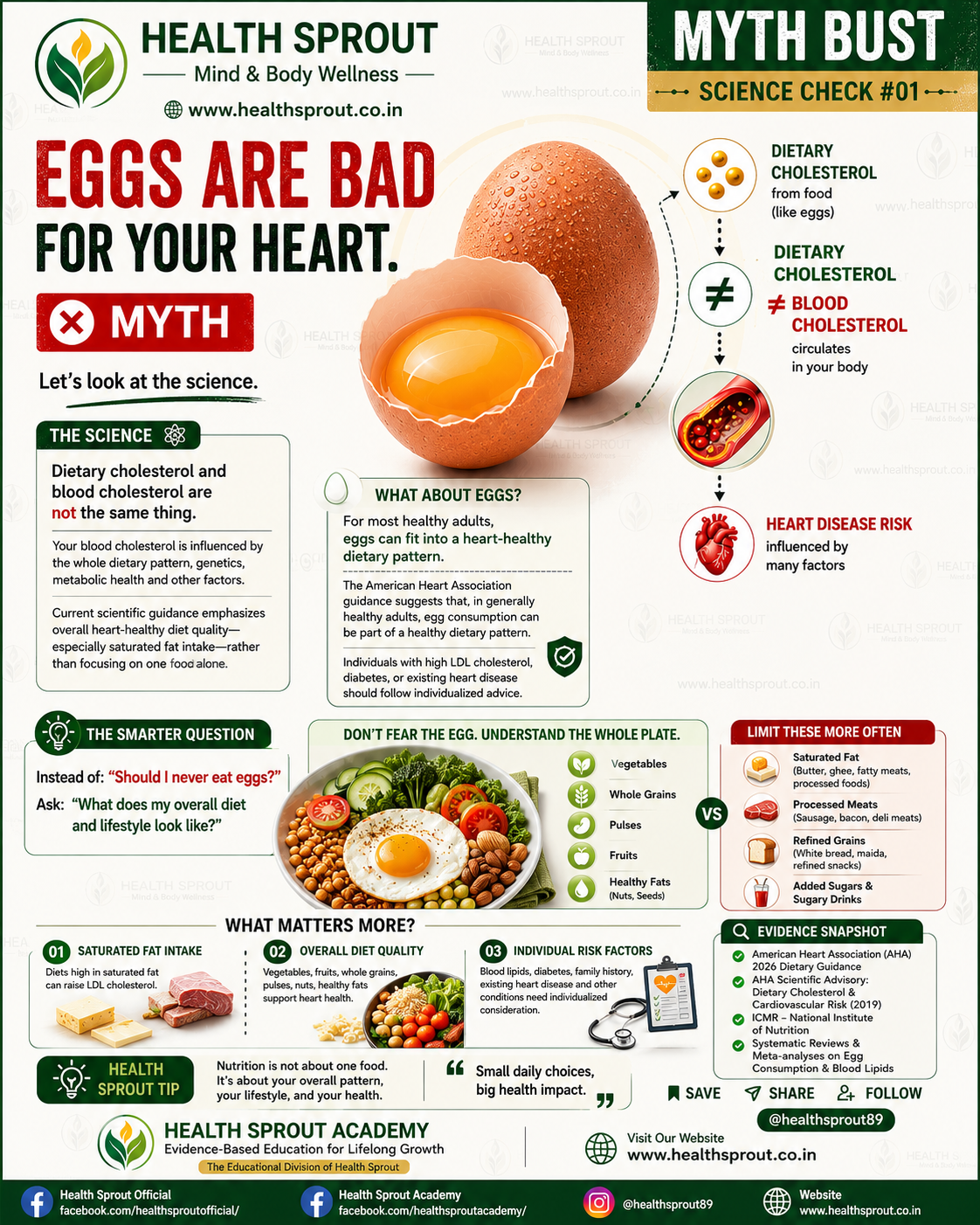
Verdict: Too simplistic. Saying that eggs are universally “bad” for the heart ignores the rest of the diet and the individual's cardiovascular risk profile.
A better approach is to assess the entire dietary pattern—especially saturated-fat intake, overall food quality, fiber-rich plant foods, energy balance and the person's established risk factors.
What Matters More Than the Egg Alone?
1. Saturated-fat intake
Dietary patterns high in saturated fat can adversely affect LDL-C. Current AHA guidance emphasizes replacing saturated fats with unsaturated fats.
2. Overall diet quality
Vegetables, fruits, whole grains, pulses, nuts, seeds and healthy fats form the foundation of a heart-healthy dietary pattern.
3. Blood lipid profile
LDL-C is important, but modern dyslipidemia guidance also considers triglycerides, non-HDL-C, Lp(a), ApoB in selected situations and overall risk.
4. Individual risk factors
Diabetes, established cardiovascular disease, familial hypercholesterolemia, family history and other risk enhancers can change the clinical context.
So, Can Eggs Be Part of a Healthy Diet?
For many healthy adults, eggs can be incorporated into a balanced dietary pattern. The important point is not to label one food as universally “good” or “bad,” but to consider the whole dietary pattern and the individual's risk profile.
For someone with known dyslipidemia, diabetes, cardiovascular disease, familial hypercholesterolemia or other significant risk factors, dietary decisions should be individualized with a qualified healthcare professional rather than based on a generic social-media rule.
The Smarter Question
Instead of:
“Should I never eat eggs?”
Ask:
“What does my overall diet, lifestyle and cardiovascular risk profile look like?”
Frequently Asked Questions
Are eggs the main cause of high blood cholesterol?
No. Blood cholesterol is influenced by multiple factors, including diet composition, genetics, metabolic health and other lifestyle factors. A single food does not explain the entire lipid profile.
Should everyone avoid egg yolks?
No universal rule can be applied to everyone. The appropriate dietary pattern depends on the person's overall health, lipid profile and risk factors.
Is an egg automatically heart-healthy?
Not automatically. The egg can fit within a healthy dietary pattern, but the complete meal and the overall diet matter.
Why This Matters
Eggs contain cholesterol and many useful nutrients, but cardiovascular risk is determined by a broader combination of dietary pattern, blood lipids, metabolic health and other risk factors. The practical question is how eggs fit into the person’s overall pattern.
Myth Bust
Myth: Eating eggs automatically causes high blood cholesterol.
Fact: Blood cholesterol is influenced by multiple factors. Eggs can be part of a healthy dietary pattern for many people, while individual risk profiles may require more specific guidance.
Practical Application
Instead of judging eggs in isolation, look at the whole meal and the overall dietary pattern. Consider what accompanies the eggs, the person’s lipid profile and the rest of the diet before making a blanket rule.
Quick Takeaways
- Dietary cholesterol and blood cholesterol are not the same thing.
- Overall dietary pattern and saturated-fat intake deserve attention.
- People with significant lipid or cardiovascular risk may need individualised advice.
References & Evidence Base
- American Heart Association. 2026 Dietary Guidance to Improve Cardiovascular Health .
- American Heart Association. 2026 Guideline on the Management of Dyslipidemia .
- ICMR–National Institute of Nutrition. Dietary Guidelines for Indians, 2024 .