
The Quick Sprout
- “Plant protein versus animal protein” is not a single comparison because both categories contain many different foods and supplements.
- The answer depends on the protein source, amino-acid profile, digestibility, amount consumed, the person, and the outcome being measured.
- For muscle and performance, total protein intake, source quality, distribution and the wider training and nutrition context all matter.
How to use this: Read this box first for the core message, then continue into the full evidence-based explanation below.
The poster is the visual cue; the article carries the deeper explanation, evidence interpretation, limitations and source links. Read the “What This Visual Shows” box before treating any visual claim as a scientific conclusion.
THE QUESTION BEHIND THE DEBATE
“Plant protein or animal protein—which is better?” sounds like a simple question. Scientifically, it is not. The answer depends on what outcome you are measuring, which protein sources are being compared, how much protein is consumed, who is consuming it, and whether the question concerns an acute biological response or long-term training adaptation.
A useful starting point is to stop treating “plant” and “animal” as two single, uniform proteins. They are broad categories containing foods and supplements with different amino-acid profiles, digestibility characteristics and practical serving requirements.
Why the opening distinction matters
People often compare a concentrated supplement against a mixed food meal or a single plant food against a high-quality animal source and then generalise the result. That is a category error. A fair question has to match the source, dose, outcome and timescale.
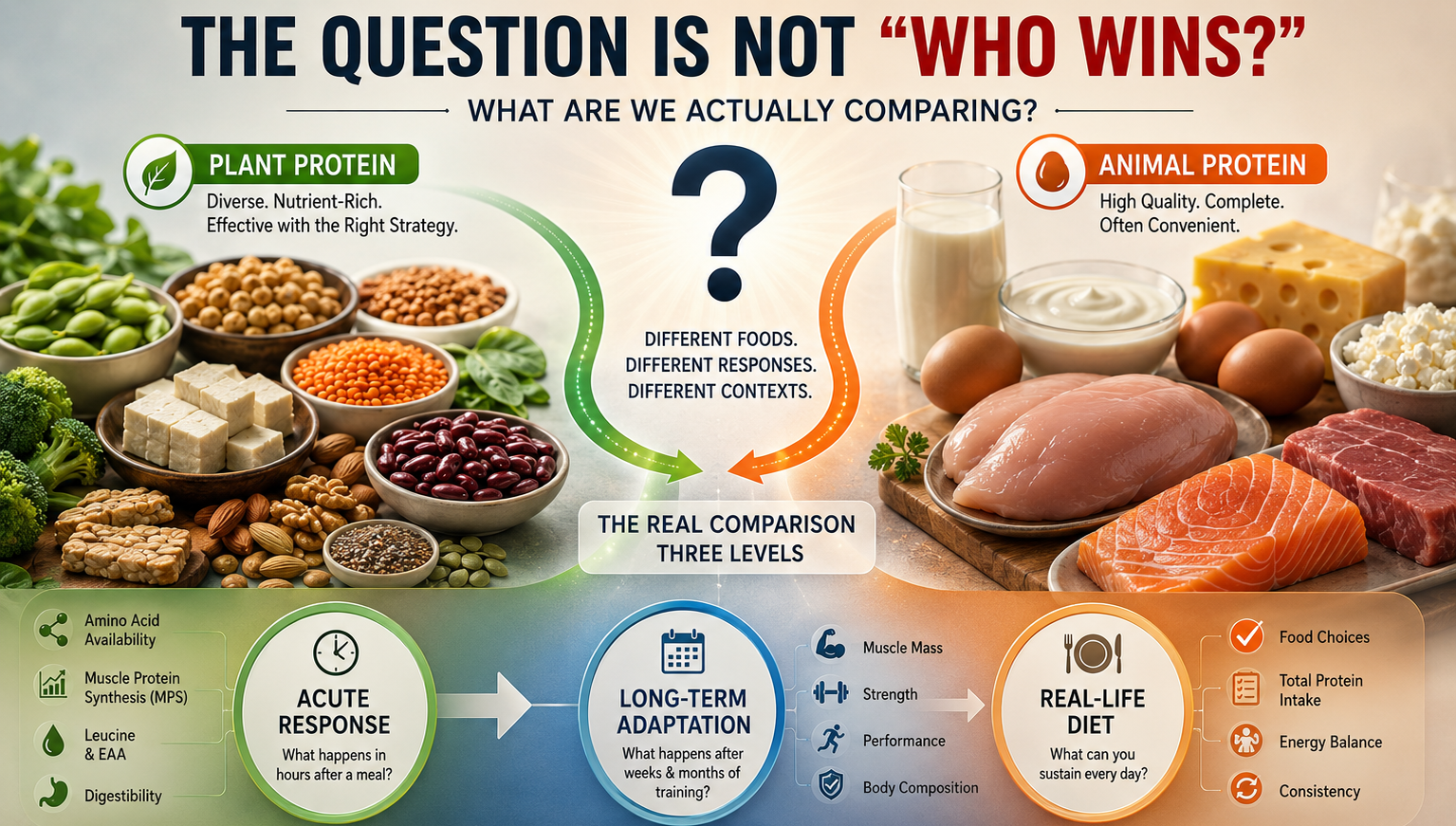
The visual opens the article by reframing the question around evidence, not ideology.
WHAT ARE WE ACTUALLY COMPARING?
A fair comparison can involve at least four different questions: protein quality, acute muscle protein synthesis, long-term muscle mass and strength, and real-world dietary practicality. A result in one category does not automatically answer all the others.
KEY IDEA Mechanism informs. Long-term outcomes confirm.
The visual separates questions that are often collapsed into the single word 'better'.
PLANT PROTEIN VS ANIMAL PROTEIN VS MIXED PROTEIN
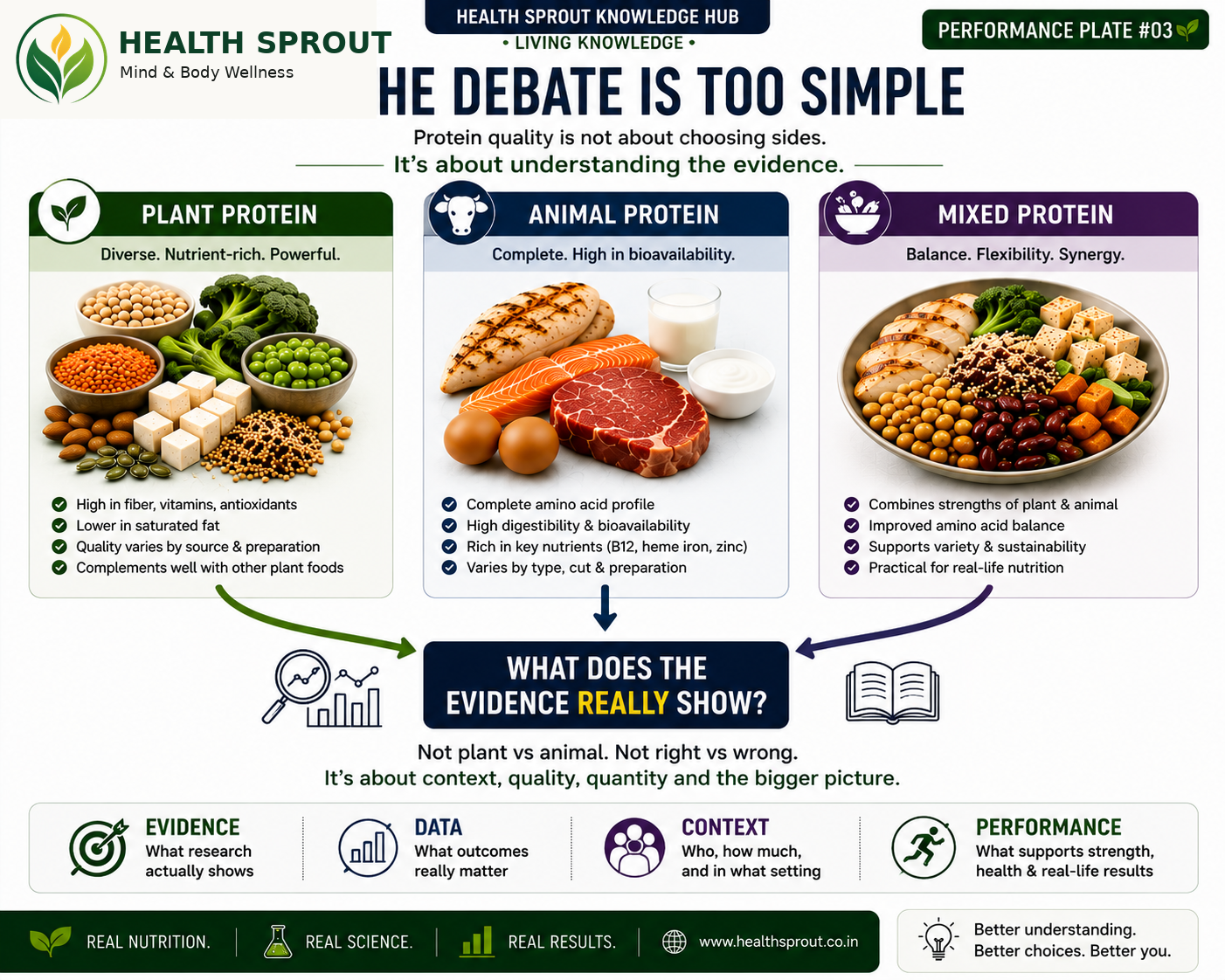
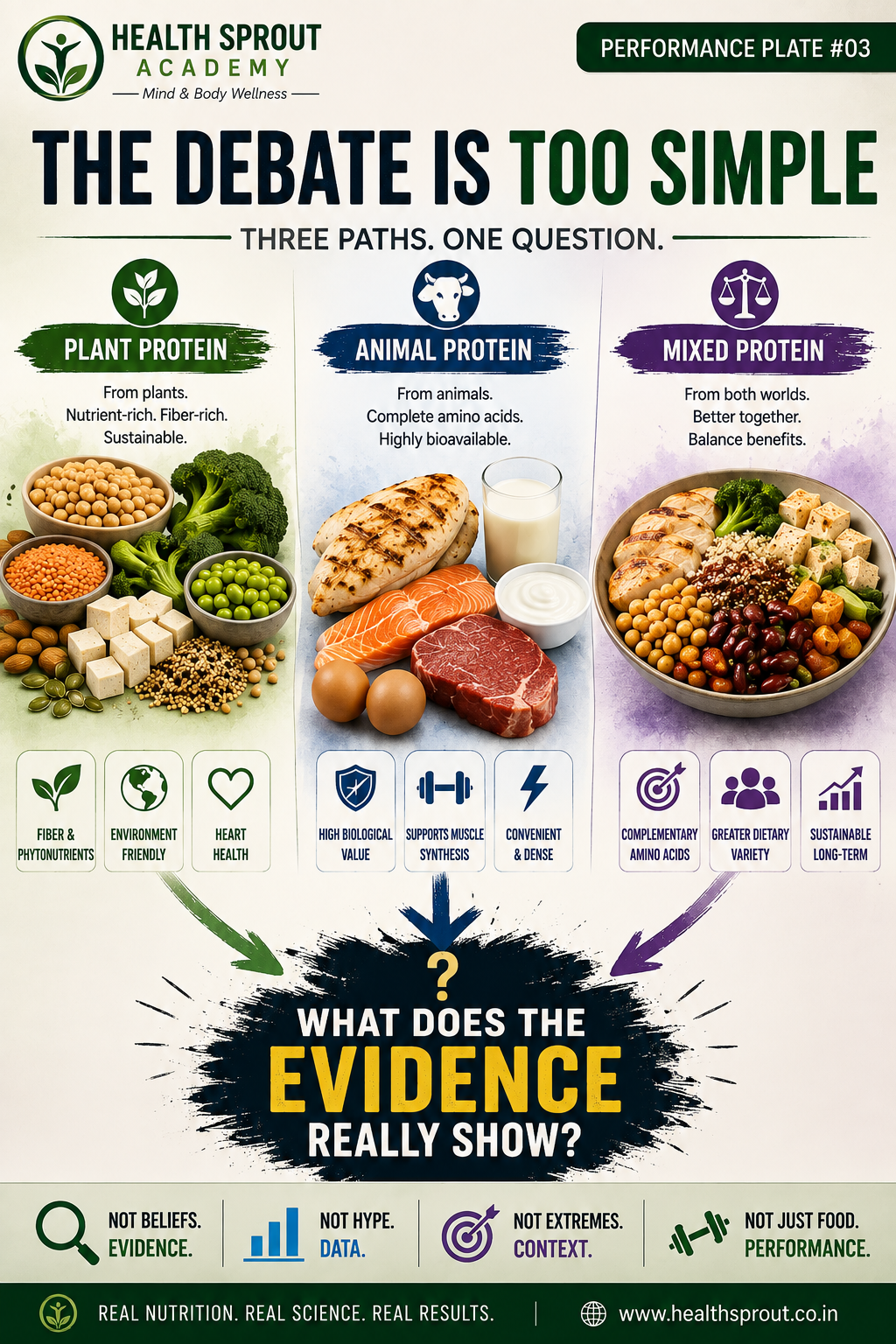
Plant proteins include foods and isolates such as soy, pea, rice, beans, lentils, grains and blends. Animal proteins include dairy, eggs, meat, fish and other sources. Mixed dietary pattern s combine both. Because the foods within each category differ, broad labels can hide important differences.
The practical question is therefore not simply which team wins. It is which protein strategy can reliably support the individual’s goals and total dietary pattern.
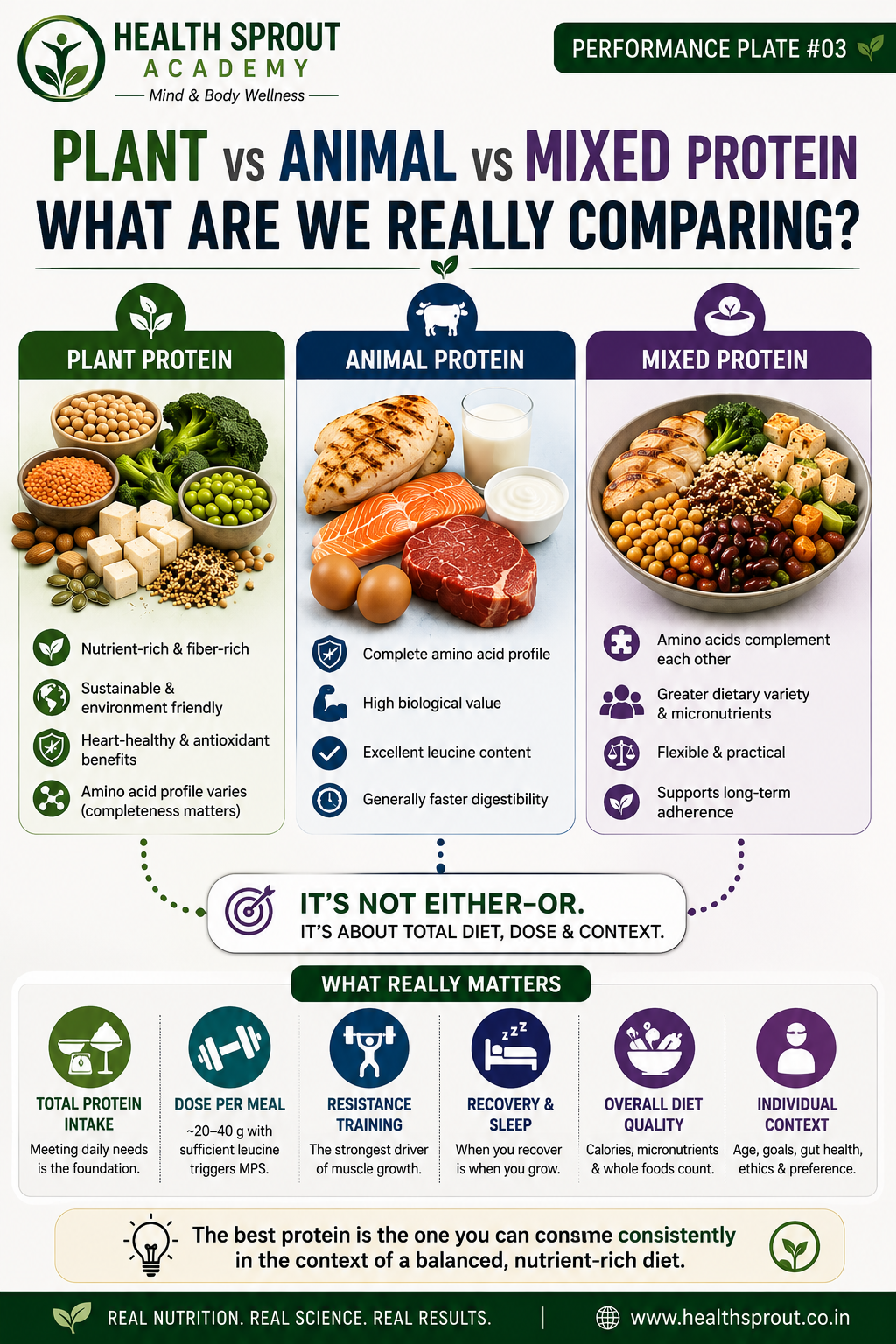
The visual prevents one plant source from being treated as representative of all plant proteins.
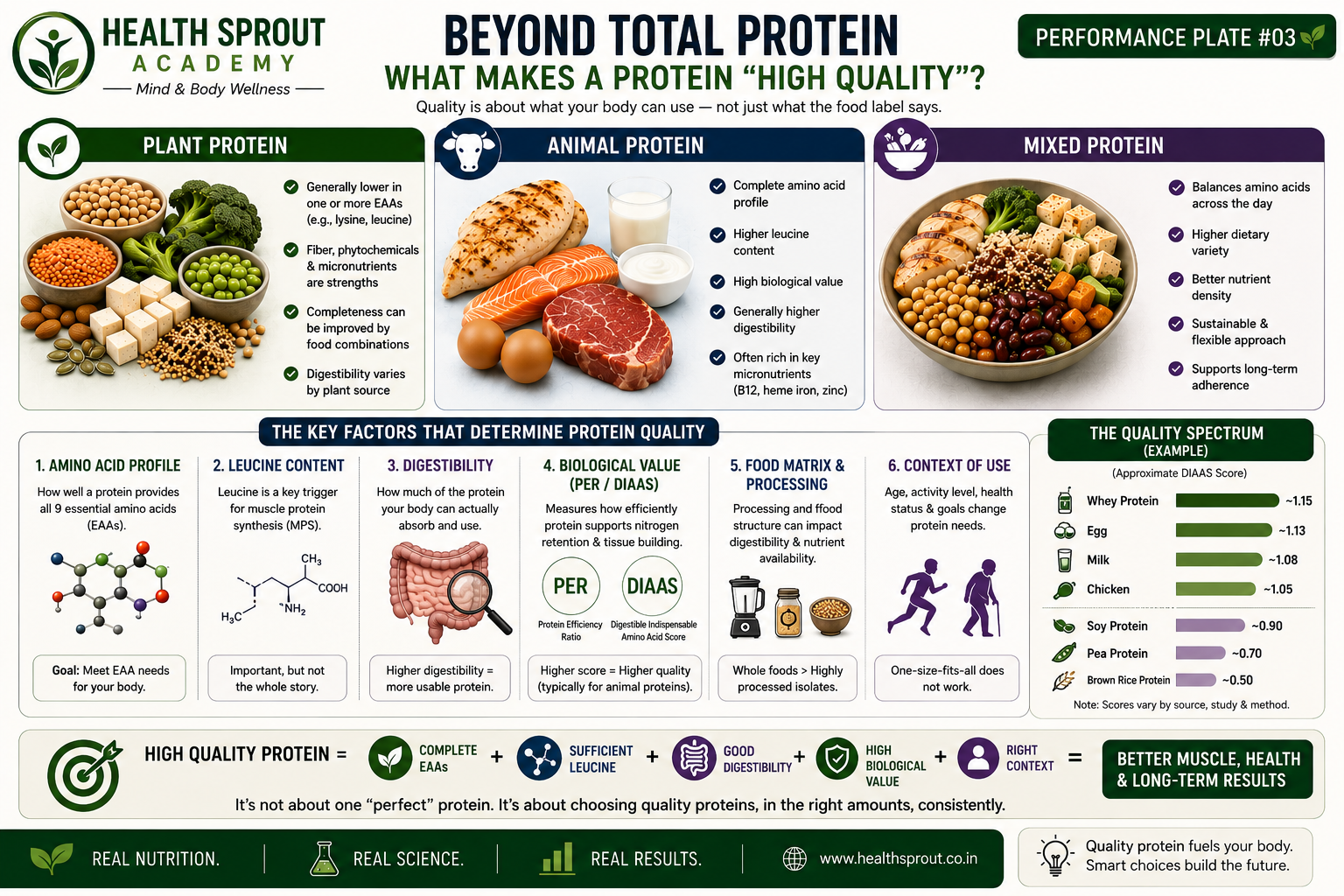
WHAT MAKES A PROTEIN “HIGH QUALITY?”
Protein quality is multidimensional. Relevant features include the essential amino acid s provided, leucine content, digestibility and the amount of food or supplement required to deliver a practical protein dose.
This does not mean that a single quality score can completely predict muscle growth or overall diet quality. Real-world outcomes also depend on total intake, meal pattern, training and the rest of the diet.
Why a quality score has limits
Protein-quality scores are useful for describing amino-acid adequacy and digestibility, but muscle adaptation is an outcome of an entire intervention. A high score does not replace resistance training, energy availability or sufficient total protein.
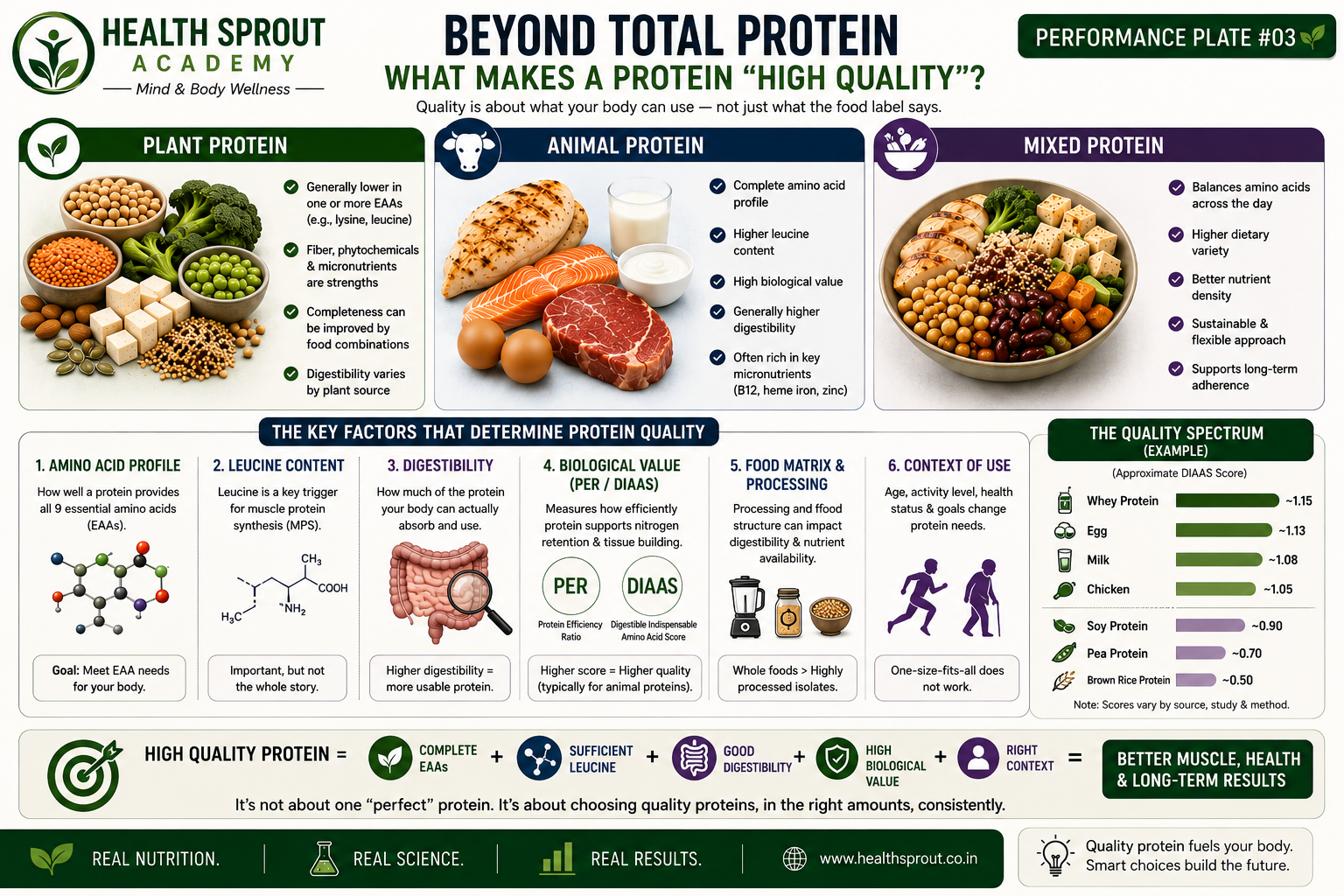
The visual prevents milk, eggs, fish, poultry and meat from being treated as one biological input.
The visual introduces the tools used to describe protein quality rather than treating one score as an outcome.
AMINO ACIDS, EAA AND DIGESTIBILITY
Essential amino acids are particularly important because the body cannot synthesize them in sufficient amounts. Different protein sources provide different amino-acid patterns and may differ in how much digestible protein is available from a given serving.
That is one reason equal grams of protein do not always represent identical nutritional inputs. At the same time, different biological characteristics do not automatically translate into a large long-term difference in every person or outcome.
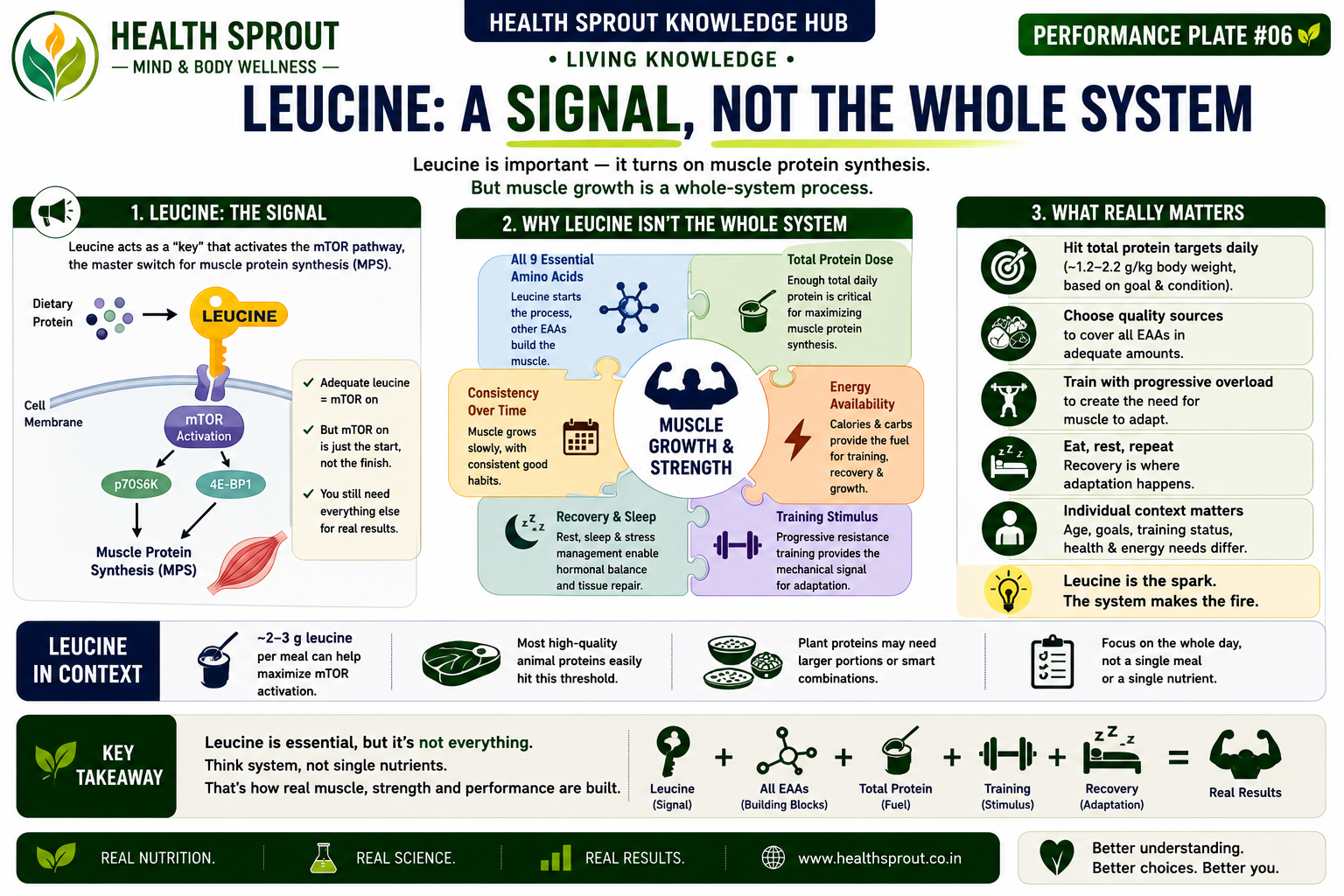
LEUCINE: A SIGNAL, NOT THE WHOLE SYSTEM
Leucine is an important amino acid in the regulation of anabolic signalling. This is why leucine is often discussed in muscle-protein research.
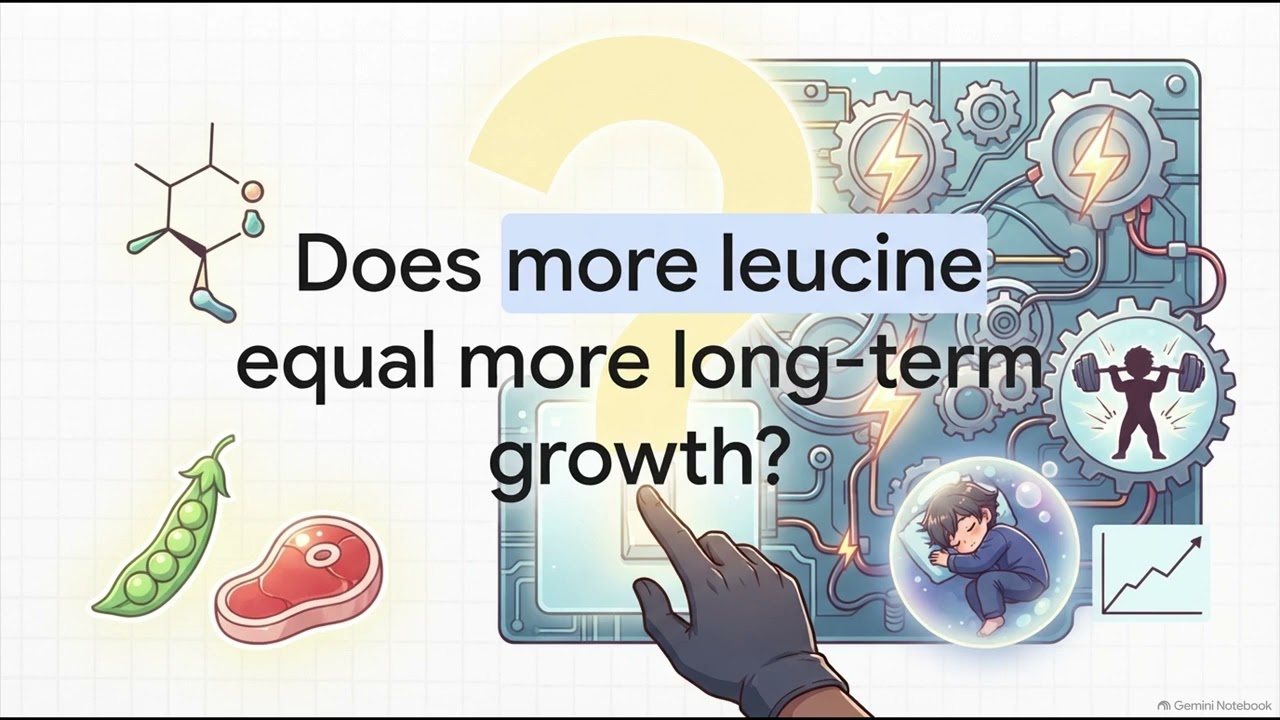
But a useful scientific correction is needed: more leucine does not automatically mean proportionally more long-term muscle growth. Long-term adaptation also depends on total protein, the broader essential-amino-acid supply, resistance training, energy availability, recovery and consistency.
PERFORMANCE PLATE TAKEAWAY LEUCINE IS IMPORTANT. BUT IT IS NOT THE WHOLE SYSTEM.
The important correction
Leucine is better understood as a signal within a broader anabolic system. The body still needs the other essential amino acids, and the training stimulus and recovery environment remain necessary for sustained adaptation.
The visual places leucine inside a network containing essential amino acids, protein dose, training, energy and recovery.
ACUTE MPS VS LONG-TERM MUSCLE GROWTH
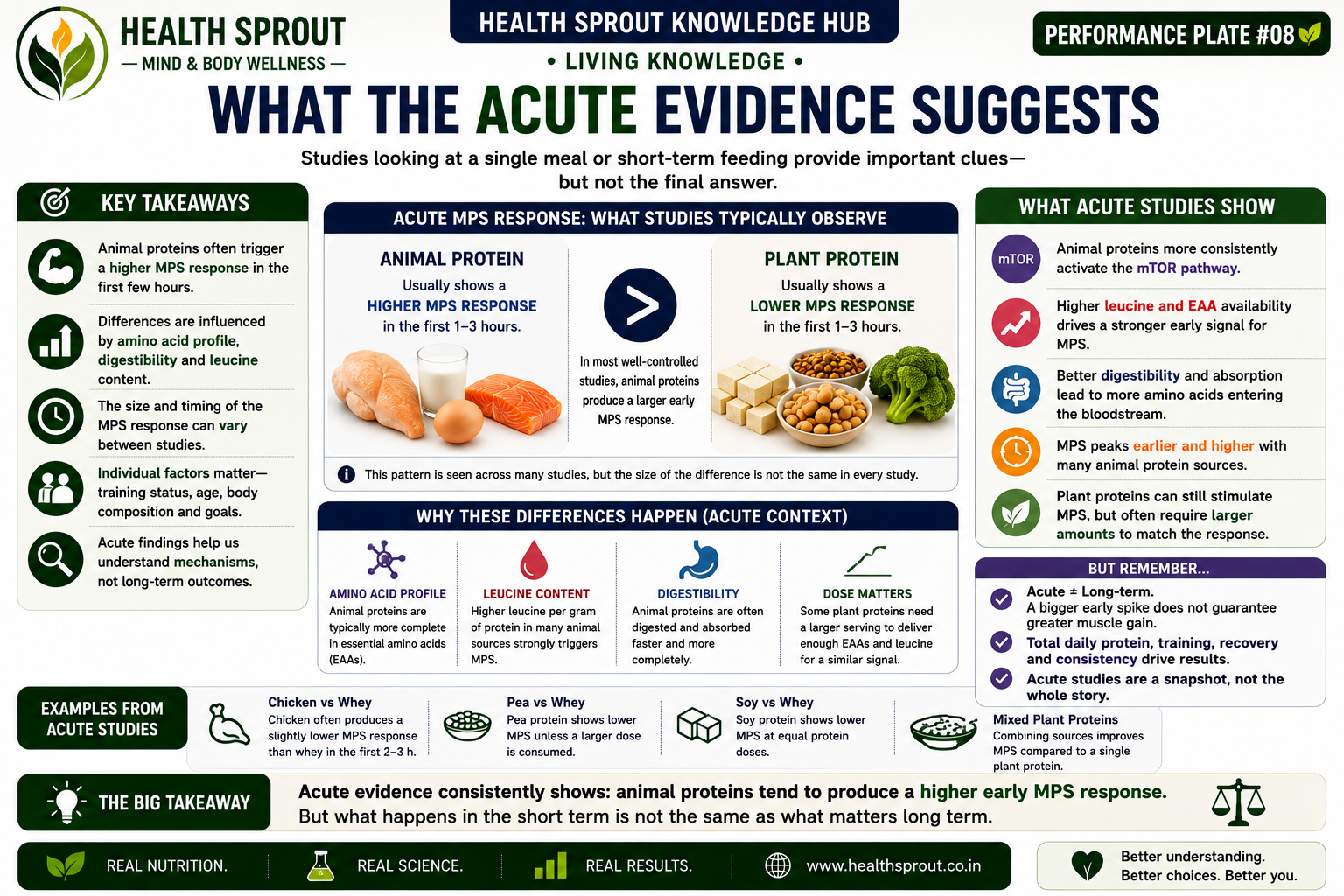
Acute muscle protein synthesis studies help researchers understand what happens after protein feeding and exercise. These studies are valuable, but an acute rise in MPS is not identical to months of muscle hypertrophy.
Recent comparative evidence has found small overall tendencies favouring animal proteins for acute MPS, with substantial uncertainty and strong dependence on the sources studied. Younger adults showed similar responses in pooled analyses, while older adults showed a modest animal-protein advantage. Much of the animal-protein evidence was milk-based, whereas plant sources were heterogeneous.
DO NOT CONFUSE A stronger short-term signal with a guaranteed long-term winner.
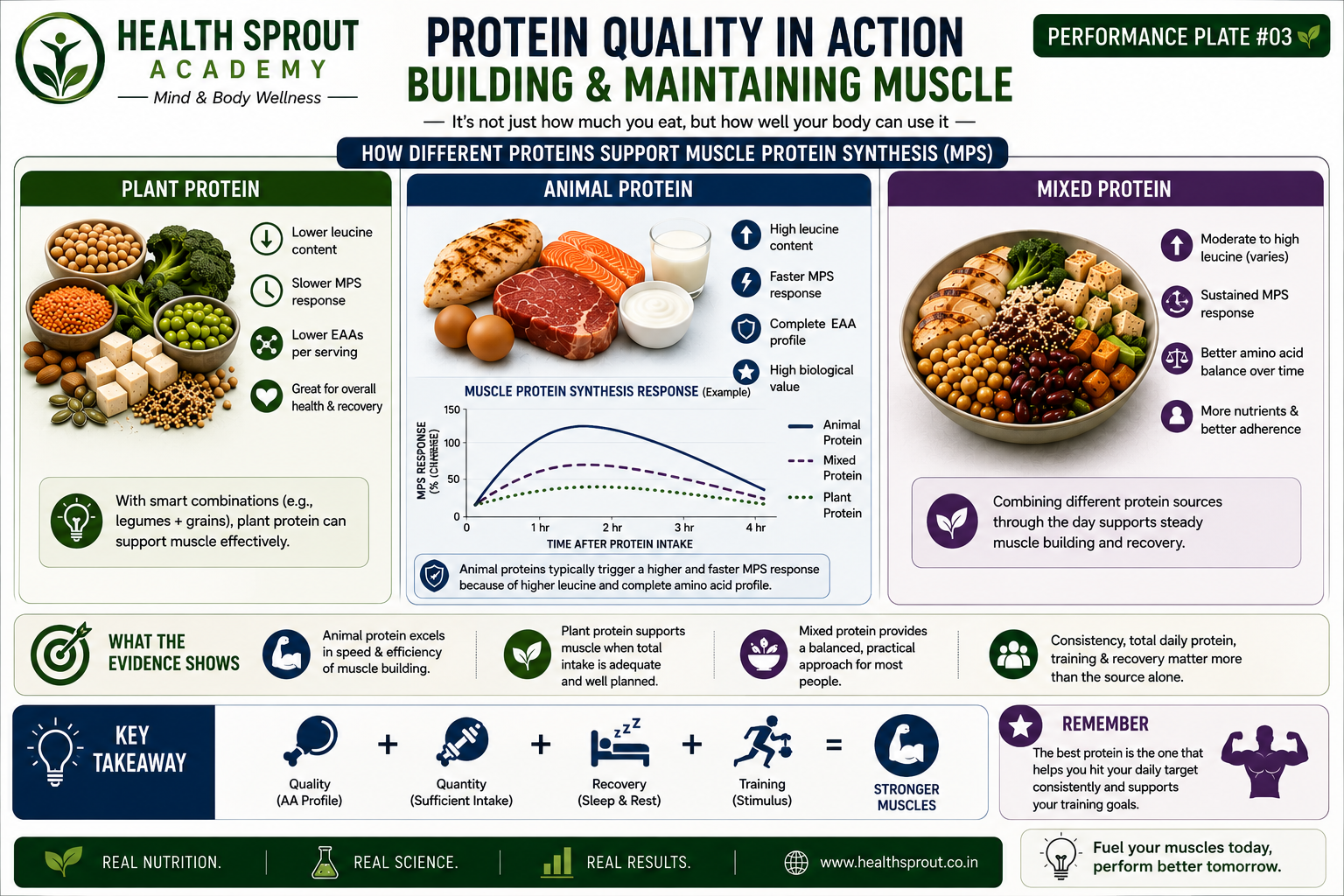
The visual prevents acute MPS from being mistaken for a direct forecast of hypertrophy.
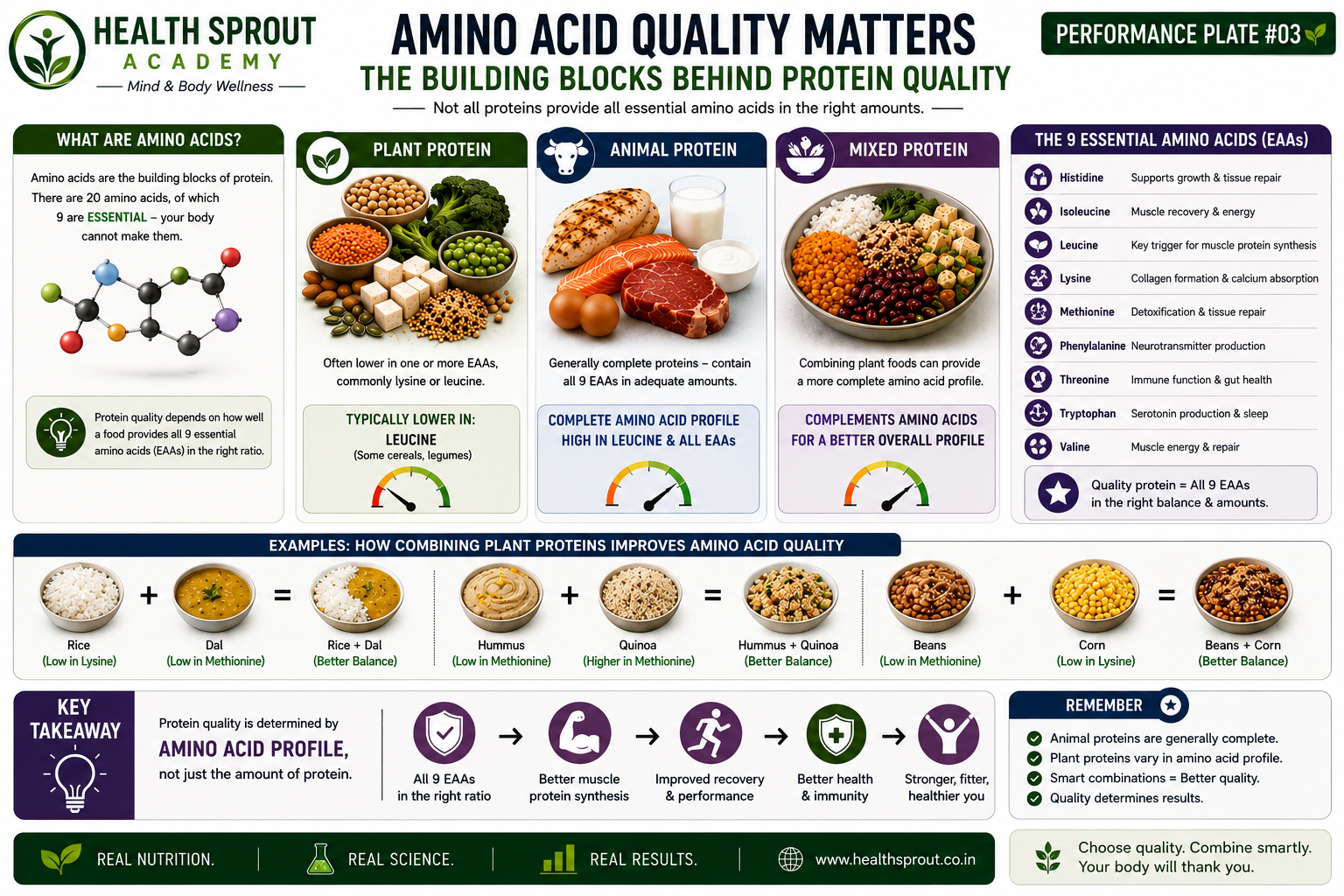
The visual shows the acute pattern without turning it into a universal winner.
WHAT DOES LONG-TERM EVIDENCE ACTUALLY SHOW?
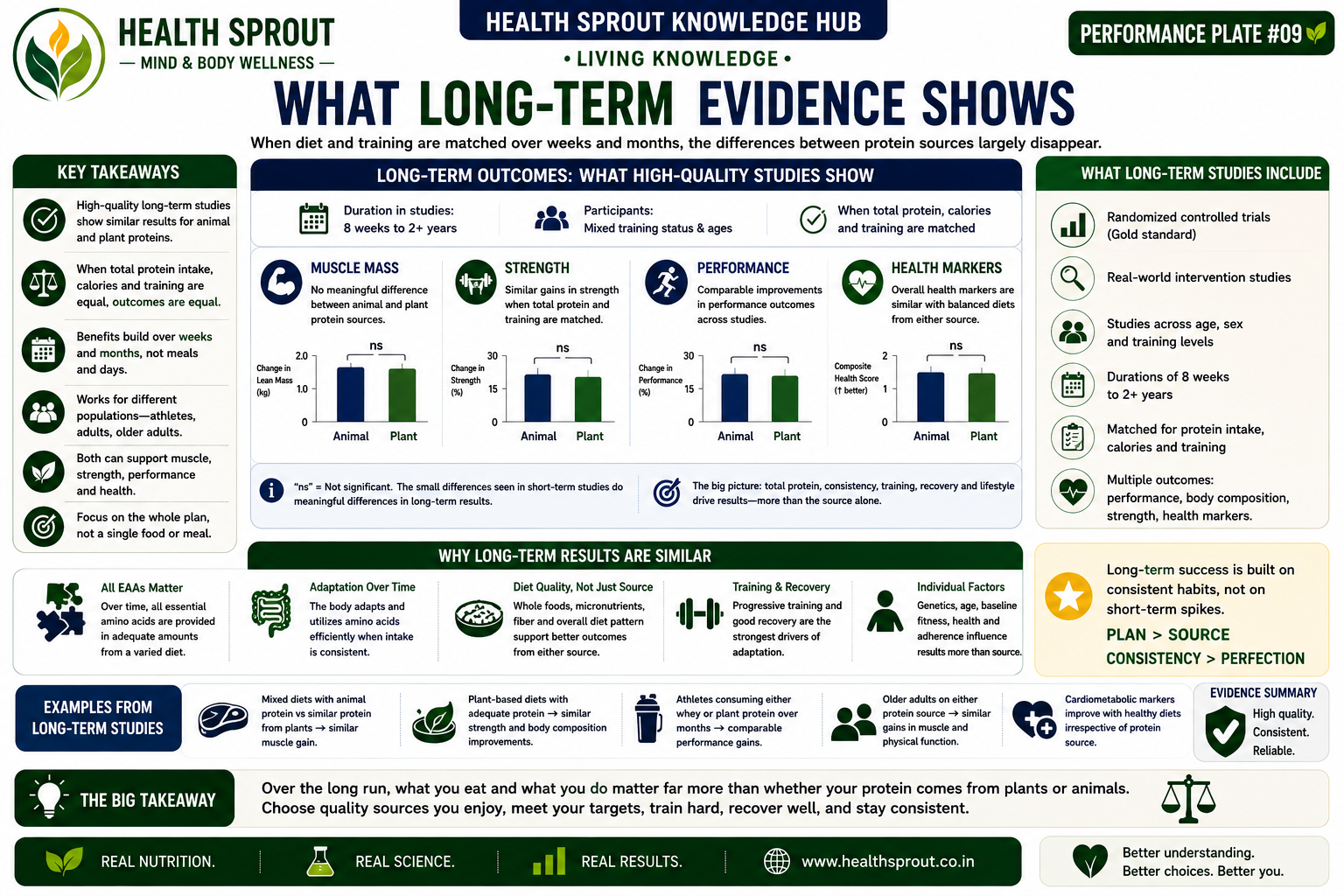
Long-term evidence is more directly relevant when the practical goal is muscle mass or strength. Comparative meta-analyses do not support a simple universal winner.
Some pooled randomized evidence has reported a small average advantage for animal protein in certain muscle-mass outcomes, particularly when compared with non-soy plant proteins. However, pooled strength and physical-performance outcomes have not shown the same consistent difference. Soy-versus-milk comparisons have also shown little or no pooled difference in some analyses.
A newer long-term meta-analysis published in 2026 likewise found no statistically significant overall differences in body composition, muscle strength or physical performance when adequate protein was consumed, although heterogeneity remains important.
THE BIG PICTURE Plant protein can support adaptation. Animal protein may offer advantages in some comparisons. The size and practical meaning of the difference depend on context.
How to read the long-term comparison
Long-term syntheses answer a more practical question, but they can still differ because studies use different sources, doses, populations and training protocols. Interpret the direction and size of effects by outcome rather than collapsing everything into a single protein winner.
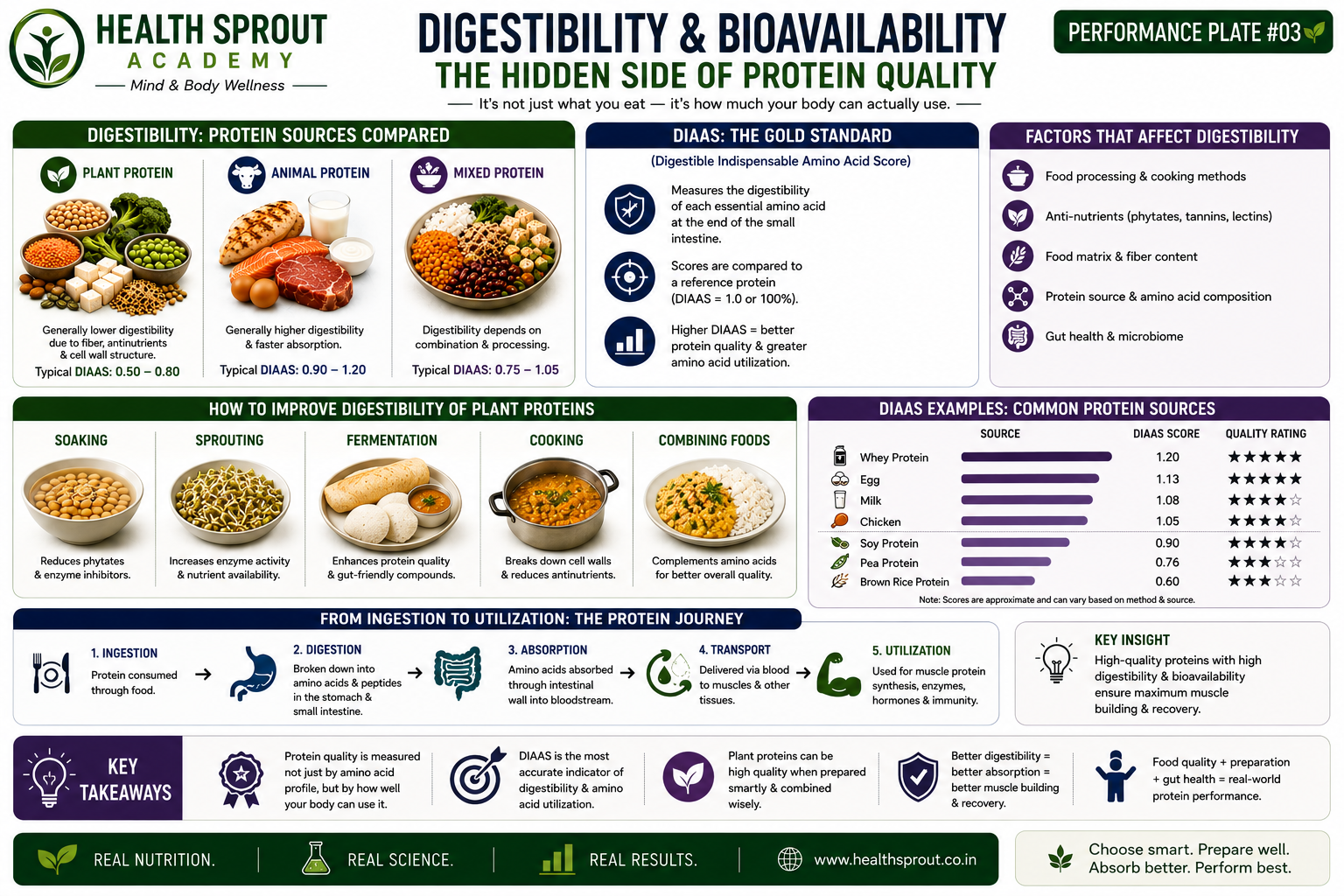
The visual separates muscle mass, strength and performance so they are not collapsed into one result.
PLANT PROTEIN: STRENGTHS AND LIMITATIONS
Plant protein can support resistance-training adaptation and can be incorporated into high-protein dietary patterns. Practical planning may become more important when a person relies heavily on lower-protein-density foods or a narrow range of plant sources.
A major limitation of simplistic discussion is treating all plant proteins as equivalent. Soy, pea, rice, wheat, legumes and mixed meals differ. Evidence for one source should not automatically be transferred to every other source.
PLANT PROTEIN Planning may matter more than perfection.
Why long-term studies deserve more weight for practical decisions
A person does not live inside a 2-hour MPS measurement. Long-term studies capture adherence, training progression, whole-diet intake and cumulative adaptation. They are messier, but they answer a more practical question.
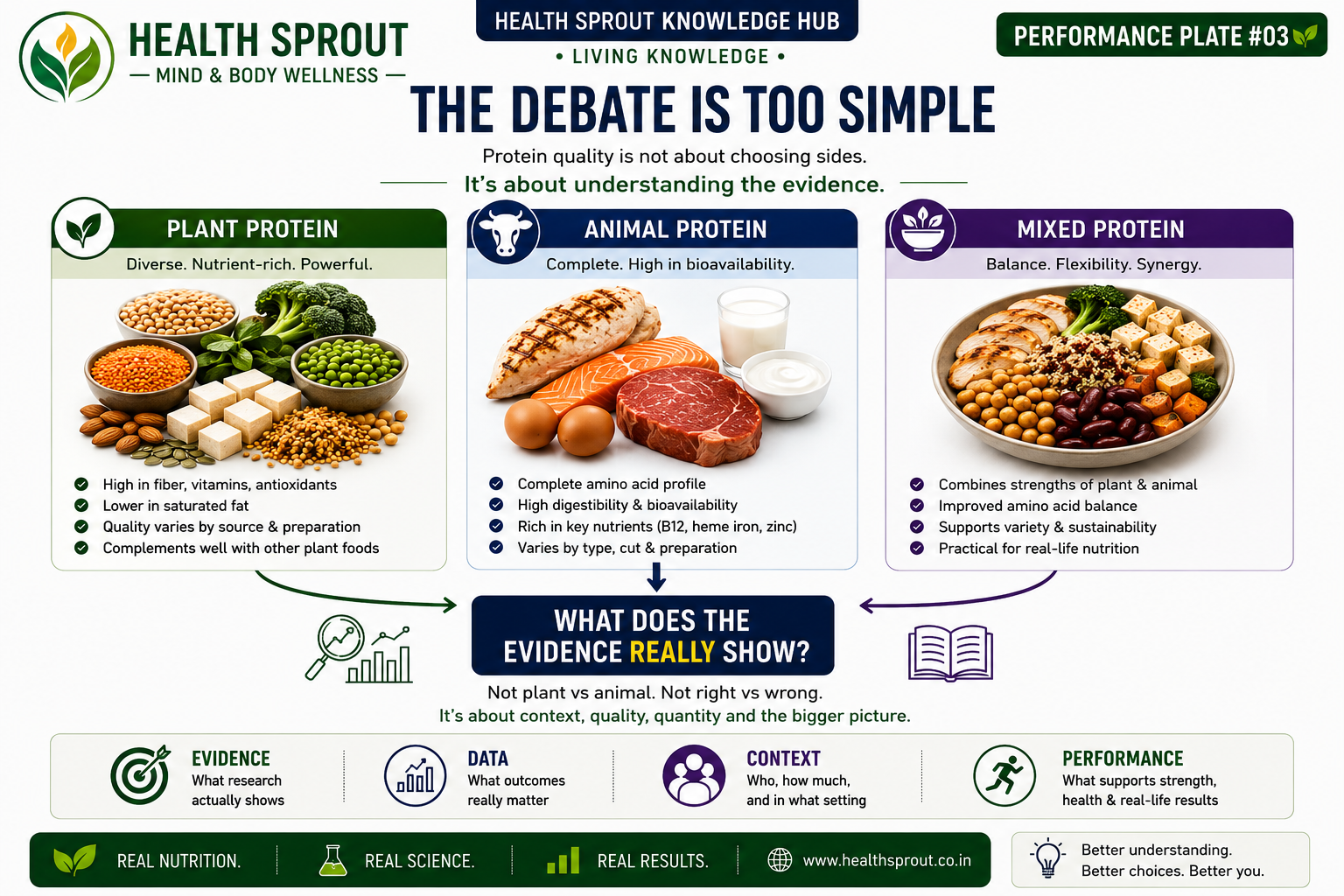
The visual separates soy from the generic plant-protein category.
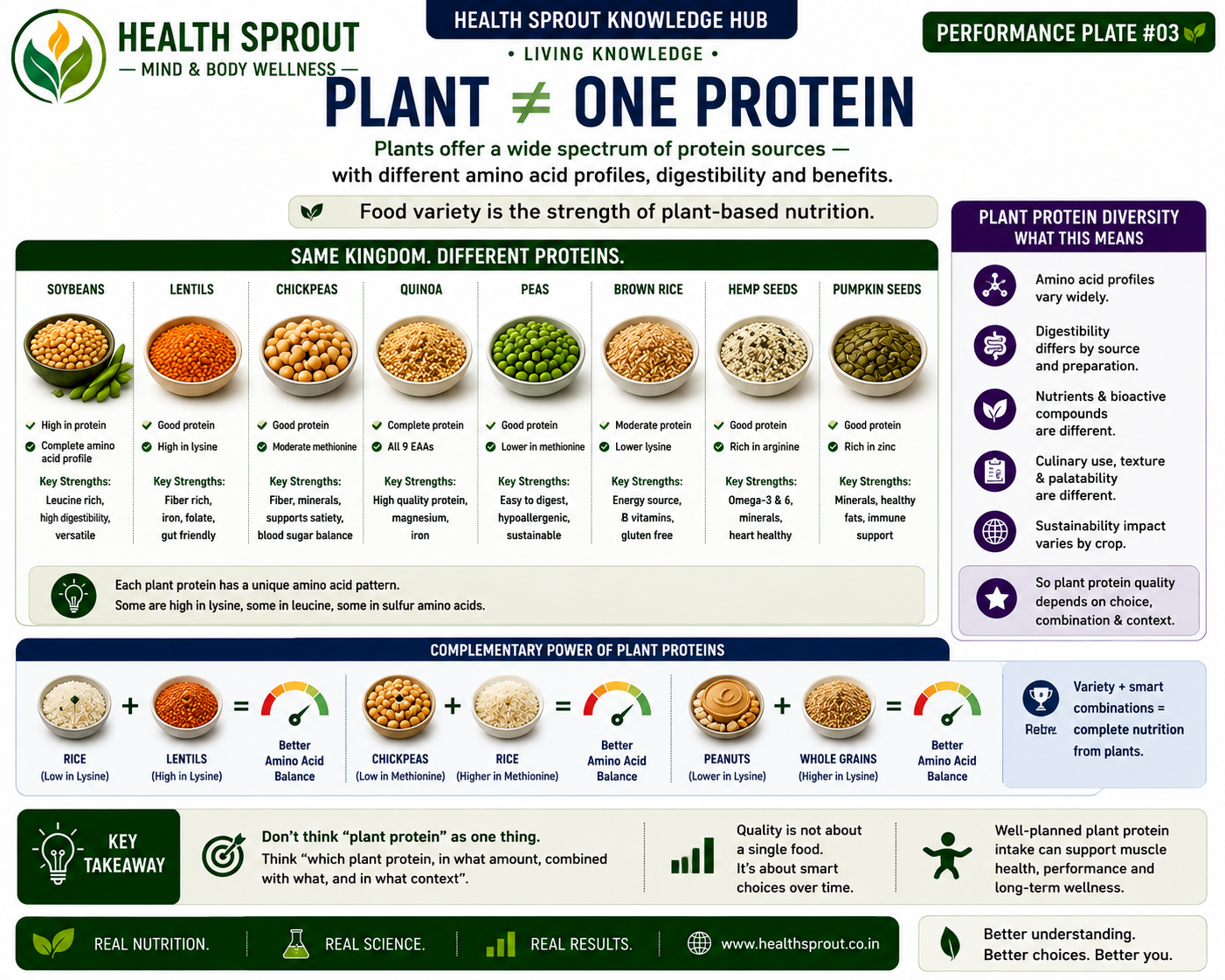
The visual focuses on strengths, food variety and planning rather than inferiority.
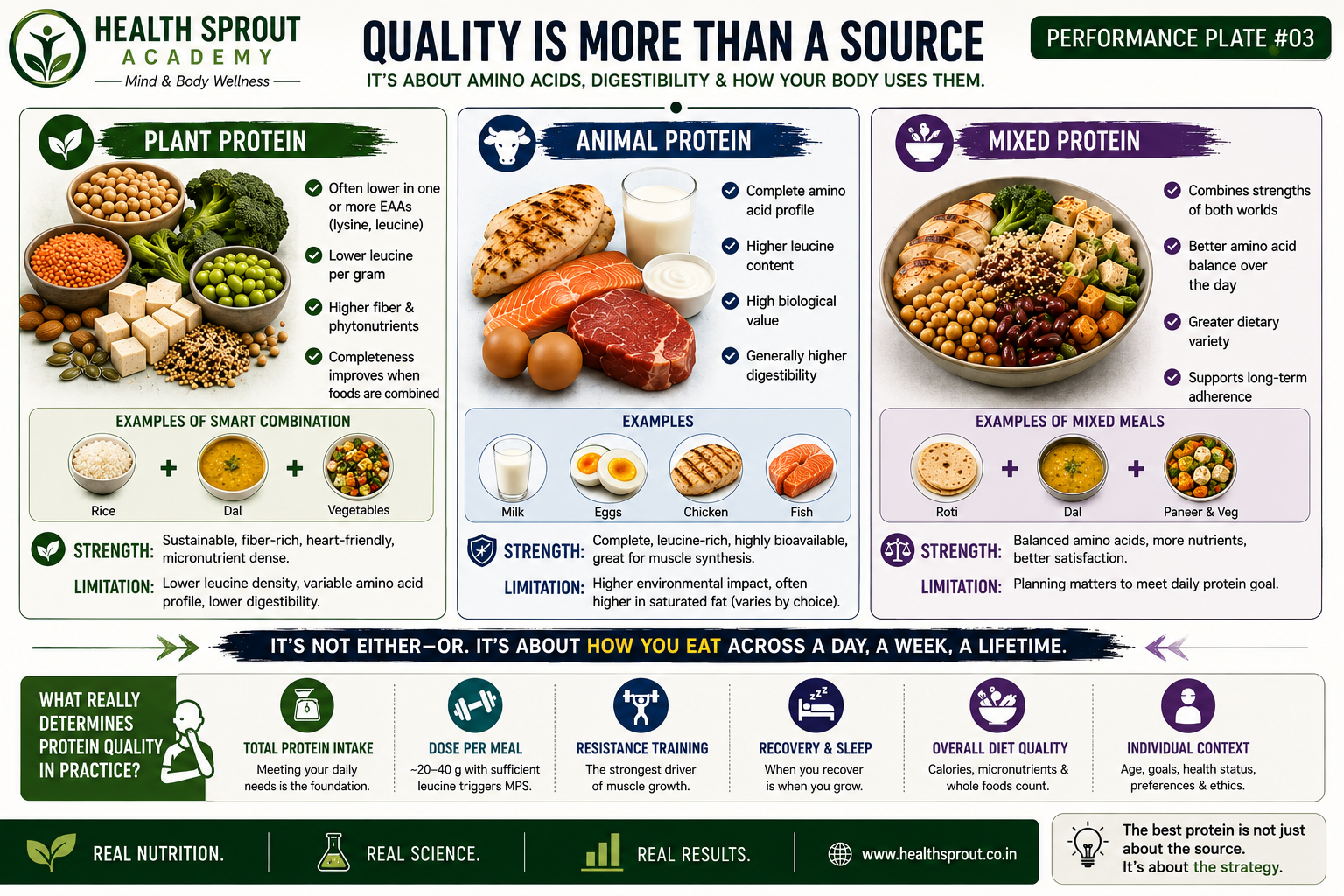
ANIMAL PROTEIN: STRENGTHS AND LIMITATIONS
Many commonly used animal proteins can provide concentrated essential amino acids and leucine in relatively practical serving sizes. This can make them convenient in some performance-oriented contexts.
However, “animal protein” is also a broad category. A result based mainly on milk proteins should not be interpreted as proof that every animal protein behaves identically. Practical convenience is not the same as universal superiority.
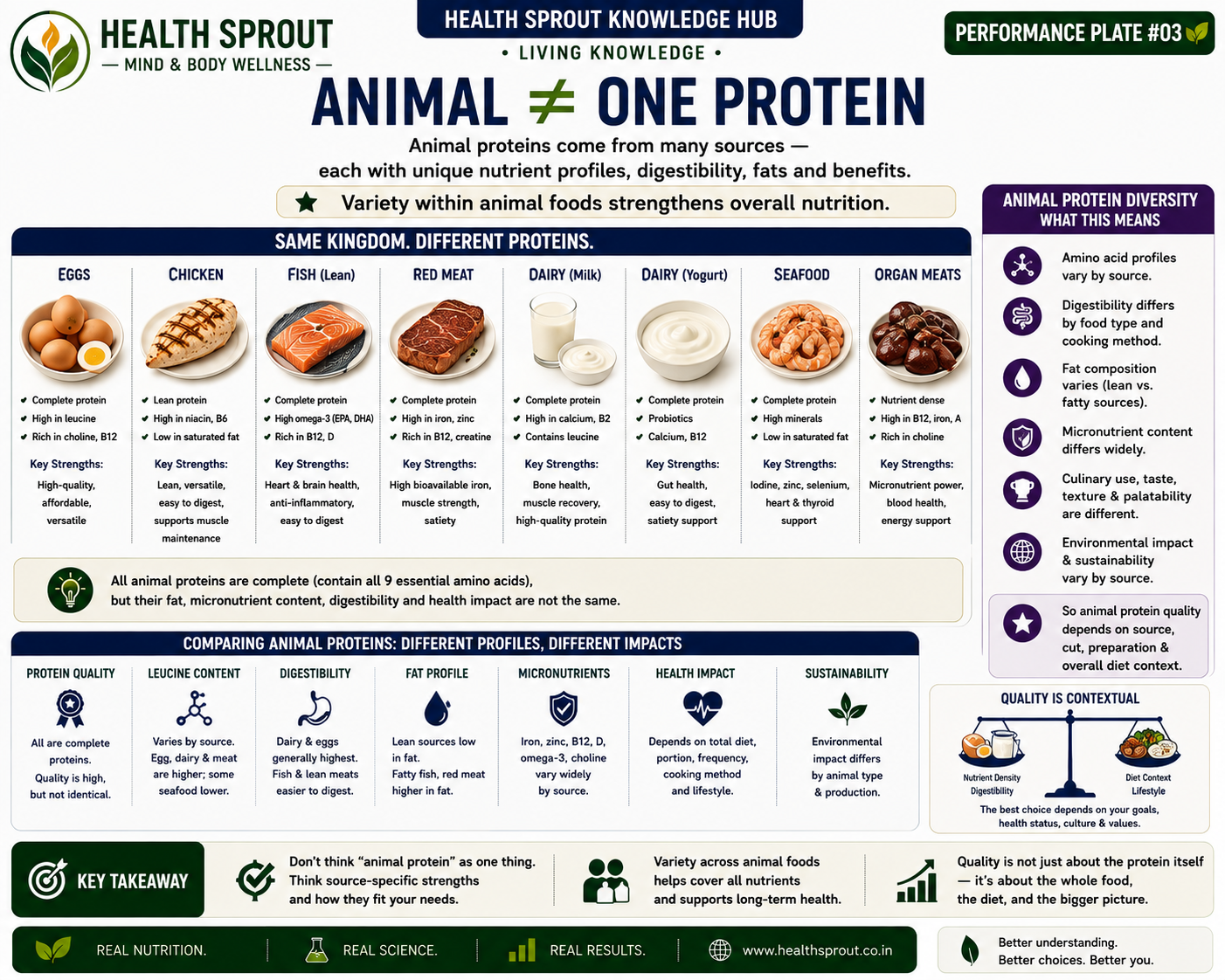
The visual shows source-specific differences instead of treating all animal protein as one thing.
THE MIXED PROTEIN STRATEGY
A mixed dietary pattern can provide flexibility by allowing different protein foods to contribute across the day. For many people, this may be easier to sustain than rigidly committing to one category.
But mixed protein is not automatically superior. Its value depends on whether the overall pattern is adequate, practical and consistent with the person’s goals and preferences.
MIXED PROTEIN Flexibility—not automatic superiority.
The visual shows how plant and animal sources can coexist across the day.
TOTAL PROTEIN, DOSE AND TRAINING
Protein source should not be discussed in isolation. Resistance training provides the primary mechanical stimulus for muscle adaptation. Protein helps support that process, but the overall strategy includes total daily intake, meal-level intake, source characteristics and long-term adherence.
CORE FRAMEWORK SOURCE × DOSE × TOTAL INTAKE × TRAINING
Energy availability, recovery and the wider dietary pattern also influence the environment in which adaptation occurs.
The visual integrates protein with total diet, energy, training, recovery, lifestyle, consistency and context.
COMPLEMENTARY PROTEIN: DOES EVERY MEAL NEED TO BE PERFECT?
No. A varied dietary pattern can provide complementary amino-acid profiles across the day. The practical goal is not to create a mathematically perfect protein combination at every meal.
The key point is that the body does not require a perfectly engineered amino-acid combination at every sitting. For most people, adequate total protein and a varied diet across the day are more important than rigid meal-by-meal pairing rules.
Very restrictive diets are different. When food variety, energy intake or total protein is limited, more deliberate planning may be needed.
The visual turns complementarity into a practical dietary-pattern idea.
PLANT-BASED ATHLETE: PLANNING, NOT PANIC
A plant-based athlete does not automatically face a performance disadvantage. The practical priorities are adequate energy, sufficient total protein, useful food variety and recovery.
Higher training demands can make planning more important because very bulky foods or limited food choices may make it harder for some athletes to meet practical intake targets. The solution is not panic; it is an individualized strategy.
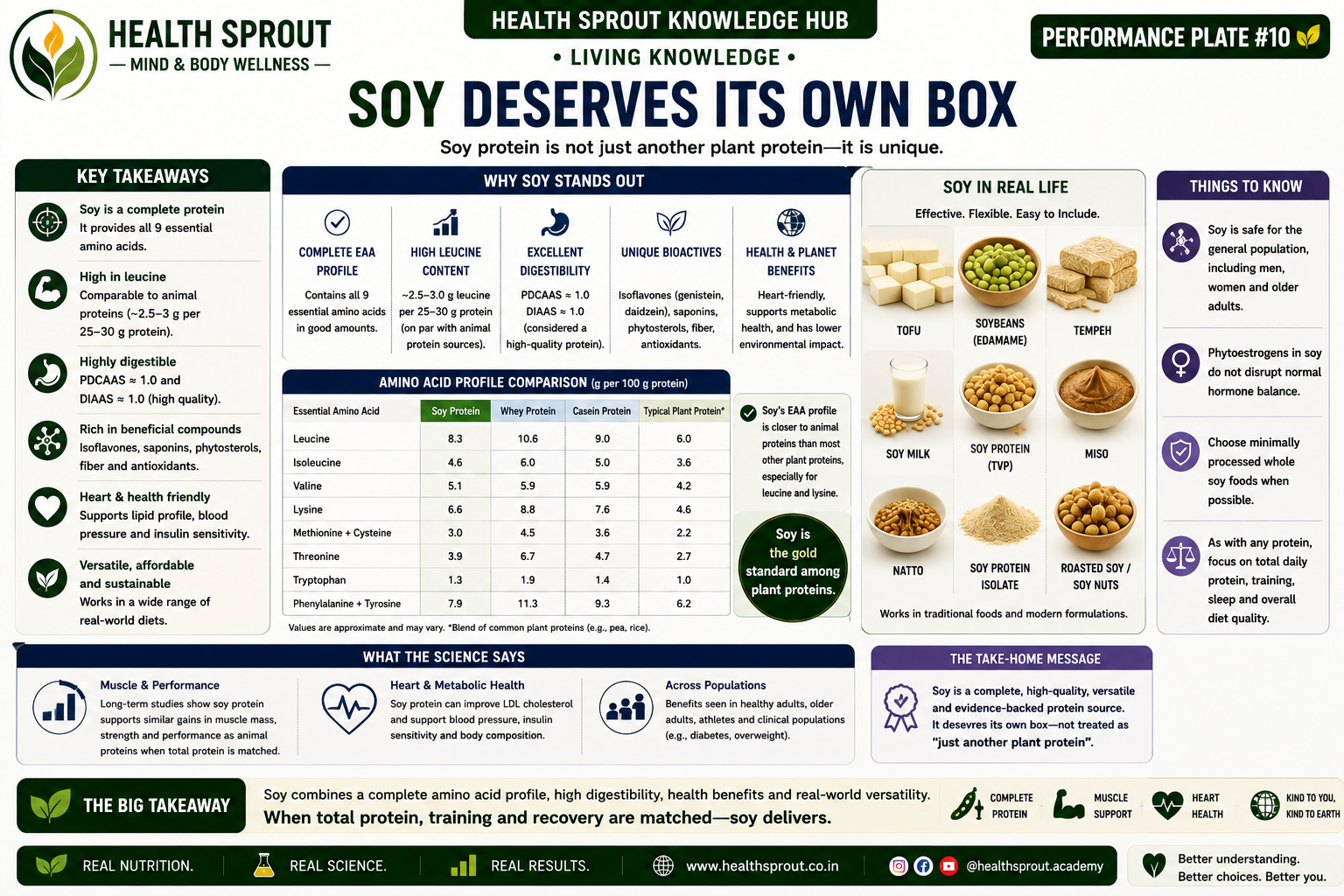
The visual maps the practical priorities rather than prescribing one rigid diet.
OLDER ADULTS: WHY CONTEXT CHANGES
Age can change the interpretation of protein research. Muscle mass, appetite, activity level and anabolic responsiveness may differ from those of younger adults.
Recent acute evidence suggests that older adults may show a modest average advantage with animal proteins in some MPS comparisons, but this should still be interpreted cautiously because the evidence base is limited and source-specific.
CONTEXT MATTERS Young adults and older adults should not be treated as one identical population.
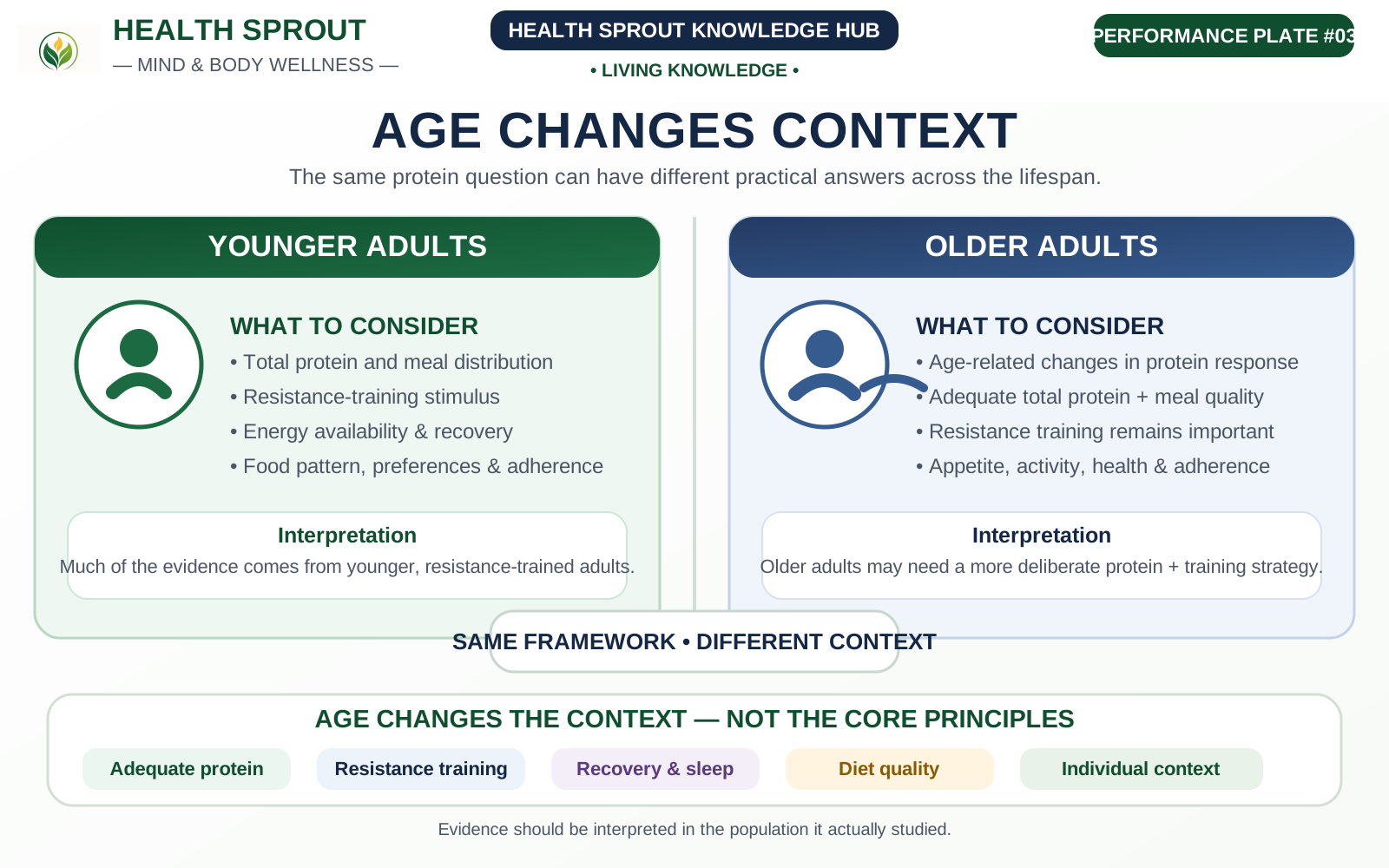
The visual makes age context explicit without creating an absolute age rule.
WHOLE FOODS VS PROTEIN POWDERS
Protein powders are useful research tools and practical supplements, but they are not entire diets. Whole foods also contribute energy, carbohydrates, fats, fibre, micronutrients and different food structures.
A whey-versus-pea isolate trial therefore answers a narrower question than a comparison of two complete dietary patterns.
IMPORTANT A protein isolate is not a whole dietary pattern.
Protein + the wider food matrix
Protein arrives with fibre, micronutrients, energy and a broader food matrix. Protein density and portion size vary by food.
Concentrated protein + convenience
A powder can make protein dosing easier and more precise, but it does not replace the wider nutritional contribution of a complete diet.
The comparison separates a concentrated protein supplement from a complete food pattern: powders are useful tools, while whole foods contribute a broader nutritional package.
RESEARCH GAPS
Longer resistance-training trials comparing specific protein sources.
Better dose-matched comparisons that consider amino-acid delivery as well as equal protein grams.
More research on individual plant proteins and blends.
More whole-food and mixed-diet studies.
More women, older adults and diverse populations.
More evidence on affordability, cultural food patterns and long-term adherence.
Age is a context modifier, not a verdict
Older adults may differ in appetite, muscle mass and anabolic responsiveness, but the correct recommendation still depends on the individual rather than age alone.
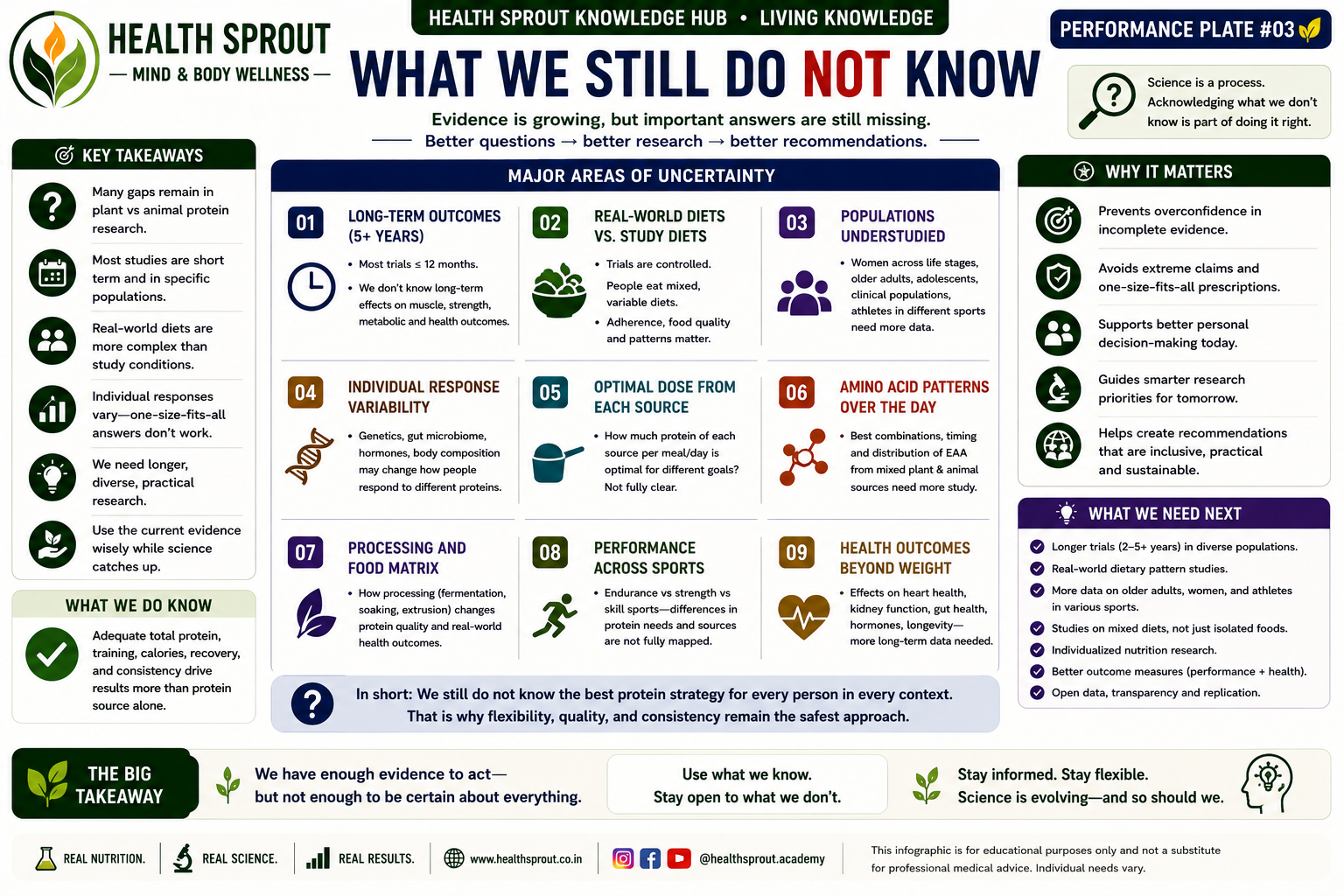
The visual maps the major research gaps and why they matter.
FINAL VERDICT
There is no scientifically defensible one-word answer to “Which is better?”
Plant protein can support muscle adaptation. Animal protein can offer practical advantages in some contexts. Mixed patterns can offer flexibility. The most useful strategy depends on the person’s goal, dietary pattern, training demands, total intake and ability to sustain the approach.
FINAL MESSAGE DON’T CHOOSE A TEAM. BUILD A STRATEGY.
RESEARCH NOTES
This article is based on comparative systematic reviews and meta-analyses, resistance-training protein evidence and practical nutrition guidance. The article deliberately distinguishes acute physiological outcomes from long-term adaptation and avoids treating broad food categories as biologically identical.
KEY REFERENCES
Jäger R, Kerksick CM, Campbell BI, et al. International Society of Sports Nutrition Position Stand: protein and exercise. 2017 · Journal of the International Society of Sports Nutrition 14:20 Open source ↗
Morton RW, et al. A systematic review, meta-analysis and meta-regression of the effect of protein supplementation on resistance training-induced gains in muscle mass and strength in healthy adults. 2018 · British Journal of Sports Medicine 52(6):376–384 Open source ↗
Messina M, Lynch H, Dickinson JM, Reed KE. No Difference Between the Effects of Supplementing With Soy Protein Versus Animal Protein on Gains in Muscle Mass and Strength in Response to Resistance Exercise. 2018 · International Journal of Sport Nutrition and Exercise Metabolism 28(6):674–685 Open source ↗
Wilkinson K, Koscien CP, Monteyne AJ, Wall BT, Stephens FB. Association of postprandial postexercise muscle protein synthesis rates with dietary leucine: A systematic review. 2023 · Physiological Reports 11(15):e15775 Open source ↗
SUMMARY
What the evidence supports
Protein source changes amino-acid delivery, leucine exposure and digestibility, and it can influence acute MPS.
What the evidence does not support
It does not support a universal rule that every animal protein is superior to every plant protein, or that one acute MPS result guarantees more hypertrophy.
What changes the practical decision
Total protein, dose, training, energy availability, recovery, dietary pattern and the ability to sustain the plan.
What remains uncertain
Source-specific long-term effects, ideal dose matching, whole-food diets, diverse populations and the size of differences that matter in real life.
THE BIG PICTURE
The evidence is complex because protein is not one variable. It is a family of foods with different amino-acid profiles and different practical doses, tested across different people and time scales.
Acute physiology helps explain mechanism; long-term outcomes are more relevant to everyday muscle-growth decisions. Current evidence supports a balanced interpretation: animal protein can have advantages in some comparisons, while several plant proteins—especially soy, which has a comparatively strong direct exercise evidence base—can also support adaptation when the broader strategy is adequate.
The most useful conclusion is therefore not to choose a team. It is to build a strategy that a person can sustain: appropriate source, adequate dose, sufficient total protein and energy, progressive training, recovery and a diet that fits real life.
QUESTIONS & ANSWERS
Answers are intentionally concise; the evidence sections above provide the full reasoning.
Why This Matters
Protein quality is more than a simple plant-versus-animal label. Amino-acid profile, digestibility, total protein intake, food combination and the wider dietary pattern all influence whether protein needs are met.
Myth Bust
Myth: Plant proteins are always “incomplete” and therefore cannot support muscle or health.
Fact: Individual plant foods can be relatively low in one or more essential amino acids, but varied diets can provide adequate essential amino acids overall.
Practical Application
Build meals around meaningful protein sources and vary them across the day. For plant-focused diets, combining or rotating legumes, grains, soy foods, nuts and seeds can improve overall dietary adequacy without treating one food as a complete solution.
Quick Takeaways
- Essential amino-acid content matters, not just total grams of protein.
- Leucine is one useful consideration when planning protein-rich meals for muscle adaptation.
- Dietary variety can help cover amino-acid and micronutrient needs.