

Listen to the Podcast
Prefer listening? Explore the science of delayed onset muscle soreness, pain, recovery and adaptation in the companion episode.

What Really Causes DOMS?
A focused companion discussion on delayed soreness, eccentric loading, pain, recovery and what muscle soreness does—and does not—tell us about adaptation.
Play here on the article page, or open the full episode on YouTube.
The Quick Sprout
- Delayed-onset muscle soreness ( DOMS ) is a delayed, multifactorial response to unfamiliar or strenuous exercise, especially eccentric loading.
- DOMS is not simply “lactic acid” and is not the same thing as an acute injury or a direct measure of muscle damage .
- Mechanical stress, cellular signalling, sensory sensitisation and recovery all contribute to how soreness develops over time.
How to use this: Read this box first for the core message, then continue into the full evidence-based explanation below.
Why can a workout feel fine today — and hurt tomorrow?
You finish a workout feeling fine. The next morning, climbing stairs suddenly feels harder than it should. That delay is the key to understanding delayed-onset muscle soreness (DOMS).
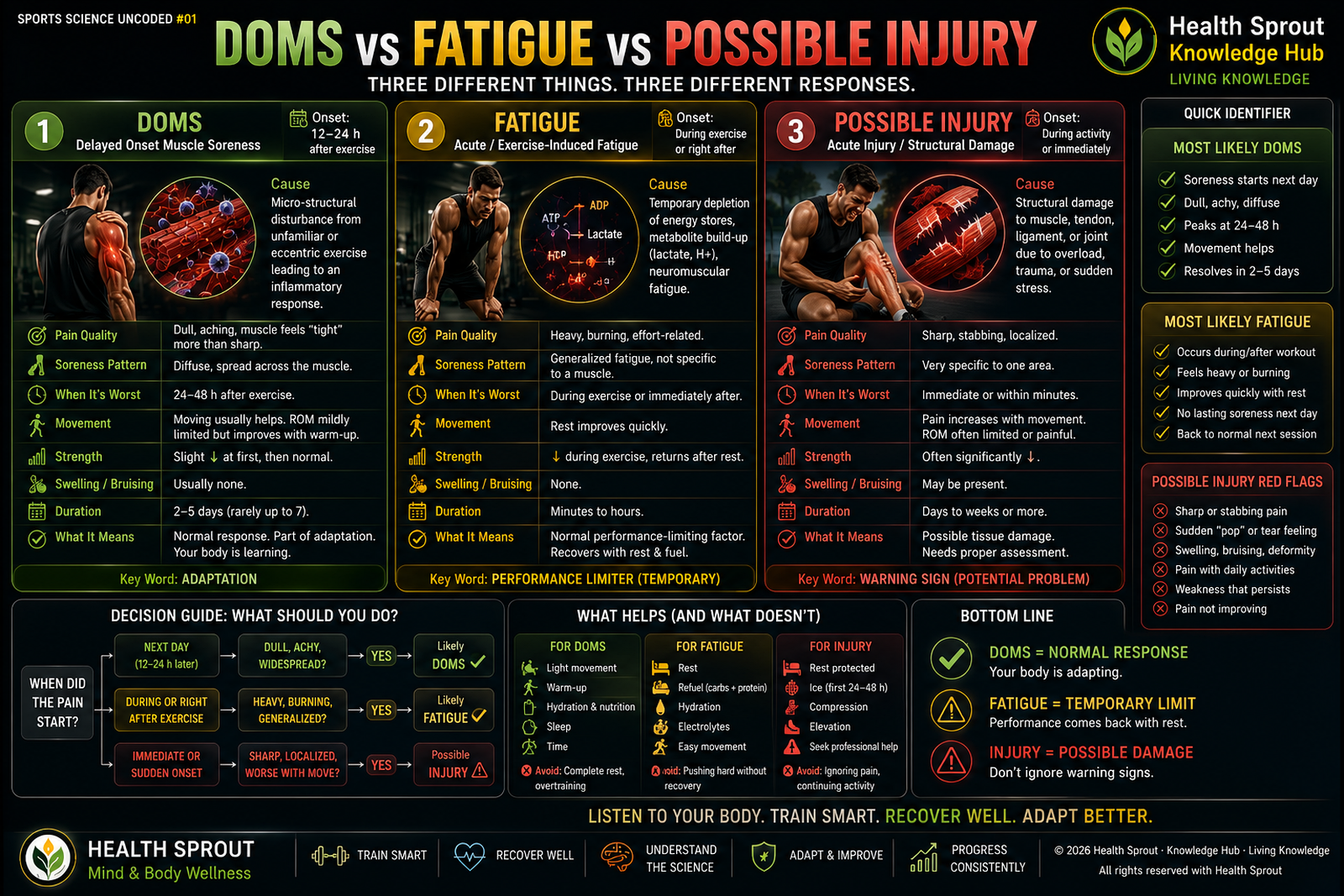
DOMS is different from the burning sensation during hard exercise, ordinary fatigue immediately after training, and pain from an acute injury. It usually emerges later, often after unfamiliar or strenuous exercise and especially after eccentric or lengthening actions.
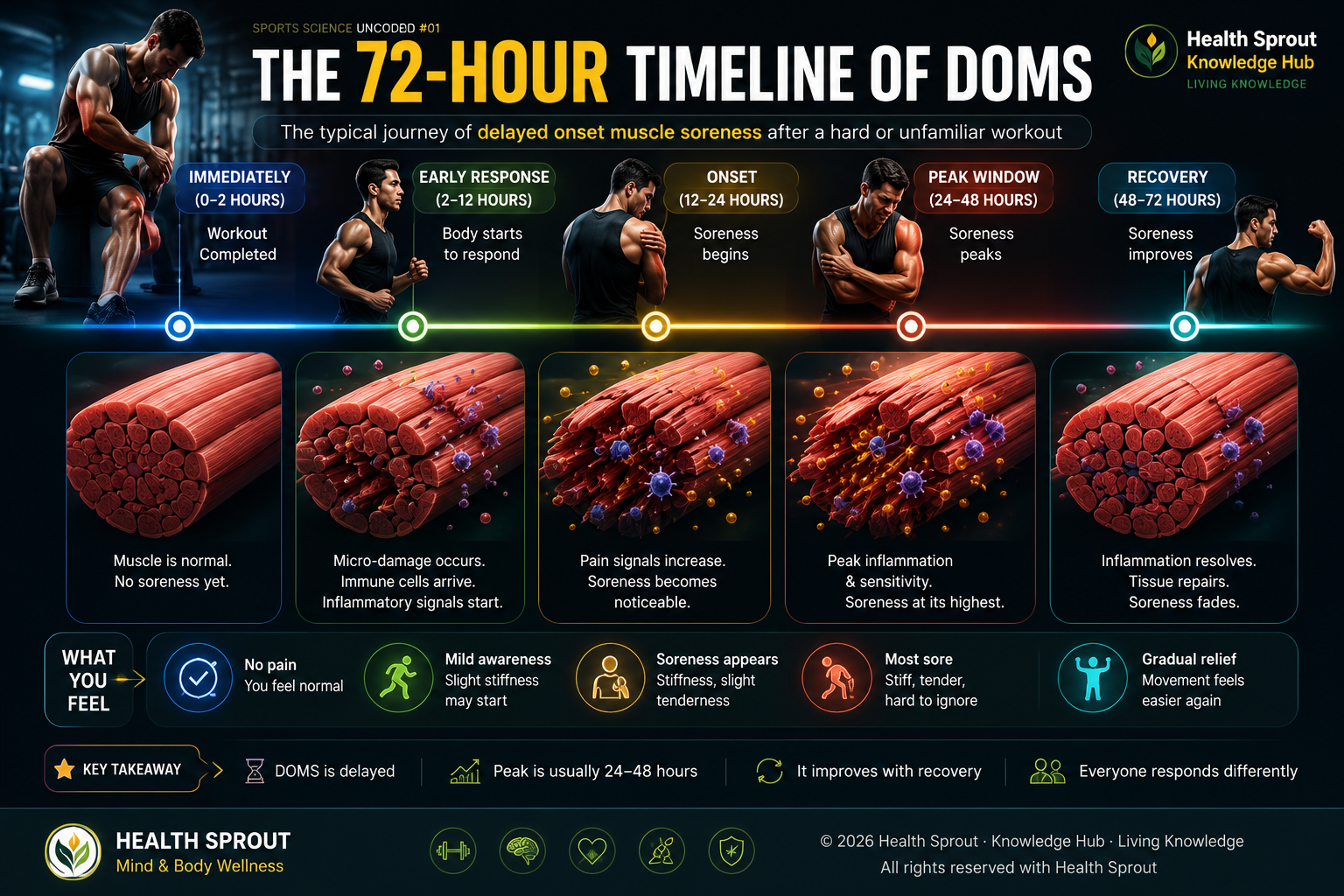
What this visual shows
The timeline makes the central puzzle visible: the exercise happens first, while the most noticeable soreness often appears hours later. The exact onset and peak vary by person, exercise and measurement, so the curve is intentionally conceptual.
Not all post-exercise pain is the same
DOMS is a delayed soreness/tenderness phenomenon. It can include stiffness, movement-evoked discomfort, reduced range of motion and temporary reductions in force or performance. What matters first is the pattern: delayed, exercise-related, and often associated with unfamiliar or eccentric-biased loading.
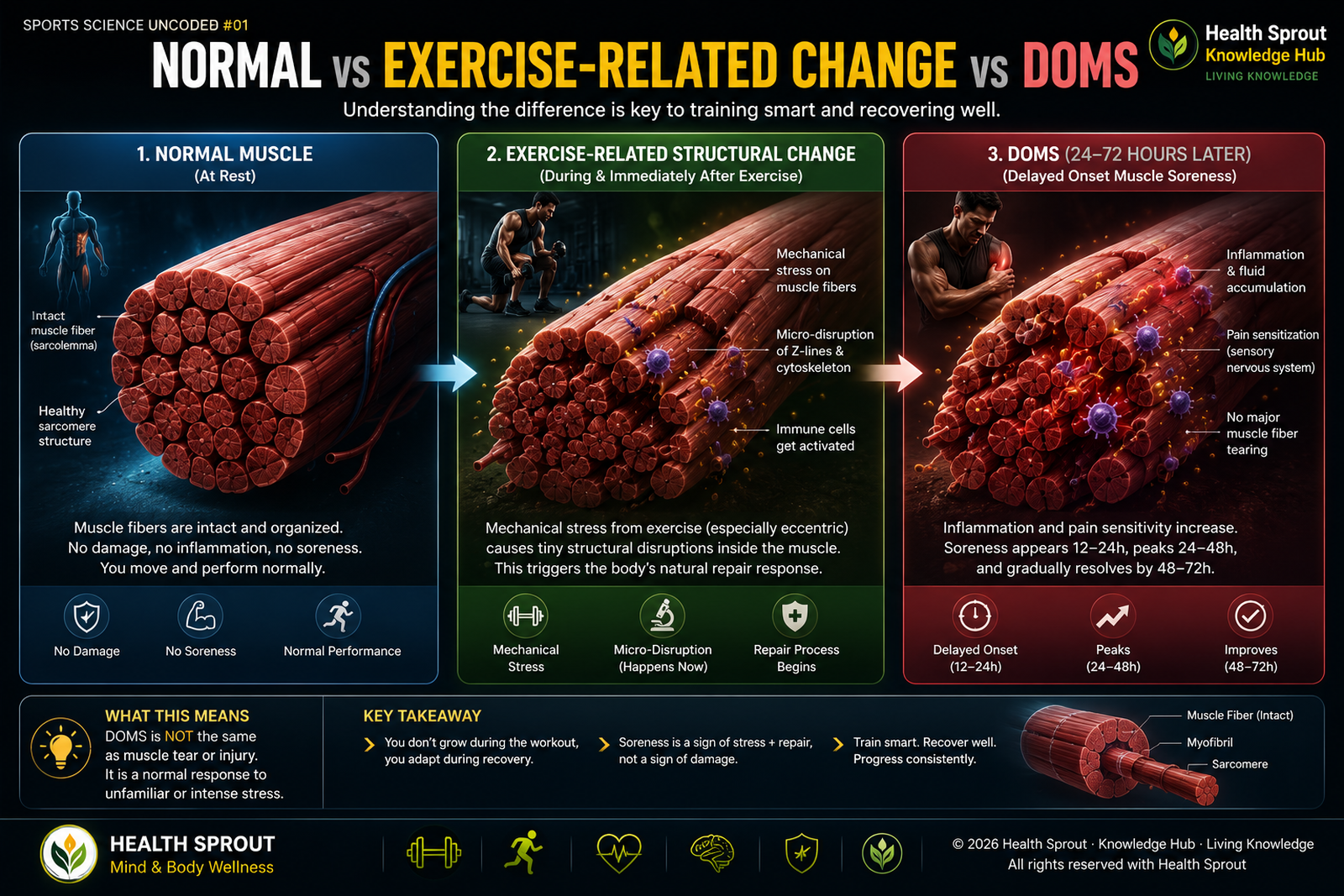
What this visual shows
The four-way comparison prevents the common mistake of calling every post-workout sensation “DOMS.” Timing, pain quality and function matter.
Why do eccentric exercises cause more soreness?
Eccentric actions occur when a muscle produces force while lengthening—for example, lowering a squat, lowering a dumbbell, or controlling a downhill run. Unaccustomed eccentric loading is a common trigger for DOMS because it can impose high mechanical strain on active muscle.
That does not mean eccentric training is harmful. Eccentric loading is a valuable part of strength, hypertrophy and athletic training. The important variables are dose, novelty, volume, range of motion and the athlete’s previous exposure.
What this visual shows
Each mini-scene shows the same principle: the muscle is producing force while its length increases. The image is about the mechanical condition that commonly precedes DOMS, not about an injury.

What actually happens between the workout and the soreness?
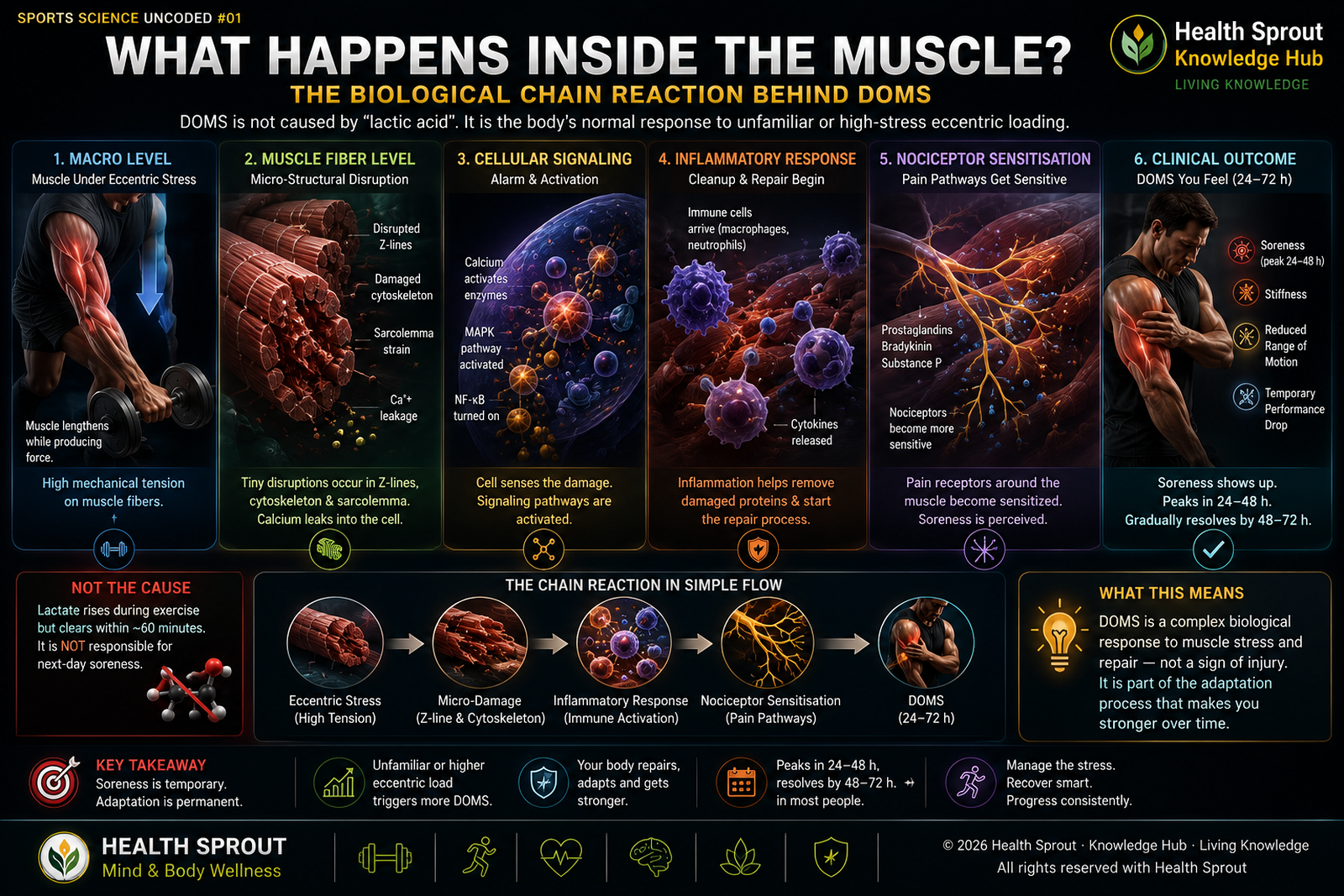
The popular “tiny tears cause pain” explanation is too simple. A better model follows several linked processes: mechanical loading and structural perturbation, local cellular signalling, immune/inflammatory responses, and sensitisation of sensory pathways.
What this visual shows
The pathway is deliberately layered. It starts with the mechanical event, moves through local cellular responses, and ends with sensitised sensory pathways that make movement or palpation feel painful or tender.
DOMS is not a direct readout of “muscle tearing”
Exercise can produce structural and functional disturbances in muscle, but soreness is a symptom outcome—not a direct visual meter of how much tissue has been torn. Creatine kinase (CK), strength loss, range-of-motion change and other markers can behave differently over time.
That distinction matters because an article can accidentally turn an imperfect biological association into a false one-to-one rule: “more damage = more soreness.” The evidence is more complicated.
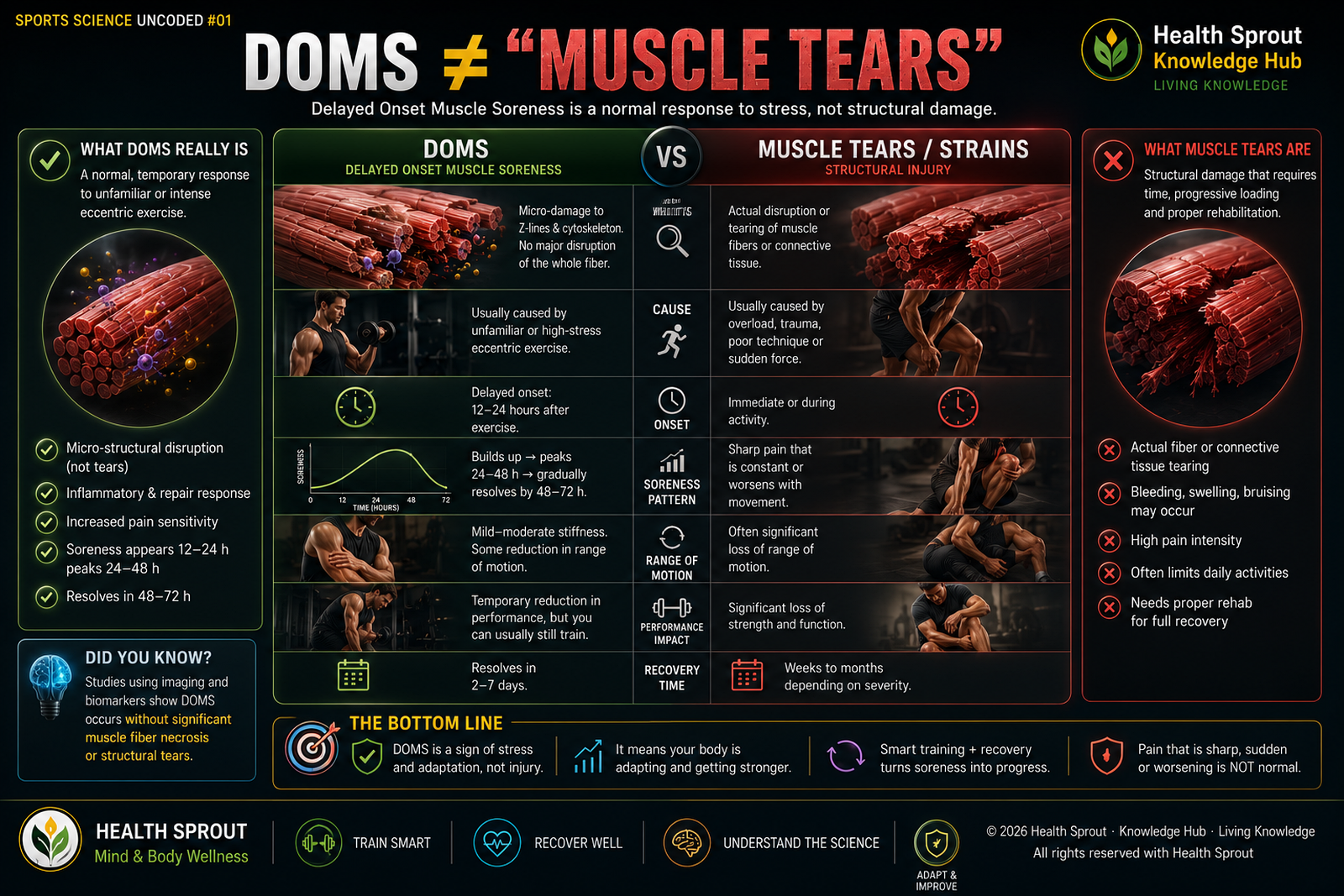
What this visual shows
The left side shows the popular shortcut. The right side shows the more defensible model: mechanical and structural changes are one part of a wider network that can lead to sensory sensitisation and soreness.
So… is “lactic acid” causing your soreness?
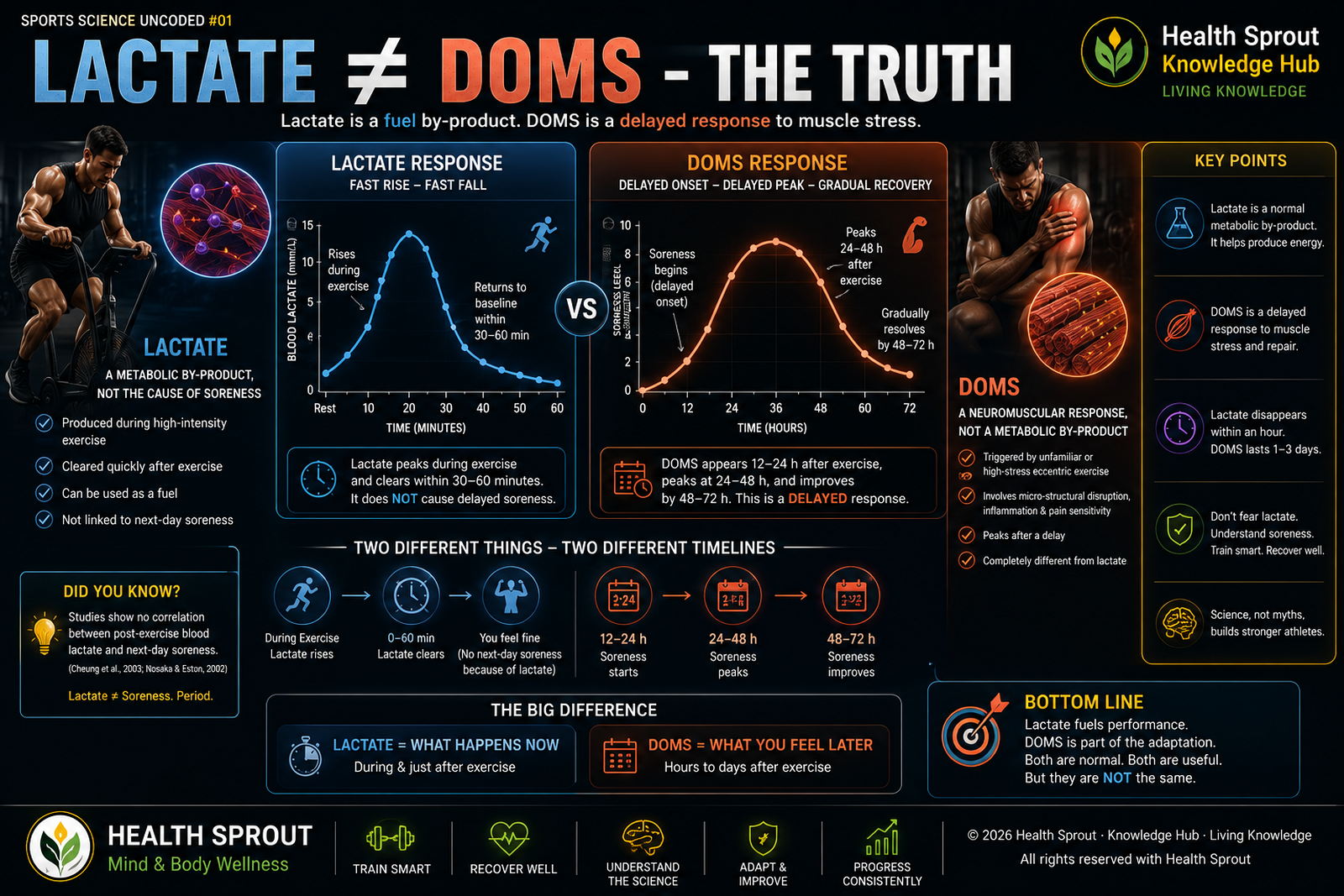
No—not as the explanation for next-day DOMS. Lactate is a normal metabolic intermediate produced during glycolytic metabolism and its concentration changes rapidly around exercise. DOMS has a much later time course.
A classic controlled study measured blood lactic acid and soreness after level and downhill running. Lactic acid rose during level running without significant later soreness, whereas downhill running produced delayed soreness without the same lactate elevation. The study concluded that lactic acid was not related to exercise-induced DOMS.
What this visual shows
The two curves have deliberately different timing. Lactate changes quickly around the exercise bout; DOMS develops later. The graph is conceptual rather than a numerical dataset.
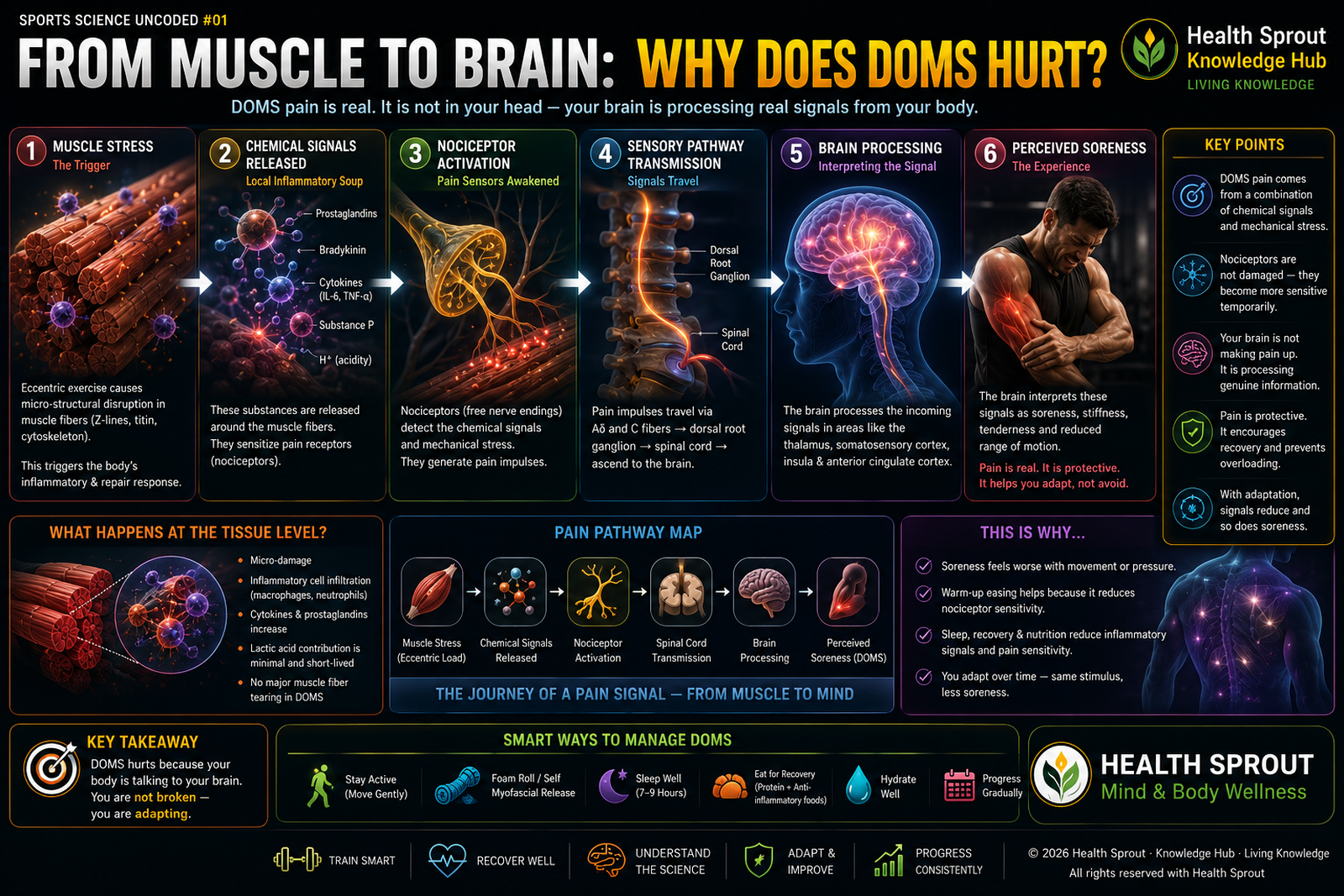
Why does it hurt?
DOMS is not just a local “damage signal.” Mechanical and chemical changes around the exercised tissue can alter the sensitivity of pain-sensing pathways. The result is increased sensitivity to pressure or movement and a greater perception of soreness.
This is why pain should not be treated as a simple one-number readout of microscopic tissue disruption. Sensory processing and context are part of the physiology of pain.
What this visual shows
The image follows the information flow from the exercised muscle to the nociceptor and onward through sensory processing to perceived soreness. The mechanism is shown as a pathway, not as a single “damage switch.”
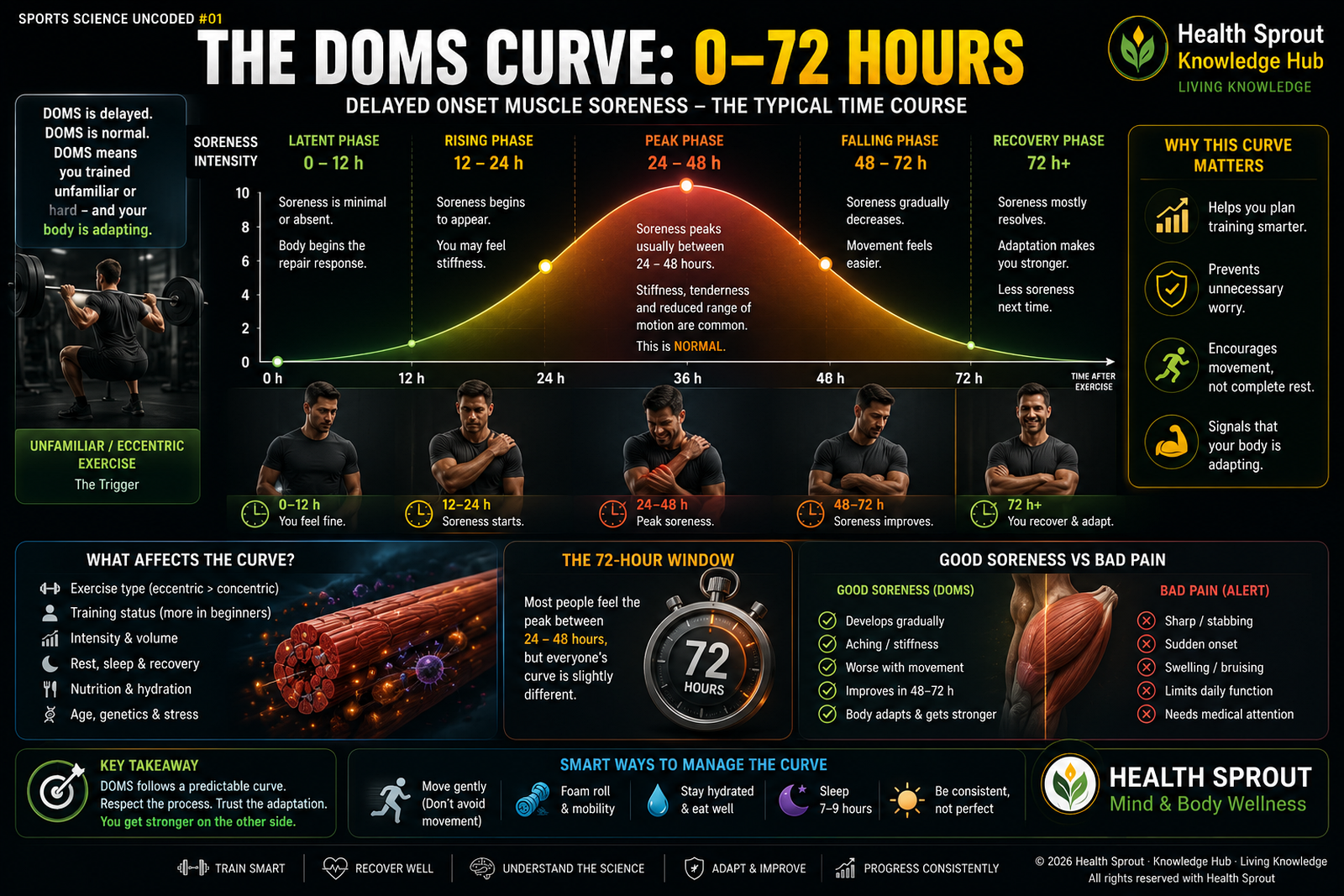
Why does DOMS often peak 24–72 hours later?
The delayed pattern is one of the defining features of DOMS. Soreness may be mild immediately after the workout, then build over the following hours before gradually resolving. The exact peak varies between protocols and individuals.
What this visual shows
This curve is conceptual. It shows the typical idea of delayed onset, a broad peak window and subsequent recovery—not a universal timetable for every athlete.
Soreness can change performance too
DOMS can coexist with temporary reductions in strength, jump performance, movement range and other performance measures after demanding exercise. A 2024 systematic review and meta-analysis found that resistance and plyometric protocols used to induce exercise-induced muscle damage significantly impaired sprint and change-of-direction performance up to 72 hours and were accompanied by higher DOMS and CK and lower countermovement-jump performance.
Why does the same workout hurt less next time?
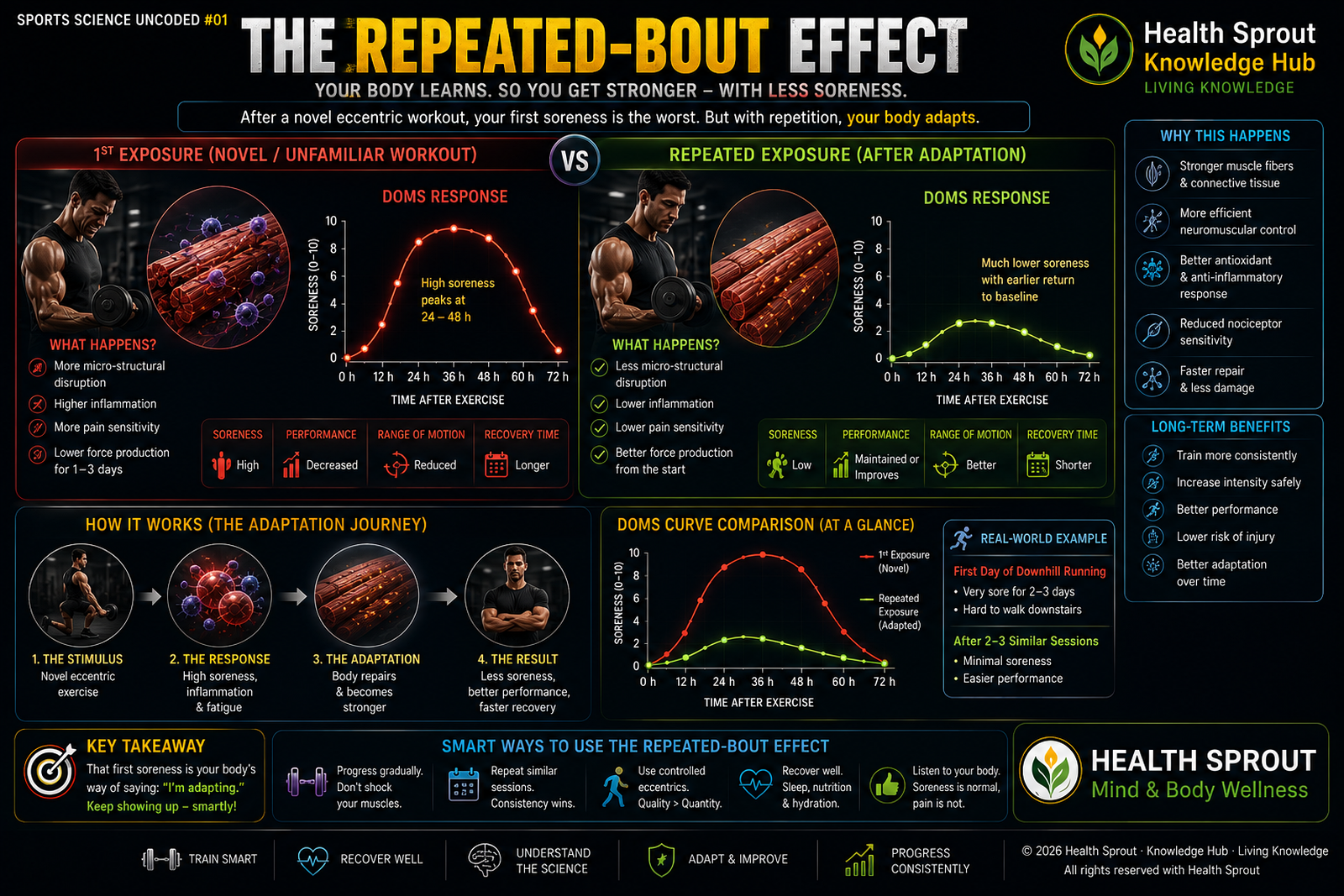
The repeated-bout effect is one of the clearest examples of adaptation in exercise science. After a damaging or novel bout, a similar later bout generally produces less soreness and smaller changes in several indirect markers and performance measures.
A 2023 systematic review and meta-analysis of multiarticular exercise compared first and second bouts and found lower DOMS and CK after the second bout, with smaller strength and jump-performance decrements at 24–48 hours.
What this visual shows
The second curve sits lower and resolves sooner. The graphic is a relative comparison, not a claim that every person has the same percentage reduction in soreness.
DOMS is not a score for how good your workout was
Soreness can occur after an effective workout, but it can also occur after a novel workout that is poorly matched to the athlete’s current conditioning. Conversely, an effective training session can produce little soreness once the athlete is adapted.
What this visual shows
The two lanes are intentionally separate. DOMS is a symptom outcome. Adaptation is the change in capacity—strength, hypertrophy, endurance, skill or power. They can overlap, but one is not a direct measurement of the other.
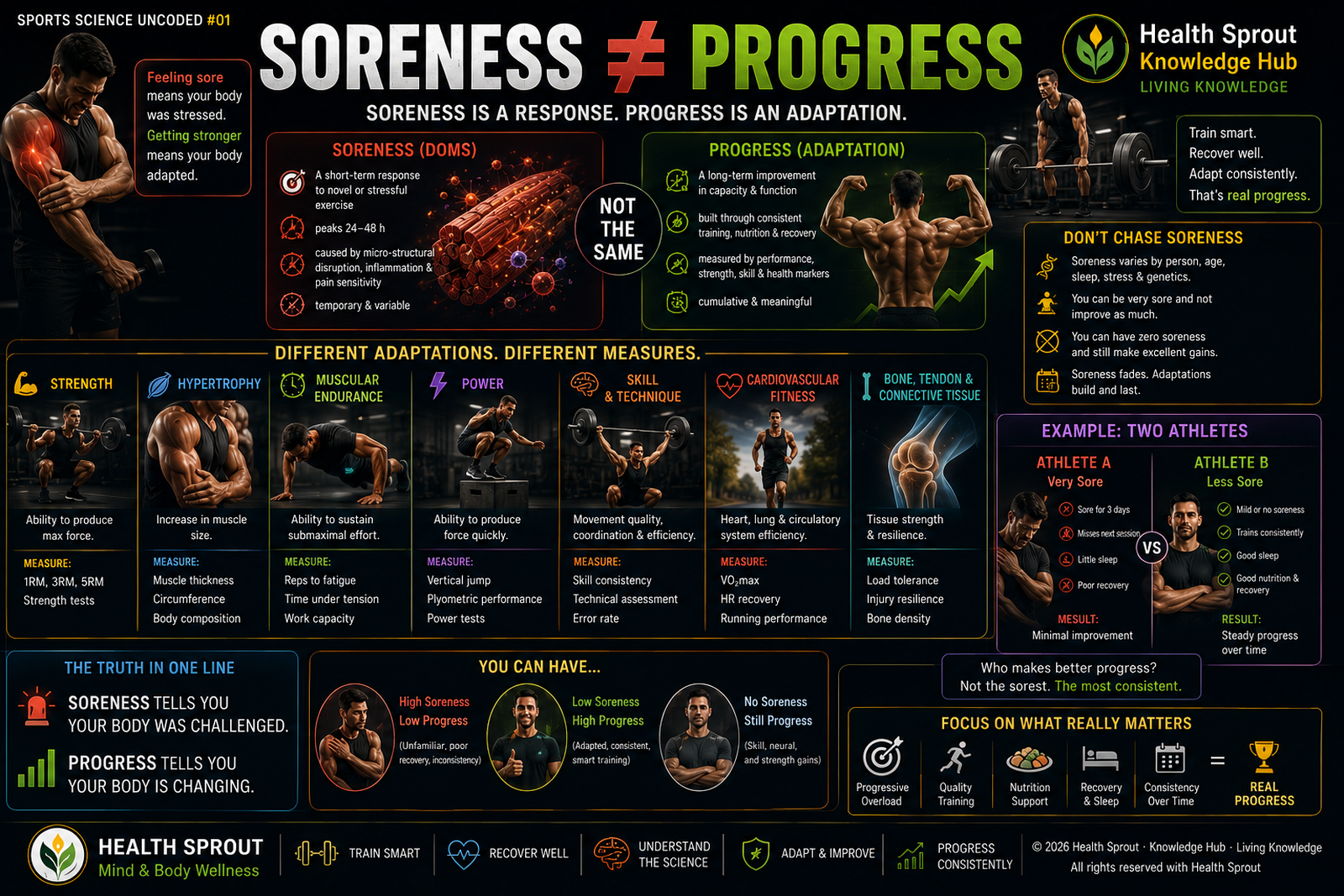
What can actually help DOMS?
Recovery interventions should be presented as an evidence map, not a list of “hacks.” Time, adequate recovery opportunity, sleep and sensible training management sit underneath every modality. Massage, foam rolling, cold-water immersion and other strategies may help some outcomes, but the evidence varies by intervention, dose and population.
What this visual shows
The ladder is intentionally cautious: some approaches have more supportive evidence for symptom relief, while others remain mixed or limited. None should be presented as a universal cure.
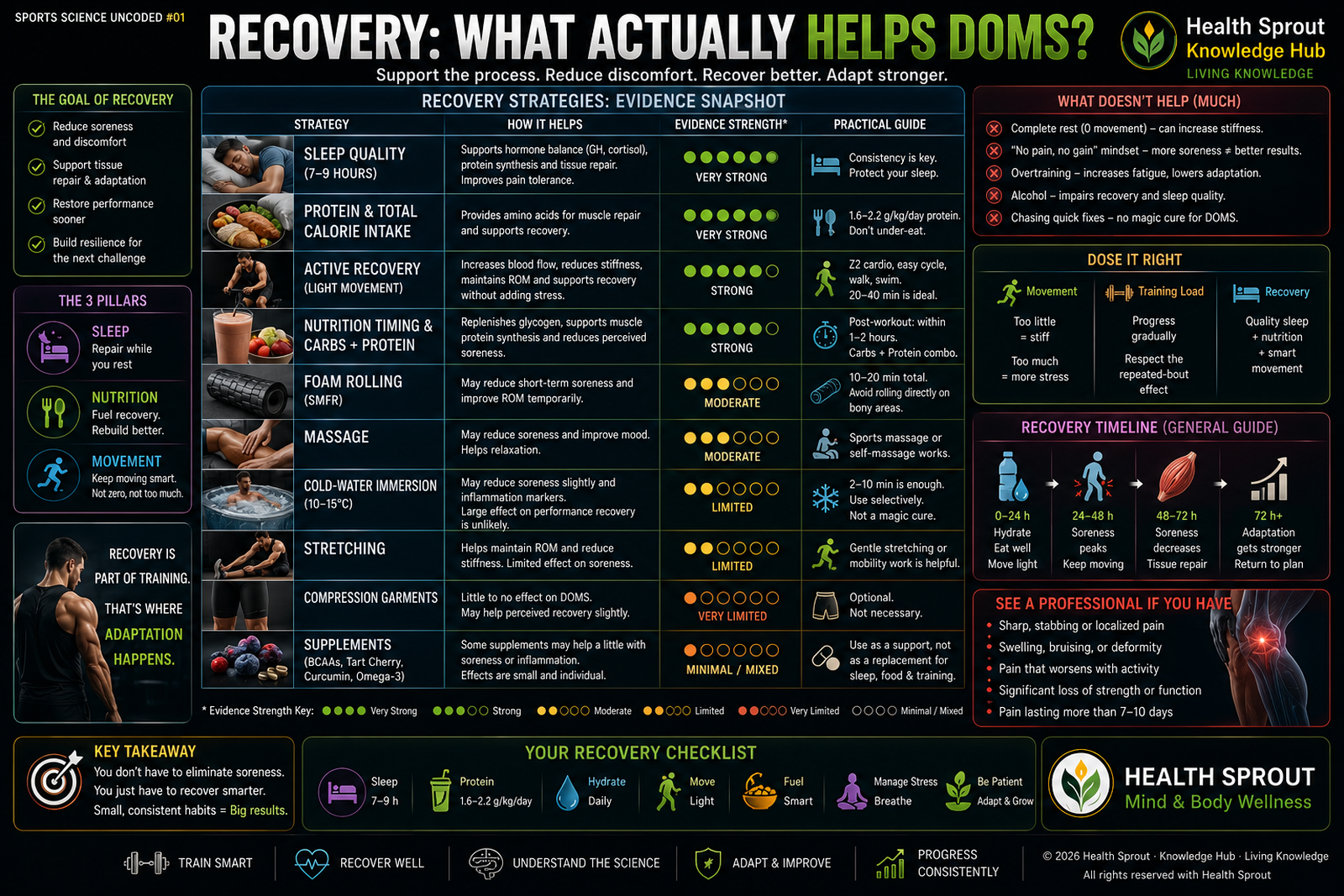
Should you train when you are sore?
The answer depends on the pattern, severity, exercise selection and movement quality. Mild, familiar soreness does not automatically mean “stop,” while severe, focal, sudden or function-limiting pain should not automatically be labelled DOMS.
What this visual shows
The flow-chart gives a conservative training decision: mild soreness may be compatible with modified or normal training if movement quality is good; greater soreness may call for reduced load or a different exercise; unusual or sharp pain should trigger reassessment.
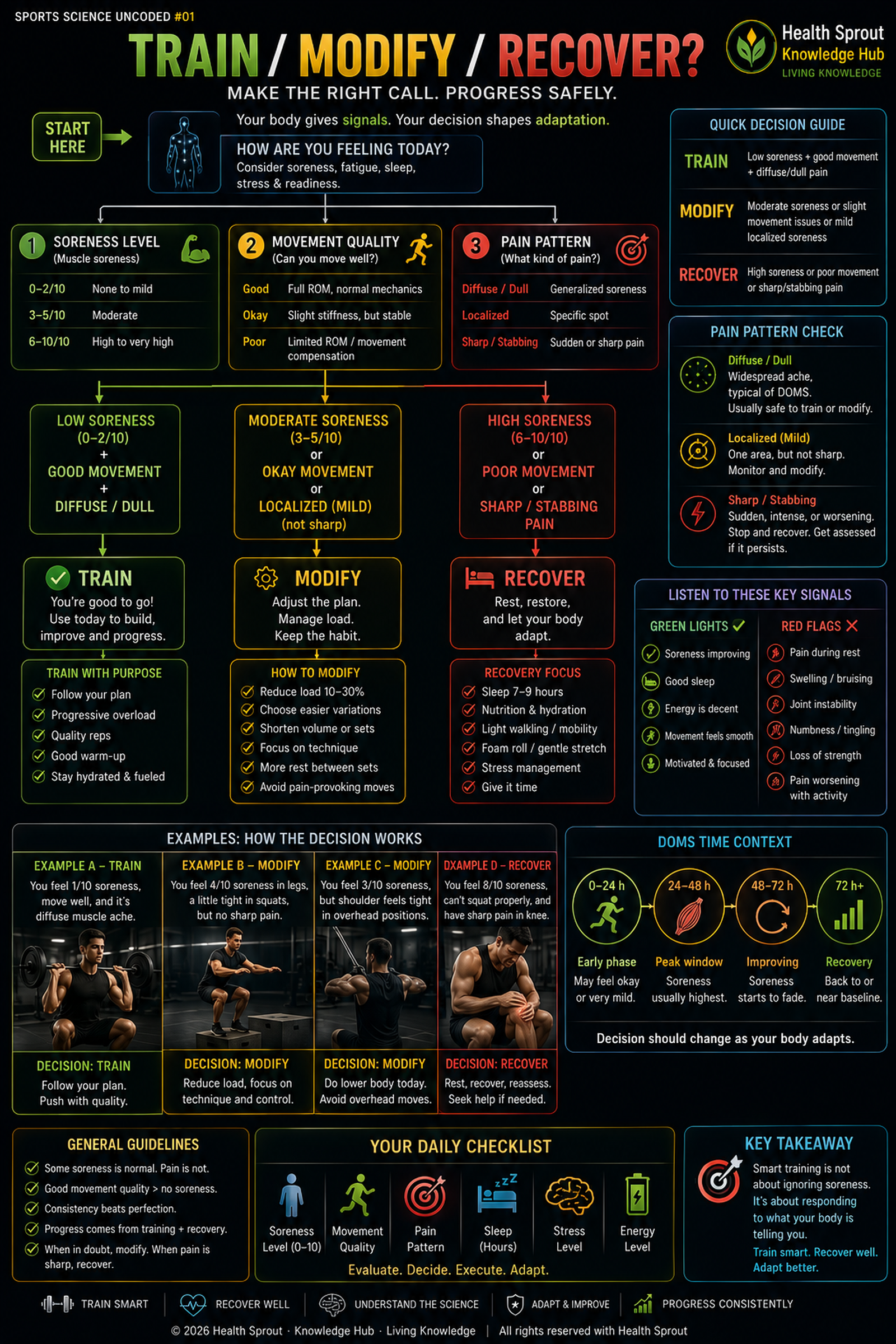
Programming to manage DOMS
For coaches, the goal is not to eliminate all soreness. The goal is to manage training stress so that novel loading, eccentric exposure, volume progression and recovery demands do not unnecessarily compromise the next training session or competition.
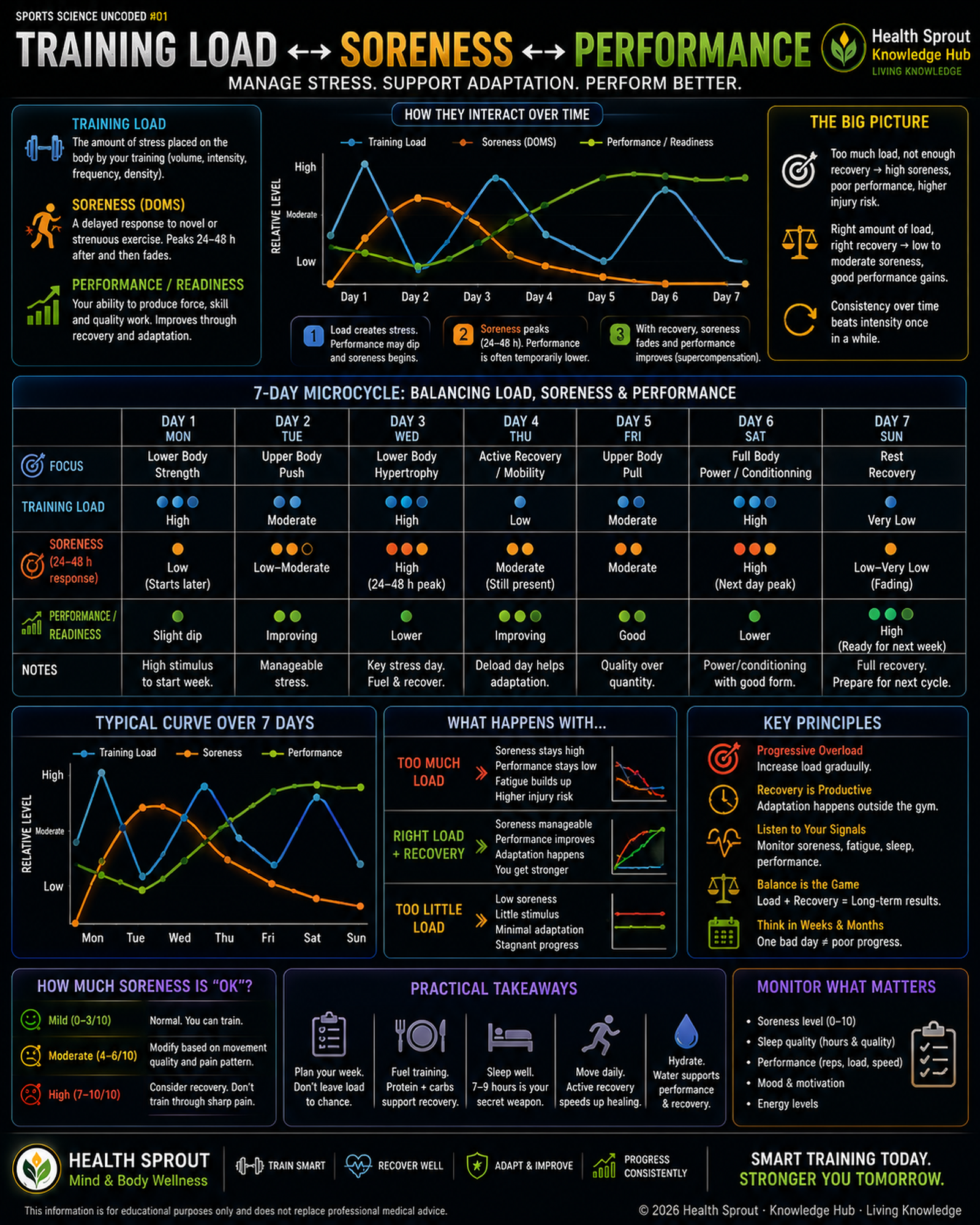
A simple microcycle can illustrate the interaction: a high-load or novel session may raise soreness for several days, so exercise selection and load distribution matter when performance has to be available again quickly.
What this visual shows
The bars represent conceptual training load while the lines represent conceptual soreness and readiness. It is a teaching model for scheduling, not a universal prescription for how an athlete should train.
What should you remember?
Core takeaways
- DOMS is delayed.
- Novel/eccentric loading commonly triggers it.
- It is multifactorial—not simply “muscle tears.”
- Lactate is not the cause of next-day soreness.
Training takeaway
- Repeated exposure can reduce soreness.
- DOMS is not a score for workout quality.
- Recovery strategies have different evidence strength.
- Severe or unusual pain deserves reassessment.
Frequently Asked Questions
Does DOMS mean I had a good workout? +
Not necessarily. DOMS tells you that your muscles experienced a delayed soreness response; it does not grade the quality of the workout. A productive session can create strength, hypertrophy, endurance, skill or power adaptations with little soreness.
Is lactic acid responsible for next-day soreness? +
No. Lactate rises and falls on a much faster timescale than DOMS. The delayed soreness that becomes noticeable many hours later cannot be explained by lactate remaining in the muscle.
Why are eccentric exercises more likely to cause DOMS? +
Eccentric actions produce high force while the muscle is lengthening. When that loading is unfamiliar or suddenly increased, the mechanical stress and subsequent physiological response can be greater, making DOMS more likely.
Why does soreness often appear the next day? +
DOMS is a delayed response. The biological processes that follow the exercise stimulus develop over time, so the strongest soreness is often noticed later rather than during the workout itself.
Why do I get less sore after doing the same exercise again? +
This is the repeated-bout effect . After an initial exposure, neuromuscular and tissue systems adapt, so a similar second exposure often produces less soreness and less temporary performance disruption.
Can I train with DOMS? +
It depends on severity, movement quality and the pain pattern. Mild, diffuse soreness with good movement quality may allow normal or slightly modified training. Greater soreness, reduced movement quality or sharp/localised pain calls for more caution.
Does massage or foam rolling help? +
They may provide modest short-term relief for soreness or stiffness in some people. They are symptom-management tools rather than cures, and they do not replace sound training progression and recovery.
Why do elite athletes sometimes get less sore? +
Training history matters. Familiar movement patterns, repeated exposure, better load management and recovery habits can reduce the soreness response. Less soreness does not mean less training stimulus.
DOMS is a response to training — not a score for how good your workout was.
The full story runs from exercise load to mechanical and cellular response, sensory sensitisation, delayed soreness, temporary performance effects, recovery and adaptation. Once that pattern becomes familiar, the same stress often produces a smaller response.
Why This Matters
Delayed-onset muscle soreness is a normal response that can follow unfamiliar or demanding exercise, especially when muscles experience substantial eccentric loading. Soreness is useful context, but it is not a direct measure of training quality or muscle growth.
Myth Bust
Myth: The more DOMS you feel, the better the workout was.
Fact: Severe soreness is not a reliable score of workout effectiveness. Training quality and progressive adaptation matter more than maximising soreness.
Practical Application
After a hard or novel session, prioritise normal movement, adequate nutrition, hydration, sleep and sensible progression. Reduce training stress temporarily when soreness is severe enough to change movement quality or technique.
Quick Takeaways
- DOMS often appears hours after unfamiliar or strenuous exercise.
- Eccentric loading can contribute strongly to soreness.
- More soreness does not automatically mean more hypertrophy or fitness benefit.
Scientific Foundation
Direct links to current reviews, meta-analyses and foundational human studies used for this article.
- Wiecha et al., 2025 — Physical Therapies for DOMS: Umbrella and Mapping Systematic Review with Meta-meta-analysis.
- Doma et al., 2023 — Repeated-Bout Effect of Multiarticular Exercises: Systematic Review and Meta-Analyses.
- Harrison et al., 2024 — Effects of Exercise-Induced Muscle Damage on Sprint and Change-of-Direction Performance: Systematic Review and Meta-analysis.
- Mizumura & Taguchi, 2024 — Neurochemical Mechanism of Muscular Pain: Insight from DOMS.
- Schwane et al., 1983 — Is Lactic Acid Related to Delayed-Onset Muscle Soreness?
- Schwane et al., 1983 — Delayed-onset muscular soreness and plasma CPK/LDH after downhill running.
- 2024 — Foam rolling systematic review/meta-analysis.
- 2025 — Cold-water immersion network meta-analysis.