
The Quick Sprout
- Human evolution is a branching family history, not a straight ladder from an ape-like animal to modern humans.
- Humans and living chimpanzees or bonobos share an ancient common ancestor ; humans did not evolve from the apes living today.
- Fossils, archaeology and genetics together help reconstruct the complex history of the hominins that preceded and accompanied Homo sapiens.
How to use this: Read this box first for the core message, then continue into the full evidence-based explanation below.
Human Evolution Is Not a Straight Line
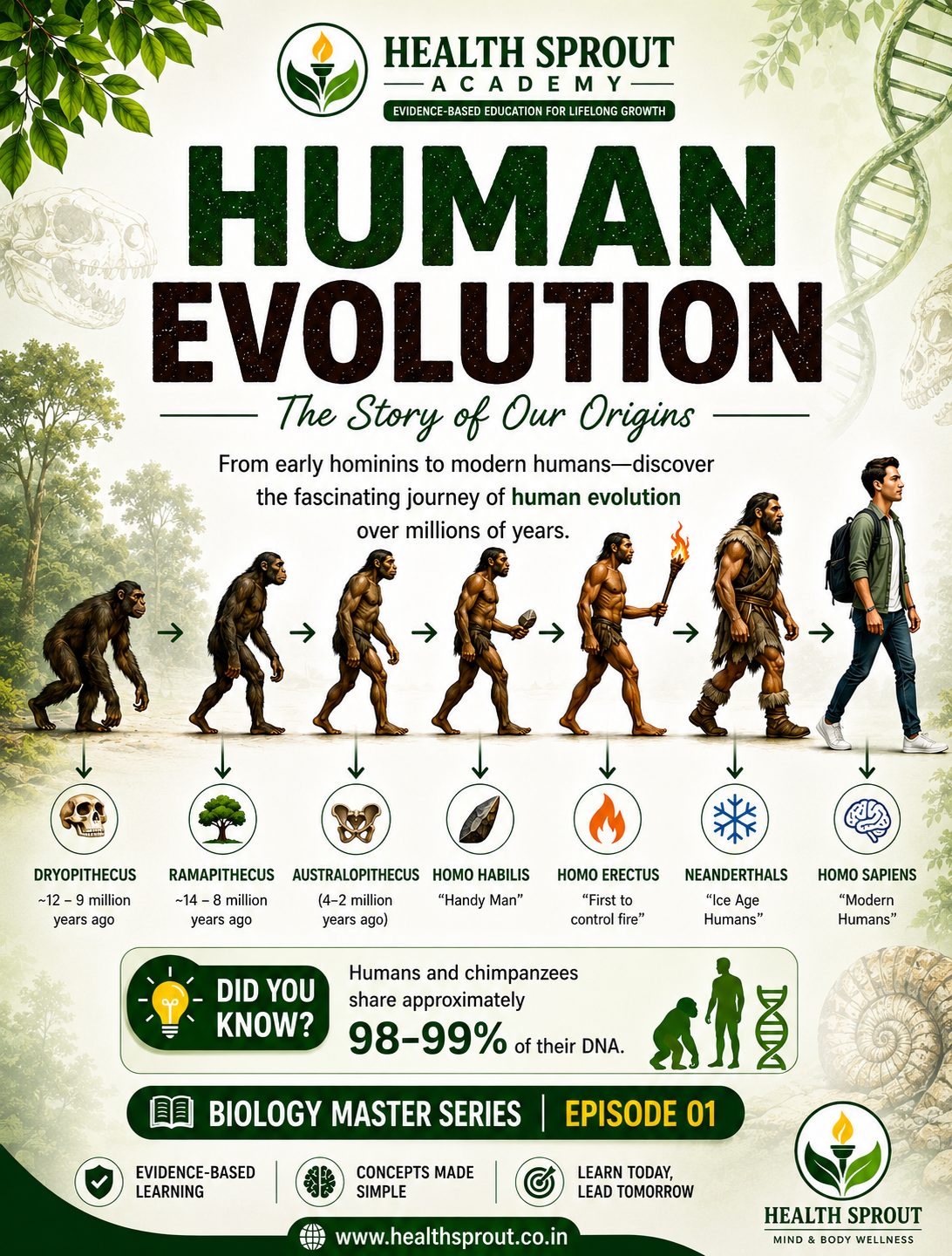
Human evolution is often shown as a familiar sequence: an ape-like figure gradually becomes an upright human and finally Homo sapiens . It is a memorable picture—but scientifically, it is incomplete. Human evolution is better understood as a branching family tree, with multiple hominin species living at different times and, in some periods, living alongside one another.
Humans are primates and members of the great-ape family. We did not evolve from any ape living today. Instead, humans and chimpanzees/bonobos share an ancient common ancestor. Fossils, archaeology and genetics together provide evidence for the evolutionary history of our lineage.
What Does “Human Evolution” Actually Mean?
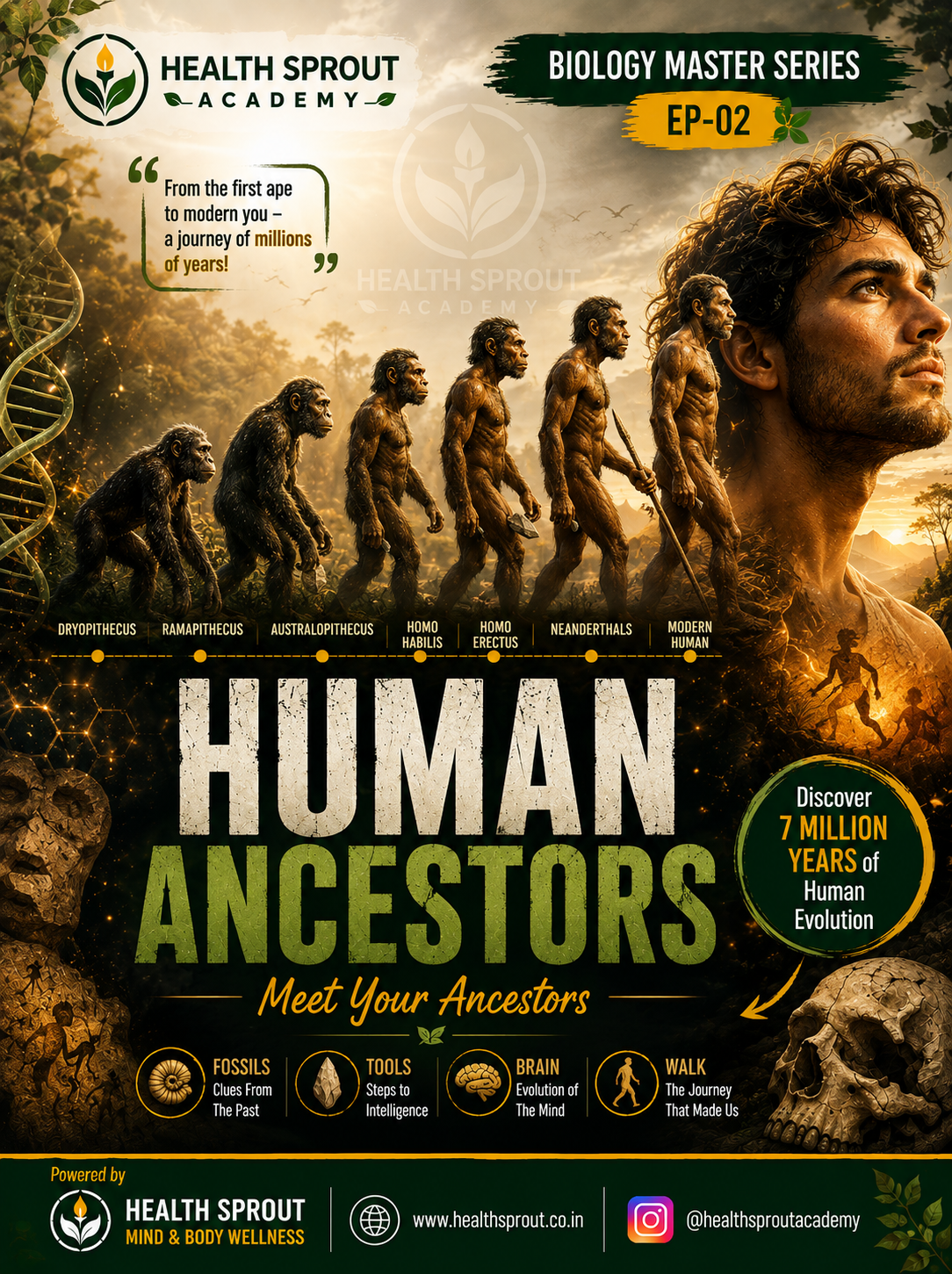
In biology, evolution describes changes in populations across generations. Human evolution therefore refers to the long evolutionary history that produced our species, Homo sapiens , as well as the many extinct relatives and close branches that existed before and alongside us.
The fossil record extends across more than six million years of human evolutionary history. Researchers also use stone tools, footprints, ancient DNA and other archaeological evidence to reconstruct how early humans lived and how different populations were related.
A Few Important Chapters in the Story
1. Early Apes and Hominin Evolution
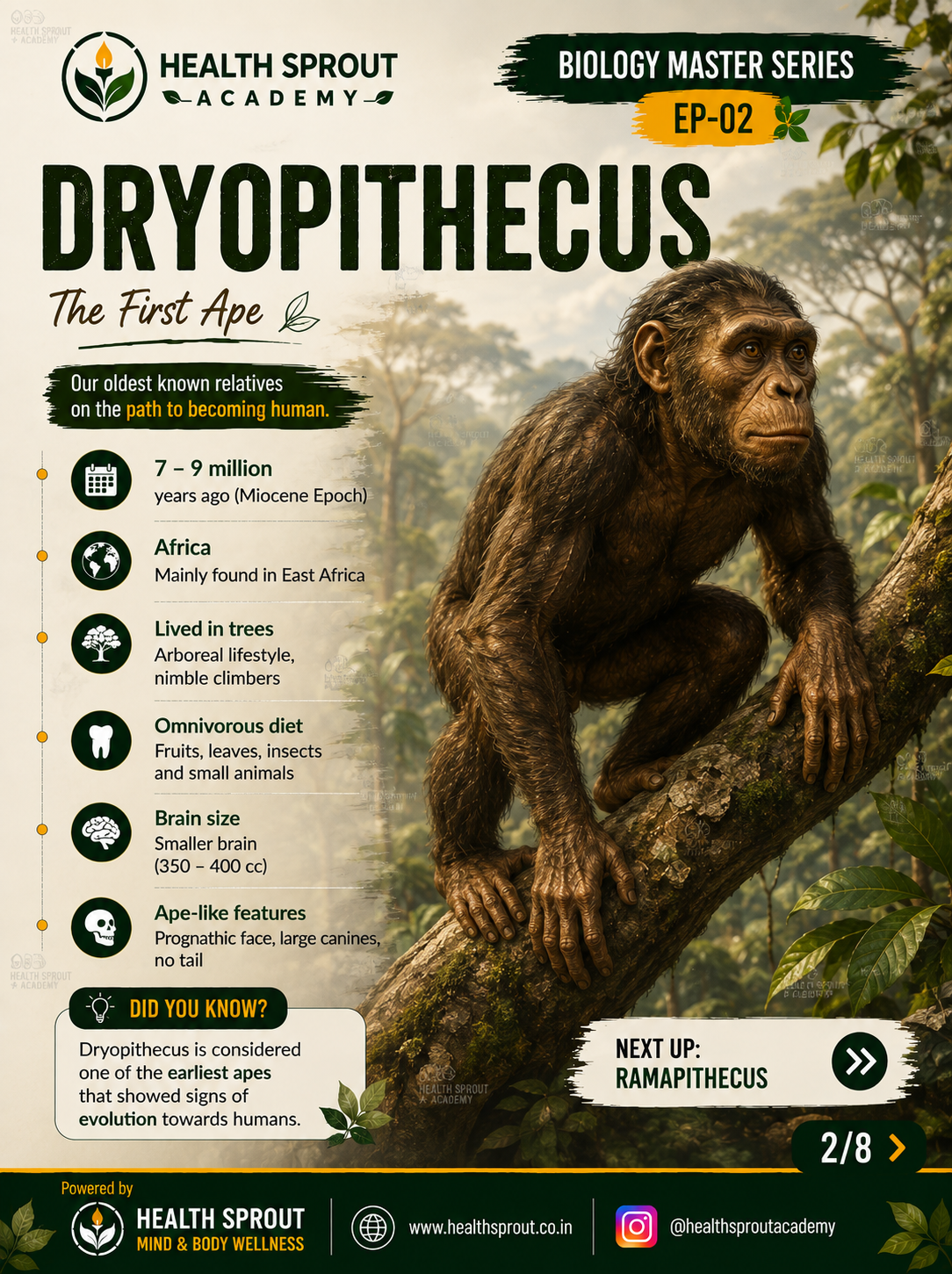
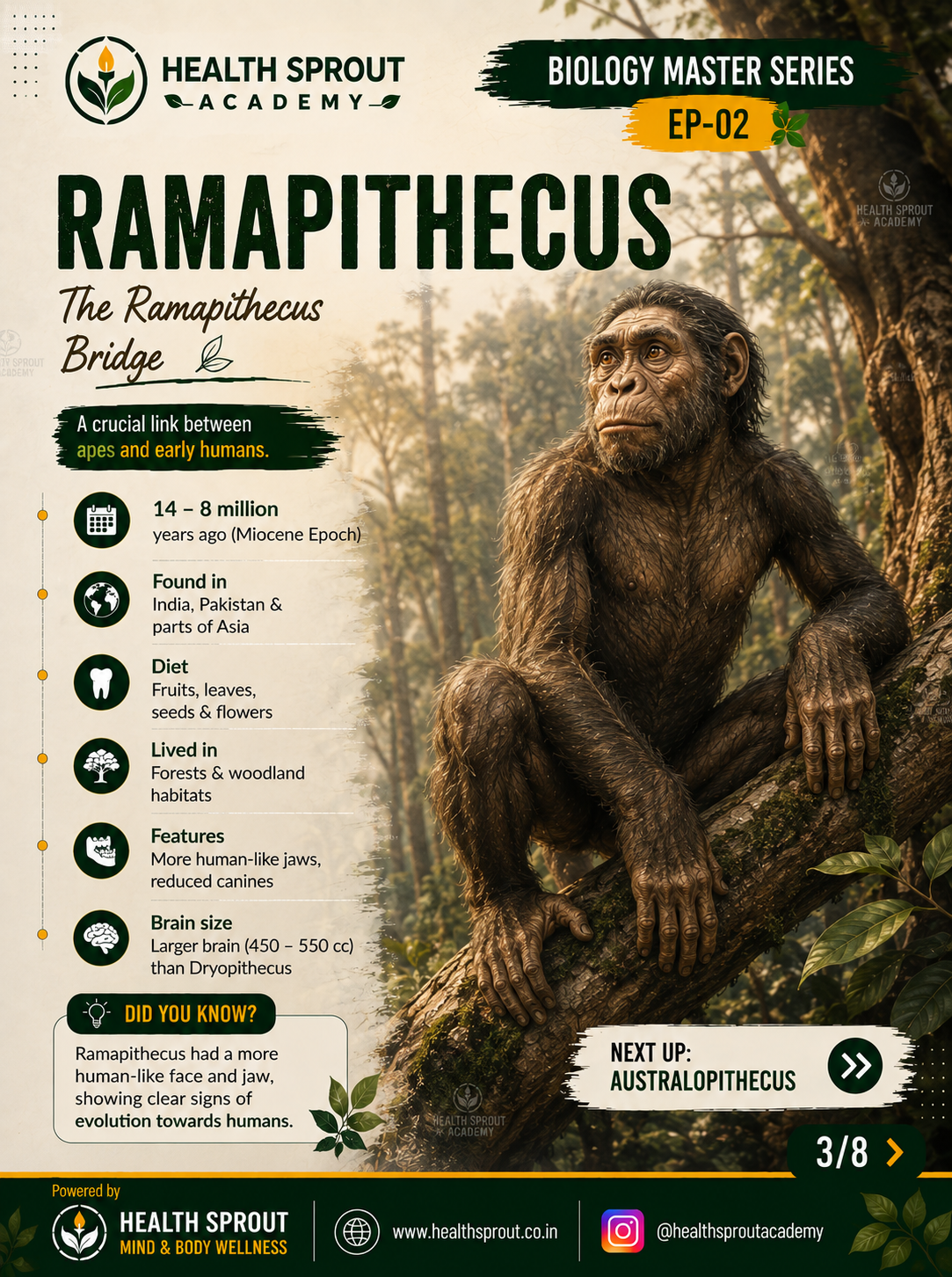
Miocene apes such as Dryopithecus are important for understanding the broader evolution of apes, but they should not be presented as confirmed direct steps in a simple human lineage. Likewise, the historical use of the name Ramapithecus as a supposed human ancestor is outdated. Modern evolutionary interpretation is much more cautious.
This is one reason a human-evolution poster should be treated as a learning map rather than a literal ladder of direct ancestors.
2. Australopithecus — Walking on Two Legs
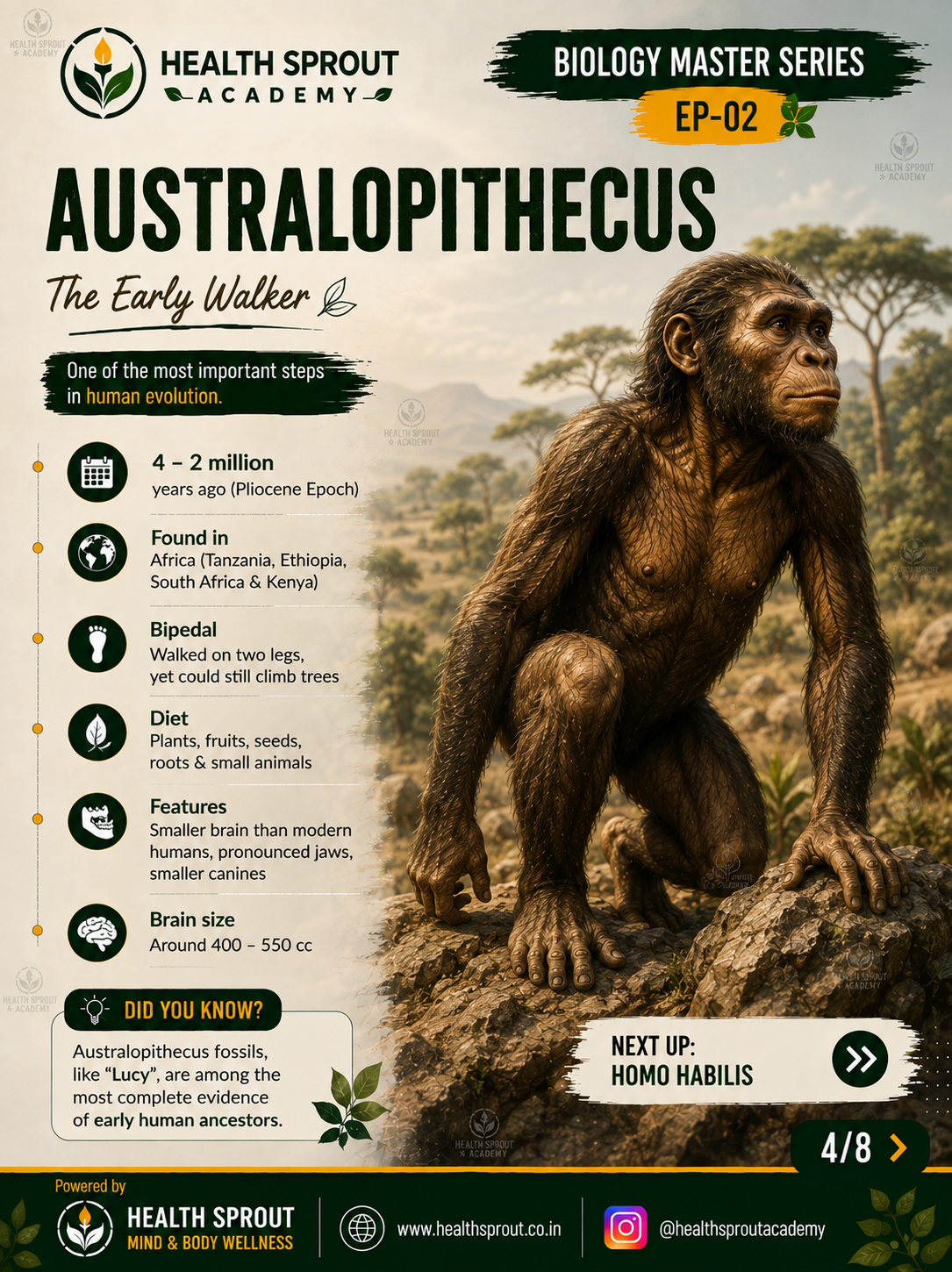
Australopithecus is a genus of early hominins that lived in Africa millions of years ago. Different species lived at different times, so a single date range should not be treated as if it describes the entire genus. Australopithecus fossils are important because they show a combination of human-like and ape-like characteristics and provide major evidence for early hominin evolution.
Importantly, Australopithecus does not mean “the one species that became modern humans.” Human evolution involved multiple populations and branches.
3. Homo habilis — The “Handy Man”
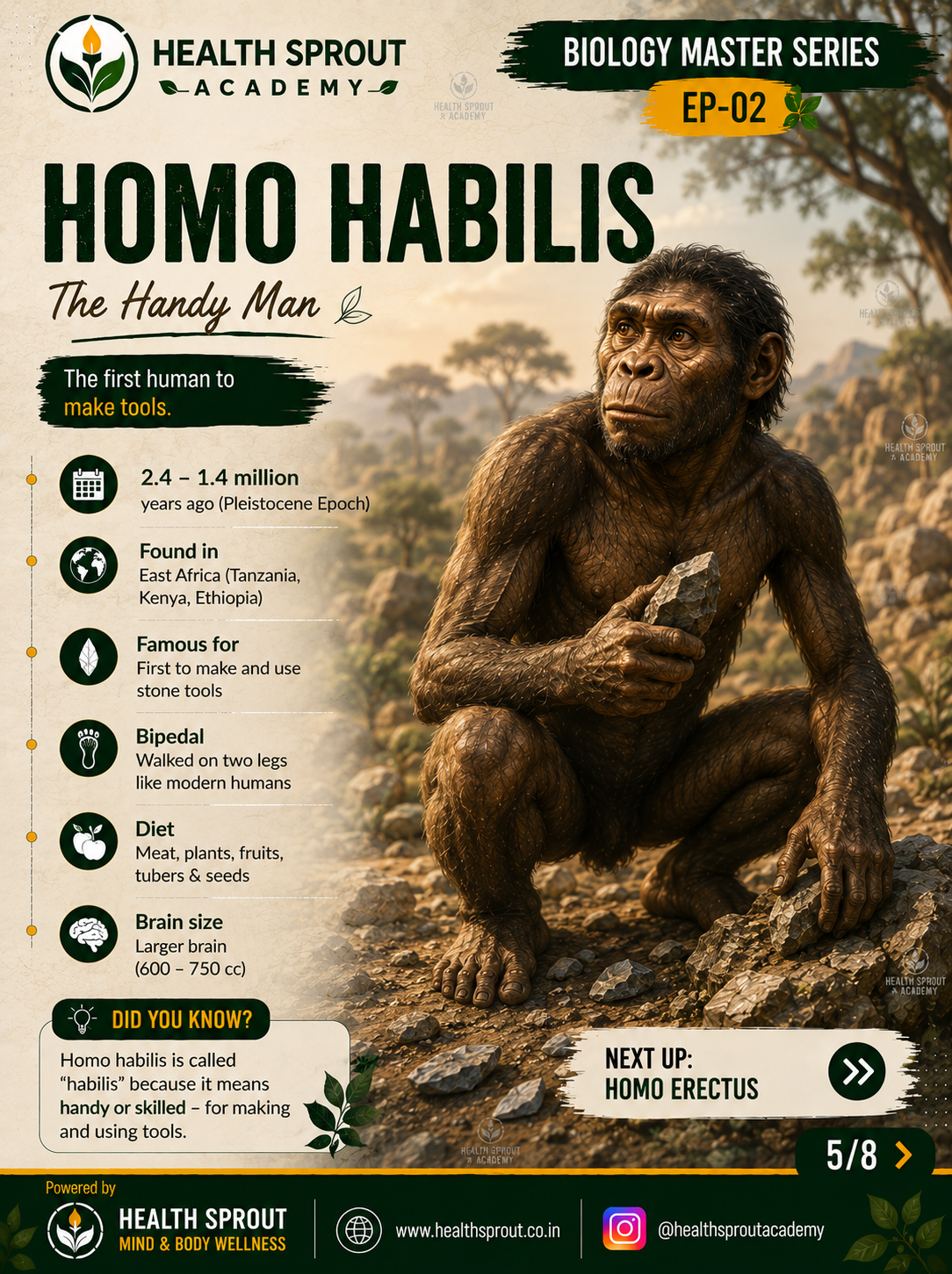
Homo habilis lived roughly 2.4 to 1.4 million years ago according to the Smithsonian Human Origins Program. The species name is commonly translated as “handy man,” reflecting the historical association with early stone-tool manufacture.
4. Homo erectus — A Major Expansion
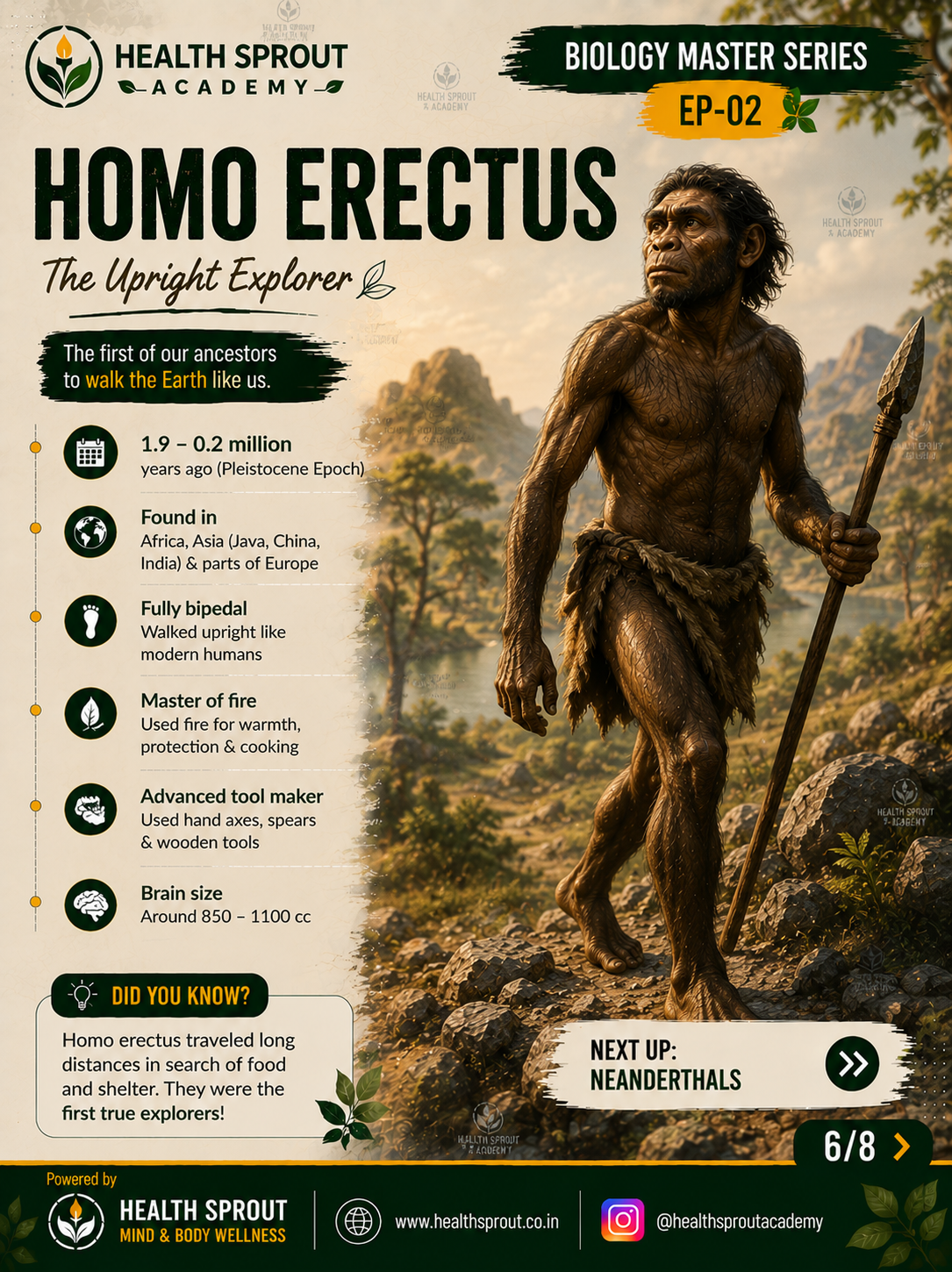
Homo erectus represents one of the major chapters in early human evolution. Smithsonian dates the species broadly from about 1.89 million to 110,000 years ago and notes its wide geographic distribution across Africa and Asia.
Homo erectus is associated with major changes in body proportions, locomotion and stone-tool technology. It is also associated with some of the earliest evidence of hearths. However, it is too strong to call Homo erectus definitively “the first human to control fire.” The archaeological record does not allow such a simple claim.
5. Neanderthals — A Related Human Lineage

Neanderthals were not simply a stage through which modern humans passed. They were a closely related human lineage that evolved on a separate branch of the human family tree. Fossil and genetic evidence shows that Neanderthals and modern humans shared a common ancestor and later interbred.
Neanderthals were capable of sophisticated behaviours including tool use, controlled fire, shelter construction and hunting. Their bodies also show adaptations to cold environments.
6. Homo sapiens — Our Species

Every living human belongs to the species Homo sapiens . Evidence indicates that our species evolved in Africa about 300,000 years ago.
Modern humans eventually spread across the world and developed diverse technologies, social systems, symbolic behaviours and cultural traditions. But becoming Homo sapiens was not the endpoint of a simple march toward “perfection.” Evolution has no predetermined finish line.
What About the 98–99% DNA Similarity With Chimpanzees?
You may have heard that humans and chimpanzees share about 98–99% of their DNA. The figure is useful for communicating how closely related our genomes are, but it needs context.
Different methods of genome comparison can produce different percentages because researchers must decide which sequences can be aligned and how insertions, deletions, duplicated regions and other structural differences are counted. Therefore, it is better to say that humans and chimpanzees are extremely closely related living primates and that the often-cited ~98.8% figure refers to a particular sequence-comparison approach—not that every part of the two complete genomes is literally 98–99% identical.
Why Scientists Do Not Draw Human Evolution as a Ladder
- Several hominin species existed at the same time.
- Different branches of the human family tree could coexist for long periods.
- Some lineages became extinct without leaving direct descendants.
- Neanderthals and modern humans represent distinct branches, yet they also interbred.
- The fossil record is incomplete, so relationships are revised when new evidence appears.
- Evolution is branching and population-based, not a progression from “primitive” to “advanced.”
Human evolution is a branching story—not a march from ape to human.
Every fossil, stone tool and DNA sequence adds another piece to that story. The more evidence scientists discover, the more detailed our picture becomes. That is what makes human evolution such a fascinating field of biology: the story is not finished.
Frequently Asked Questions
Did humans evolve from chimpanzees?
No. Humans and chimpanzees are living members of different evolutionary branches. We share a common ancestor in the deeper past; modern chimpanzees are not our ancestors.
Is human evolution a straight line?
No. The evidence is better represented as a branching family tree. Multiple hominin species existed at different times, and some lived alongside one another.
Were Neanderthals simply an earlier stage of modern humans?
No. Neanderthals were a distinct branch of the human family tree. Fossil and genetic evidence shows that Neanderthals and modern humans shared ancestry and later interbred.
Was Homo erectus definitely the first human to control fire?
That wording is too absolute. Homo erectus is associated with some early evidence of hearths and fire use, but the archaeological record does not establish it as the definitive first species to control fire.
Does “98–99% DNA similarity” mean every part of the human and chimpanzee genomes is 98–99% identical?
No. Frequently cited values depend on the genome-comparison method and on which sequences can be aligned. The figure should therefore be presented with methodological context.

Why This Matters
Human evolution is best understood as a population process shaped by variation, inheritance, natural selection, migration and changes in environment. Fossils and genetics provide complementary evidence rather than a single linear story from one “ape” into a modern human.
Myth Bust
Myth: Humans evolved directly from the chimpanzees alive today.
Fact: Humans and living chimpanzees share an older common ancestor. Both lineages changed over time after their evolutionary split.
Practical Application
When reading a human-evolution claim, ask what kind of evidence supports it: fossil anatomy, comparative genetics, archaeological context or a combination. This helps distinguish strong evidence from oversimplified “missing link” narratives.
Quick Takeaways
- Evolution occurs in populations across generations.
- Fossil evidence and genetic evidence answer different but connected questions.
- Human evolution is branching and complex rather than a simple ladder.
References & Further Reading
- Smithsonian Human Origins Program — Human Evolution Evidence
- Smithsonian — Homo habilis
- Smithsonian — Homo erectus
- Smithsonian — Homo neanderthalensis
- Smithsonian — Homo sapiens
- Smithsonian — Ancient DNA and Neanderthals
- Nature — Human/chimpanzee genome comparison
- Genome comparison details — chimpanzee and human genome similarity context