The Quick Sprout
- The 7-Color Plate is a Health Sprout visual cue for noticing food variety —not a prescription to eat seven colours every day.
- The scientific goal is dietary diversity : different foods can contribute different nutrients and bioactive components .
- Healthy eating still depends on adequacy, balance, moderation and overall dietary pattern; colour is a memorable reminder, not a validated classification.
How to use this: Read this box first for the core message, then continue into the full evidence-based explanation below.
Is Your Plate Too Boring?
We often think about healthy eating by asking whether a particular food is “healthy” or “unhealthy.” But there is another useful question: How much variety is actually on your plate?
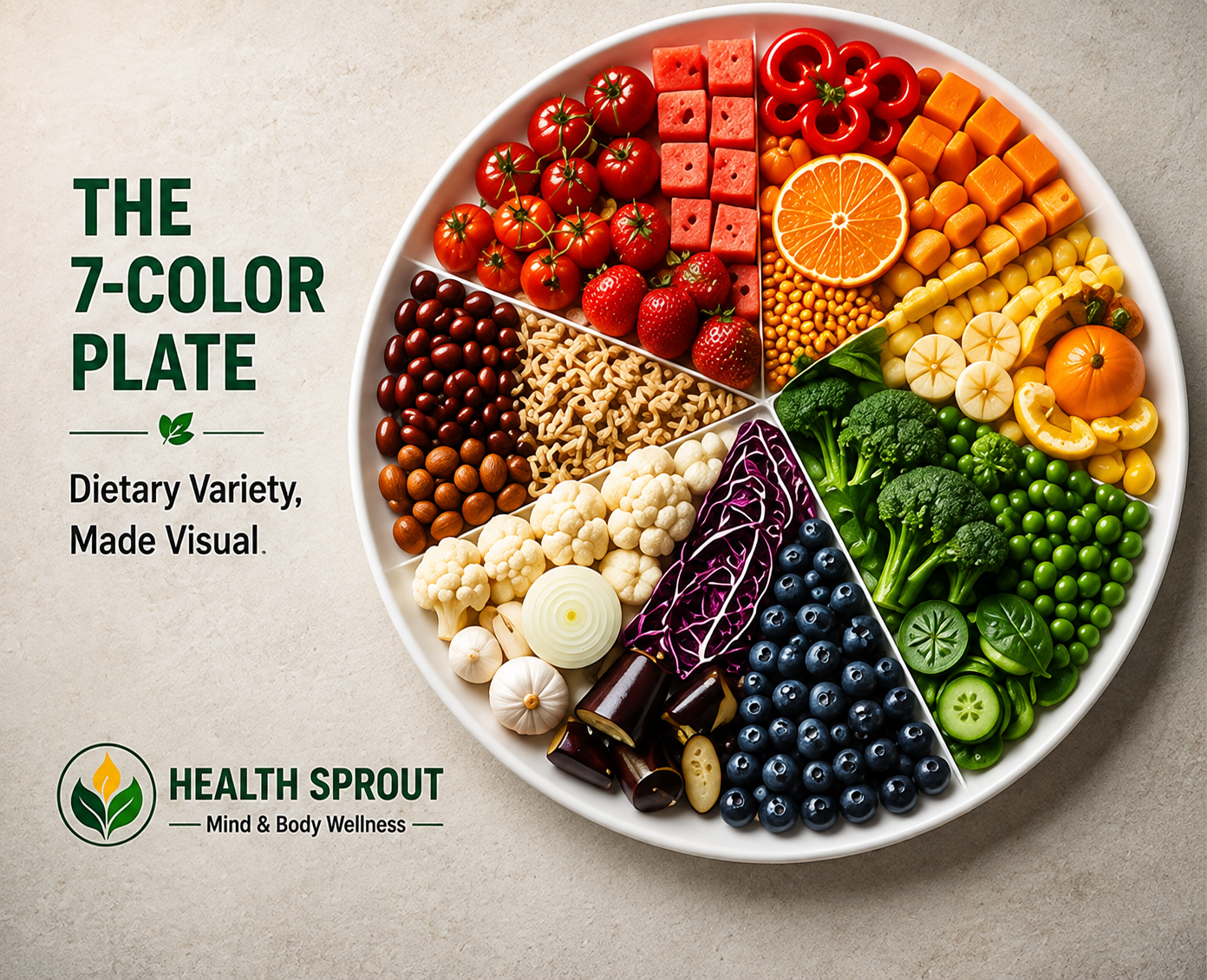
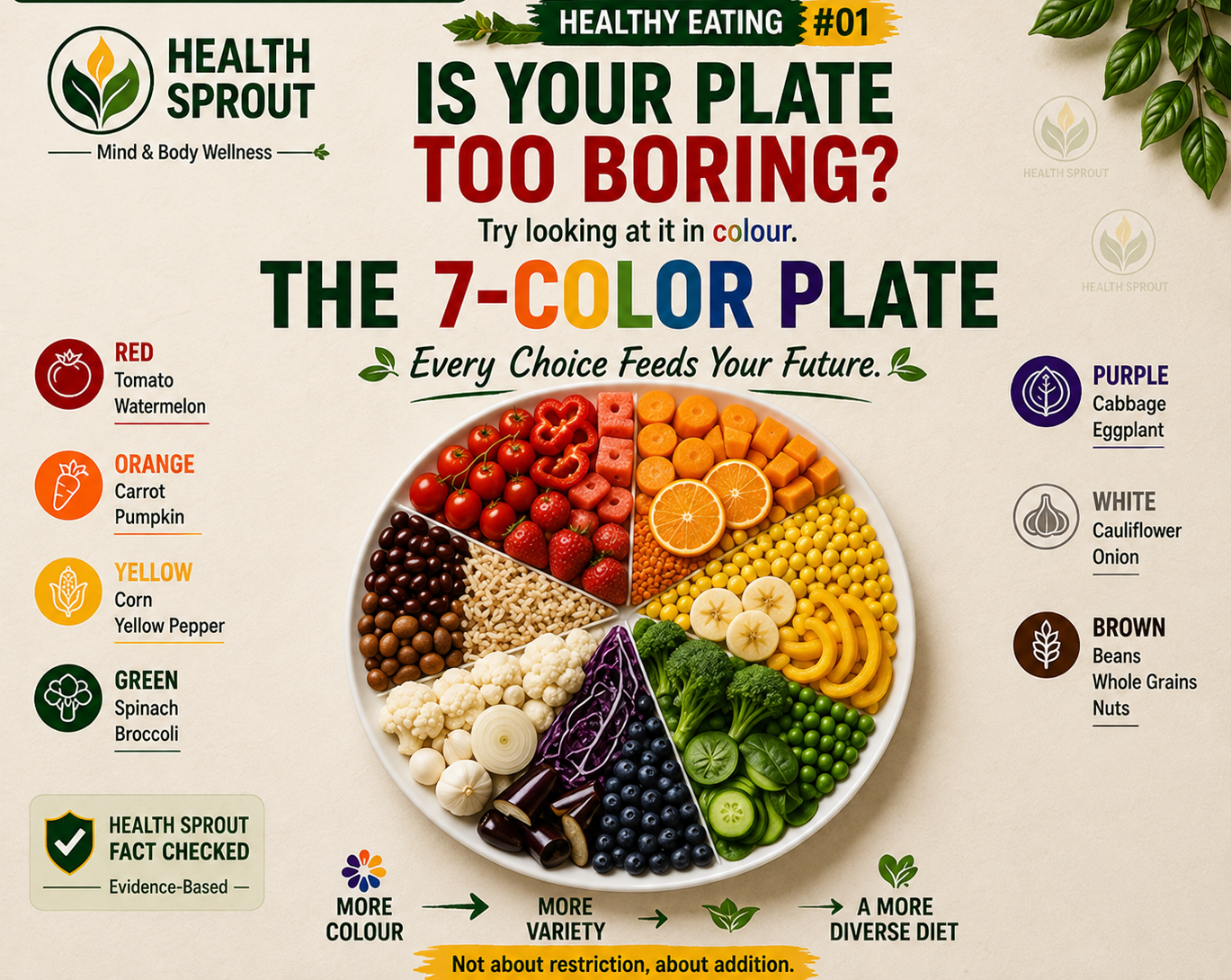
The 7-Color Plate is a simple Health Sprout educational visual designed to help people notice variety in the foods they eat. It is not a prescription to eat seven colours every day. Instead, colour acts as a memorable reminder to look beyond individual foods and think about the overall diversity of the diet.
What Does a Healthy Diet Actually Mean?
A healthy diet is not defined by one food, one nutrient, or one visual checklist. A useful framework considers four broad principles: adequacy, balance, moderation and diversity.
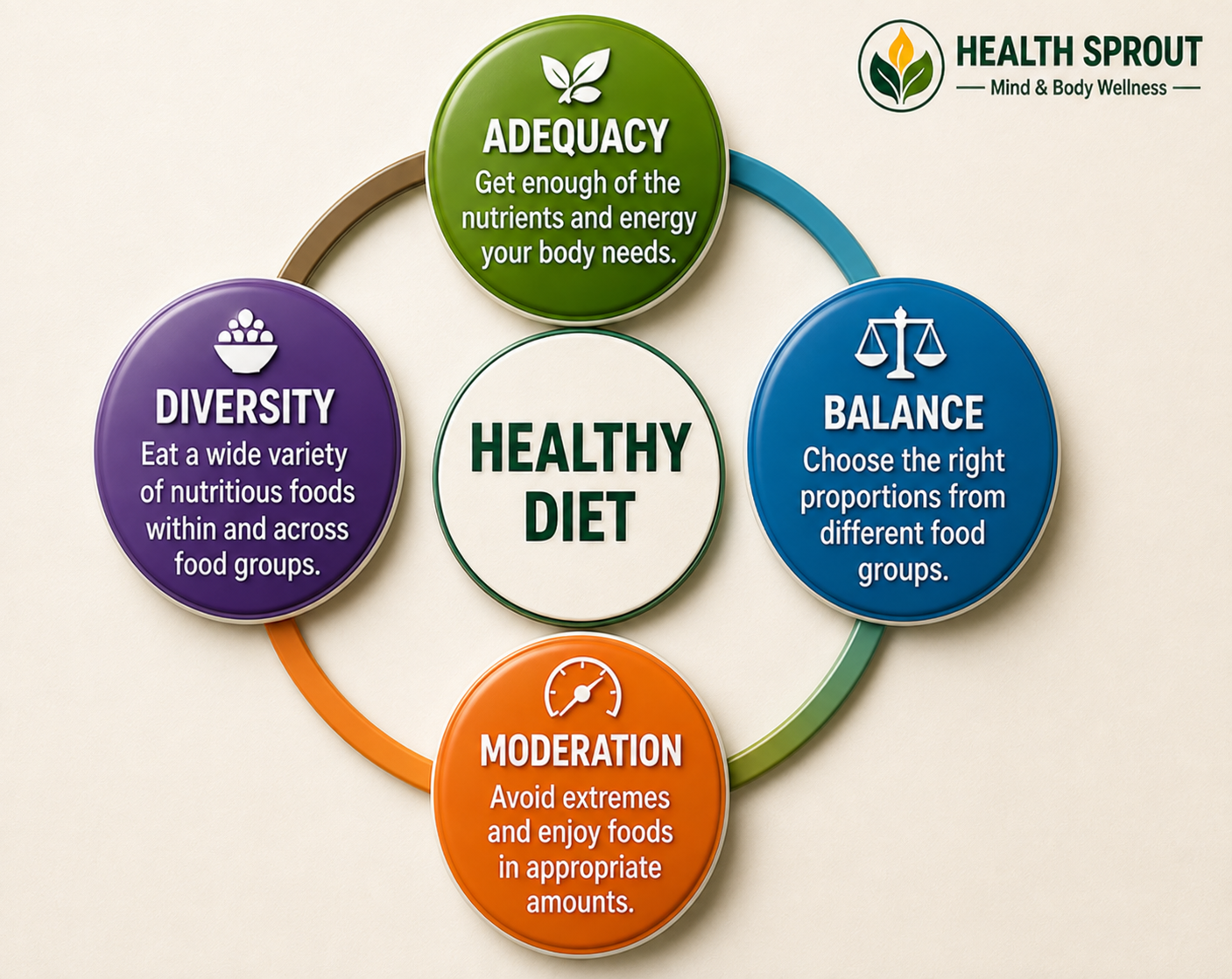
The 7-Color Plate fits into this broader idea of dietary diversity . It is simply an easier visual way to make that principle memorable.
Why Does Dietary Variety Matter?
Different foods contribute different nutrients and other biologically active components. Food groups do not all have the same nutrient composition, so including a wider variety of nutritious foods can broaden the nutritional contribution of the overall diet.
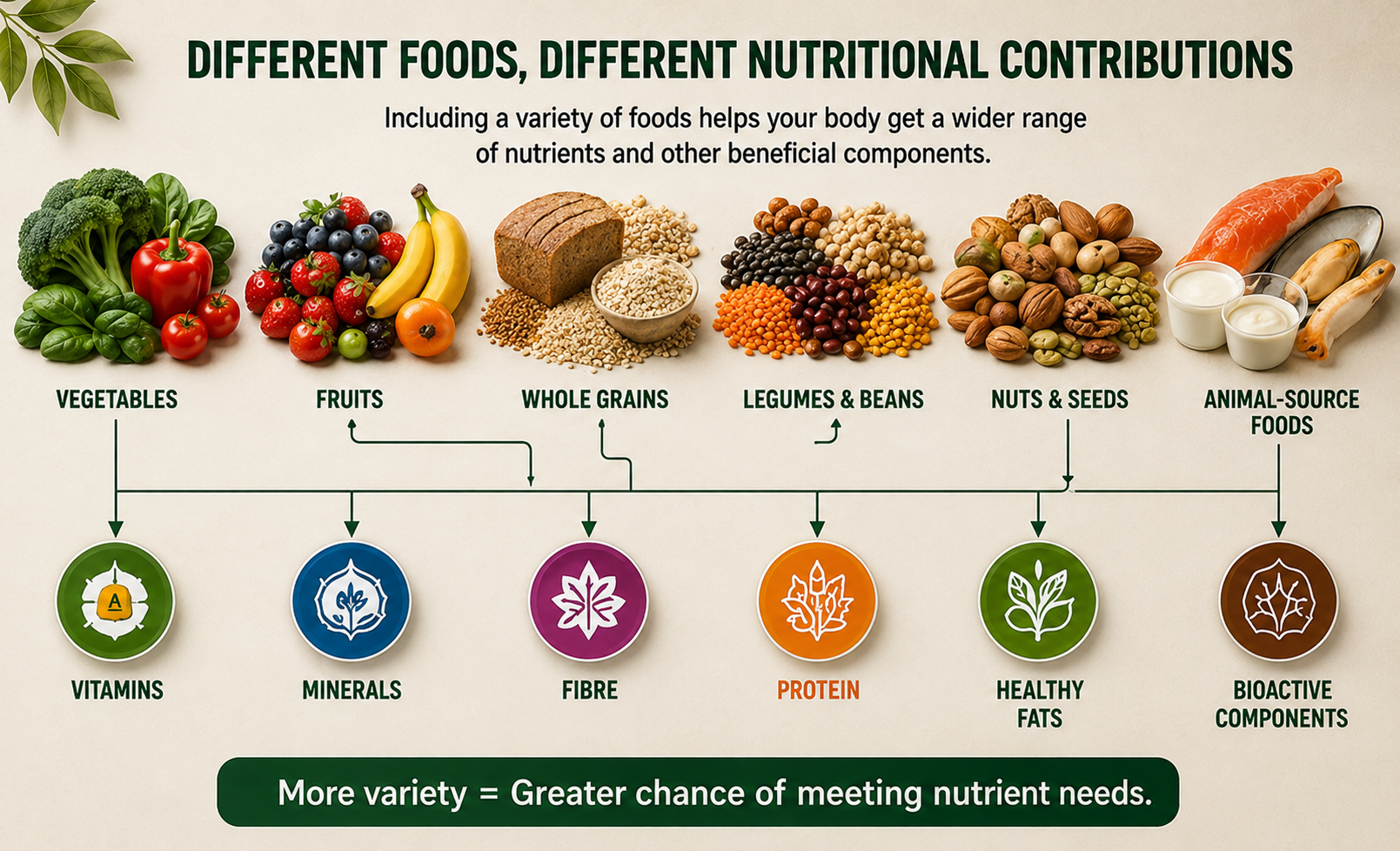
The evidence used for this article supports dietary diversity as an important part of healthy eating, while also making clear that the seven-colour idea itself is an educational device rather than an official scientific classification.
The 7-Color Plate
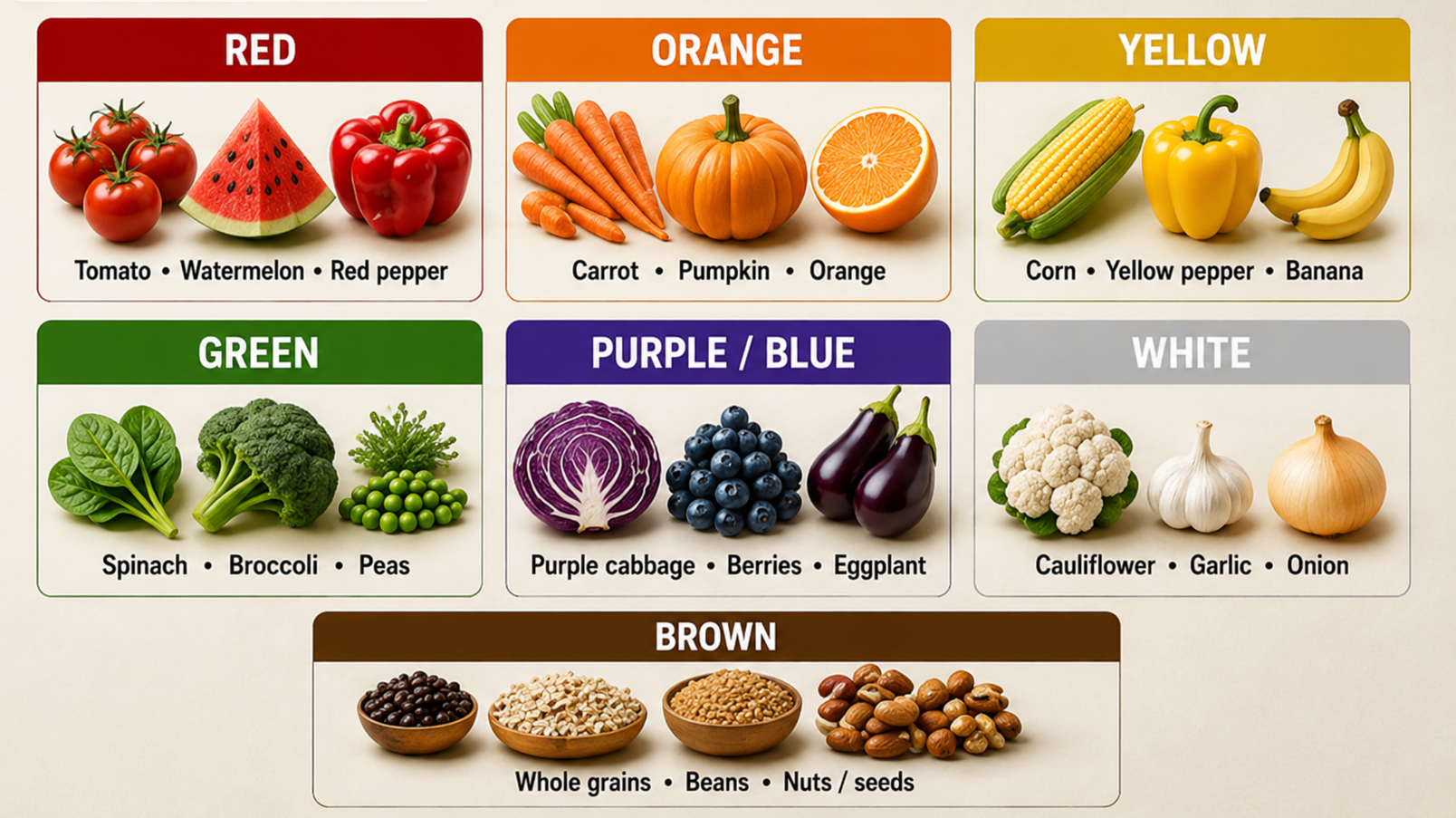
The Health Sprout visual uses seven broad colour groups to make variety easier to notice. The foods shown below are illustrative examples , not a formal seven-colour food classification.
Colour Is a Cue — Not a Nutrient Formula
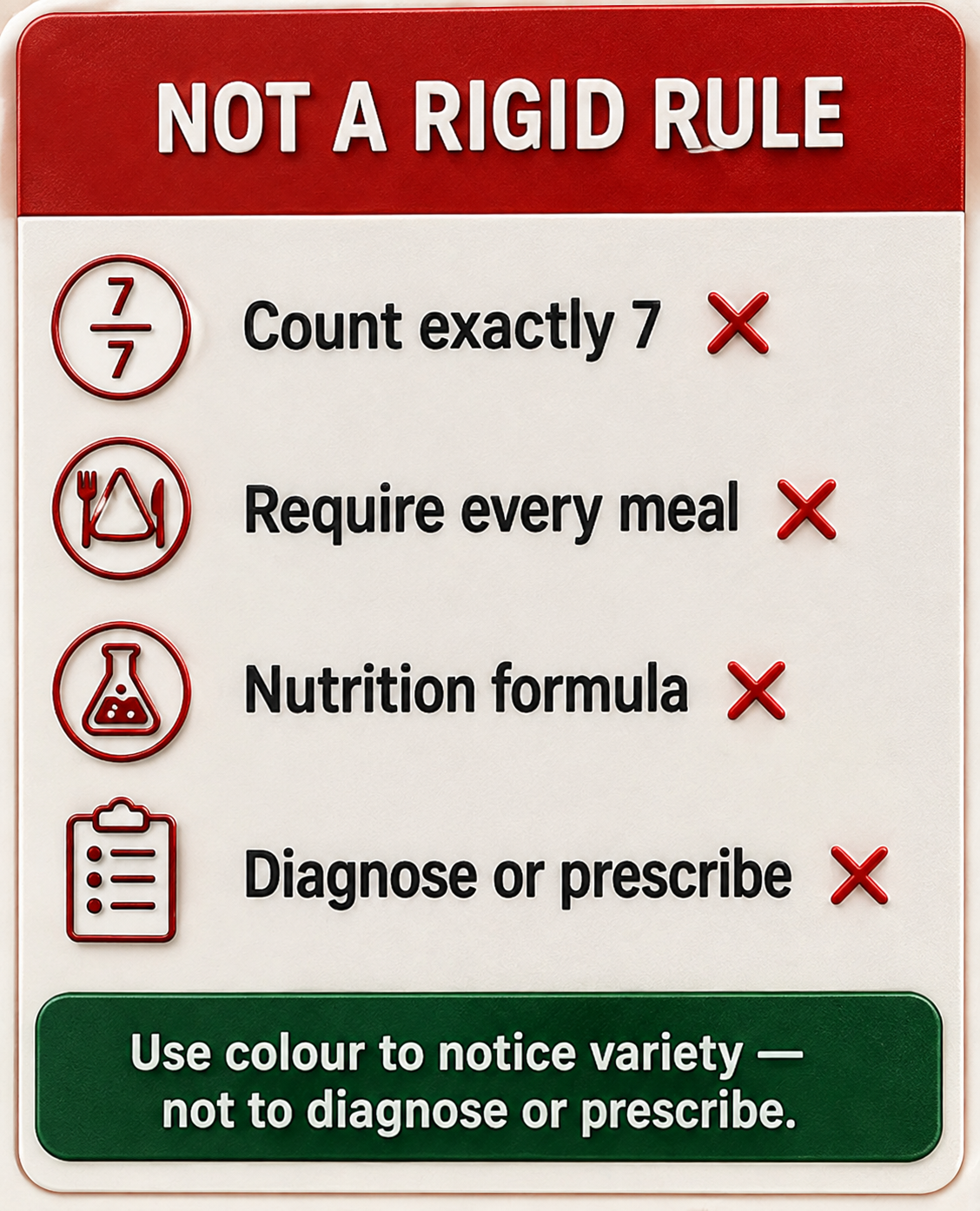
This is the most important scientific distinction in the article. The seven-colour structure is an educational communication device . It is not a validated scoring system, nutrient-matching system or dietary prescription.
More Colour → More Variety
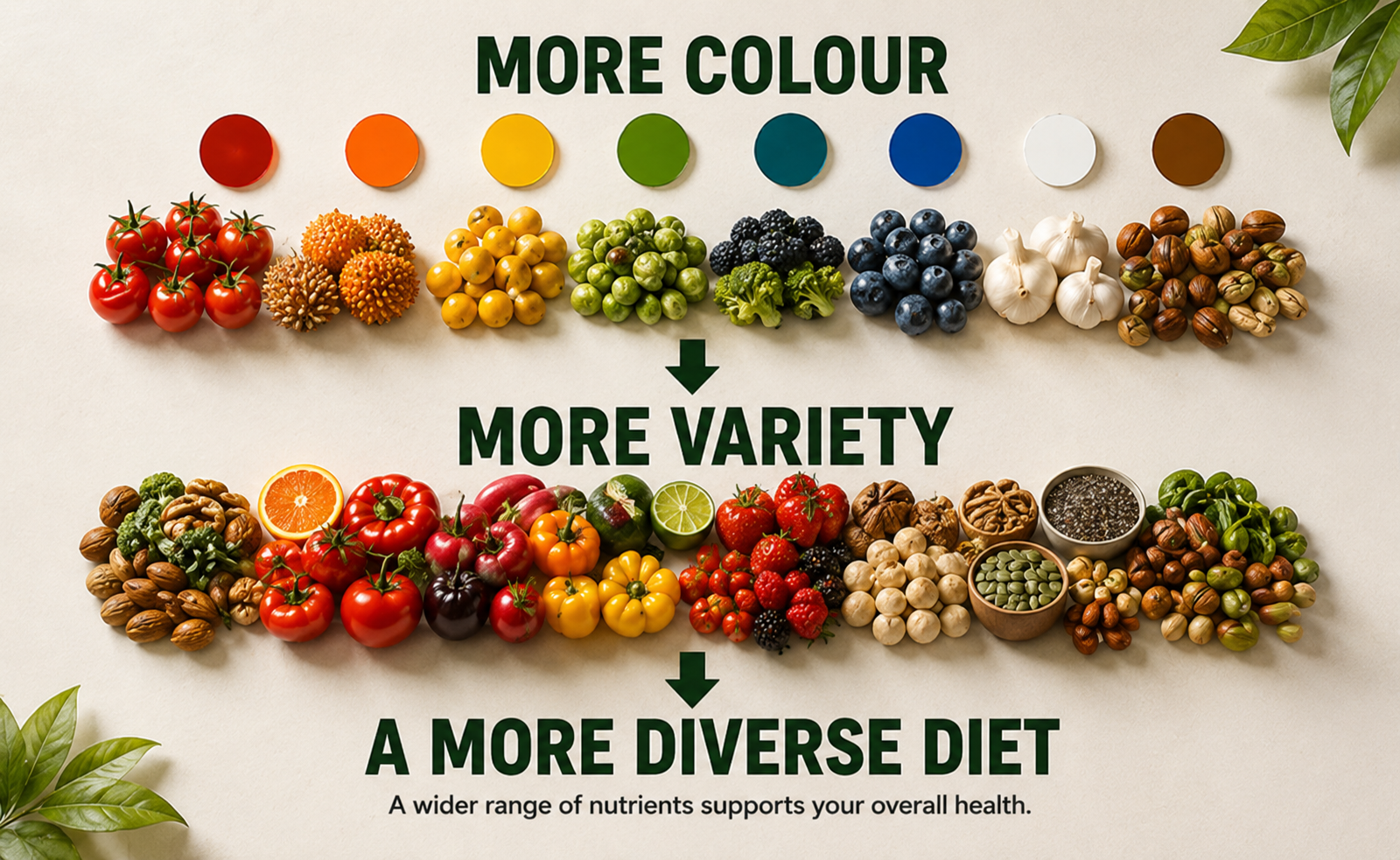
Colour itself is not the biological mechanism. The useful idea is the variety behind the colour . When people become more conscious of visual variety, it can prompt them to think about including different foods rather than repeatedly choosing the same limited group.
Do You Need All Seven Colours Every Day?
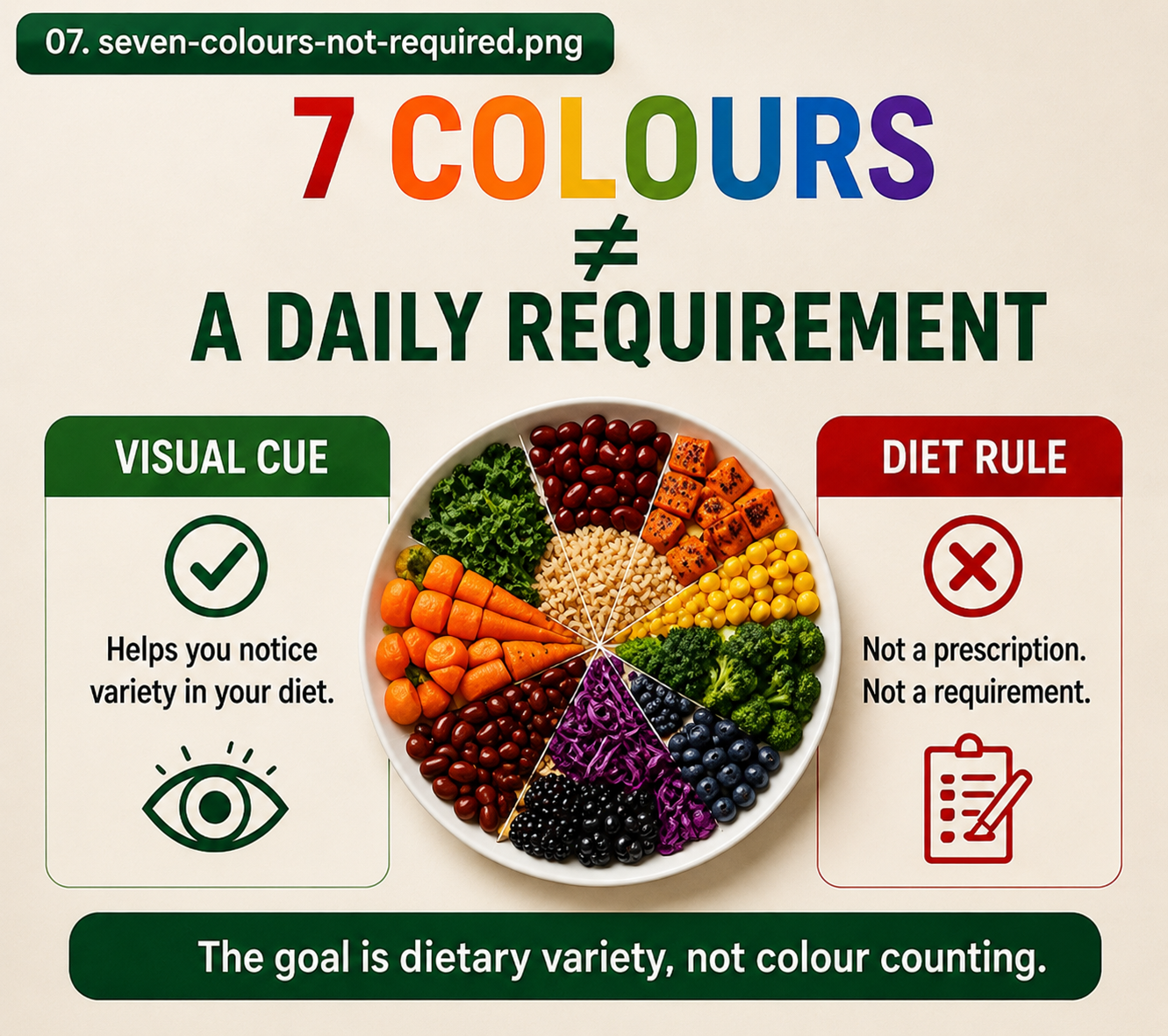
You also do not need every meal to contain seven colours. The important question is the overall dietary pattern . One meal may contain several colours and another may contain only a few.
A Better Question to Ask About Your Plate
Instead of asking “Did I get all seven colours?” , try asking “How much variety is there in my diet?”
Think about variety within and across food groups rather than simply counting colours. The aim is not perfection. The aim is to make dietary variety easier to notice.
What the 7-Color Plate Does NOT Mean
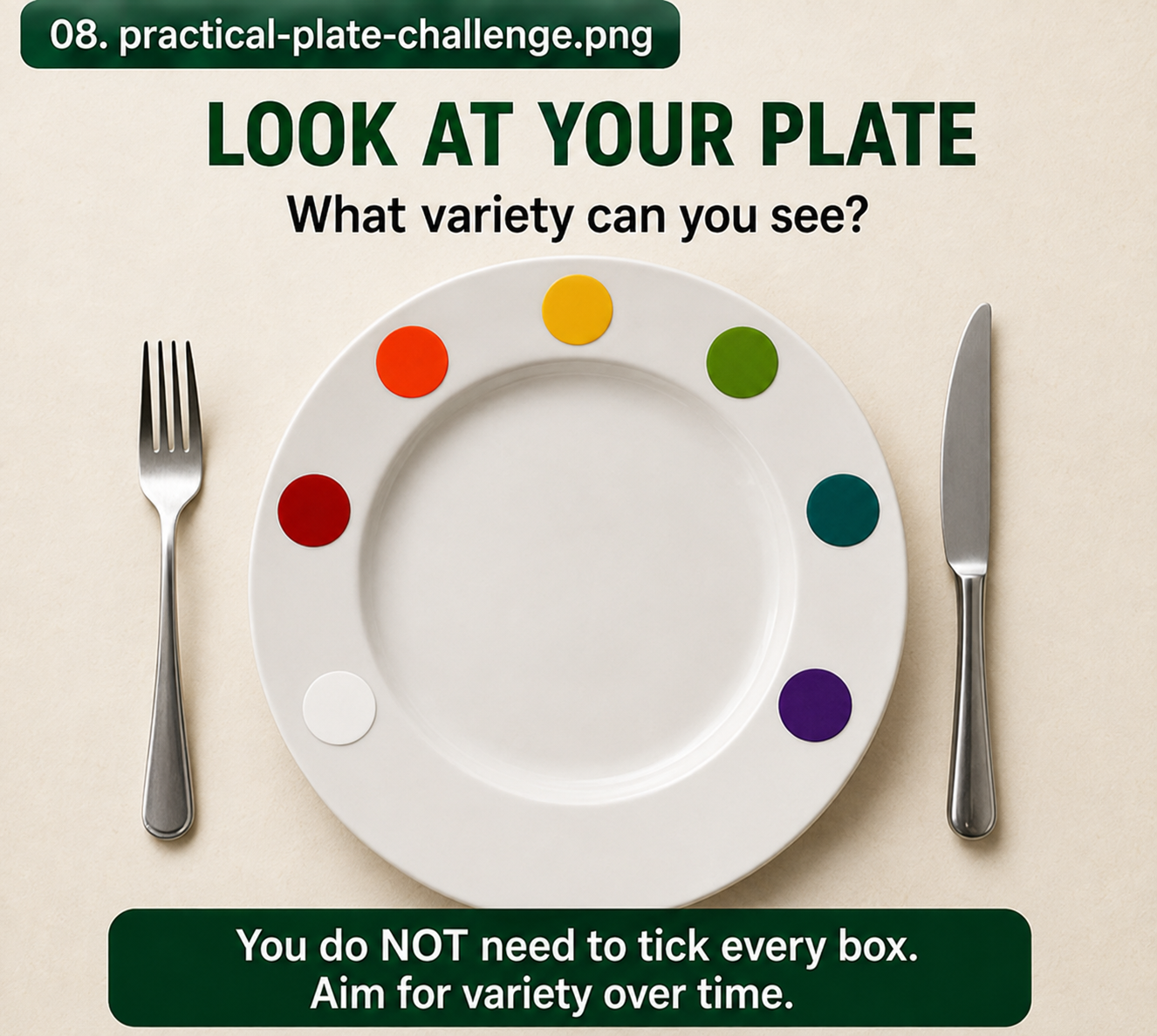
A Simple Plate Challenge
At your next meal, do not try to “complete seven colours.” Pause for a few seconds and ask:
You might notice red, orange and green. You might notice only two colours. That is okay. The exercise is simply to become more aware of variety across your eating pattern.
Frequently Asked Questions
Do I need to eat seven colours every day?
No. The seven-colour framework is a visual cue, not a daily dietary requirement.
Does each colour represent a specific nutrient?
No. The colours are descriptive food examples and are not intended as a nutrient-matching system.
Is a colourful plate automatically healthy?
No. Colour is only a visual reminder. Healthy eating also involves adequacy, balance, moderation, diversity and the overall dietary pattern.
Why is dietary diversity important?
Different foods and food groups provide different nutrients and other components, so a varied dietary pattern can broaden nutritional coverage.
Can the 7-Color Plate replace dietary guidelines?
No. It is an educational visual device used to communicate dietary diversity within the larger framework of healthy eating.
Why This Matters
The seven-colour plate is a practical visual framework for dietary variety. Its value is not in the colour number itself, but in using colour as a simple reminder to broaden food choices and increase exposure to different plant foods and nutrients.
Myth Bust
Myth: Eating seven different colours guarantees a nutritionally complete diet.
Fact: Colour variety can improve dietary diversity, but nutritional adequacy also depends on protein, healthy fats, whole grains or other carbohydrate sources, micronutrients and overall food quality.
Practical Application
Use the colour framework when planning meals: try to include several naturally coloured vegetables and fruits across the day, while also covering protein-rich foods, whole grains or other staple carbohydrates and healthy fats.
Quick Takeaways
- Colour is a visual prompt for food variety, not a medical prescription.
- Different plant foods provide different mixes of fibre, vitamins, minerals and bioactive compounds.
- A varied plate still needs adequate protein, energy and overall dietary balance.
References & Further Reading
- World Health Organization — Healthy diet
- WHO India — Healthy diet
- WHO & FAO — What are healthy diets? Joint statement, 2024.
- ICMR–National Institute of Nutrition — Dietary Guidelines for Indians, 2024
- WHO — Healthy diet: Keys to eating well.