

Breakfast is a strategy—not a universal performance rule.
The Quick Sprout
Breakfast is not automatically a performance enhancer. Its value is shaped by training timing, duration and intensity, yesterday’s intake, hydration, hunger and what the athlete can comfortably tolerate.
- Carbohydrate availability can matter most before prolonged or demanding morning work.
- Protein can help meet daily protein needs; it is not a magic morning trigger.
- Fluid intake supports physiological readiness, but needs vary widely.
- Breakfast-related cognitive effects are limited and heterogeneous—not a promise of sharper thinking.
- Match the meal to the session ahead.
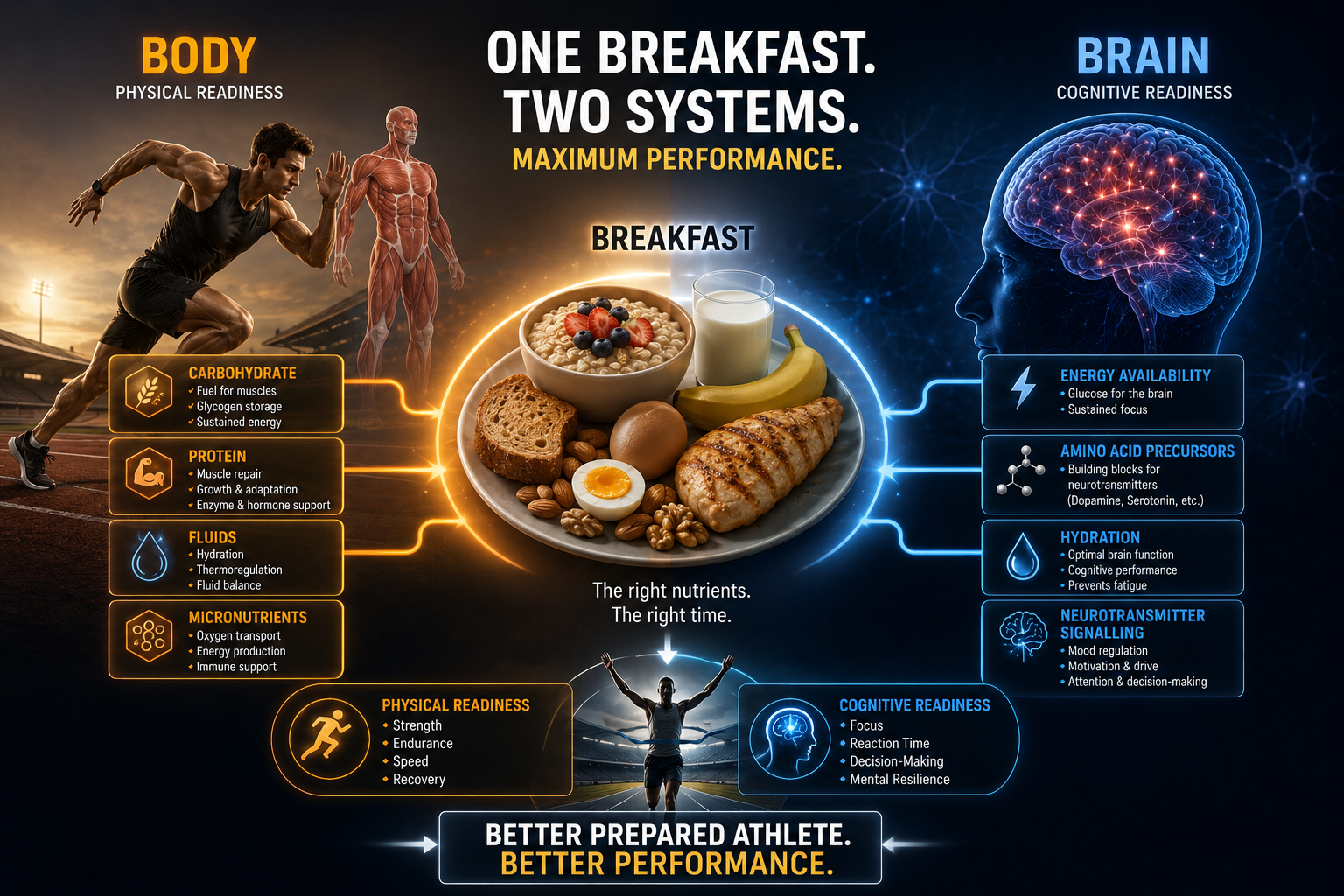
What This Visual Shows
Breakfast does not act on performance through one single pathway. Carbohydrate, protein, fluids and micronutrients enter a broader physiological context that can influence both the body and the brain. The practical question is whether the meal matches the work ahead.
What Happens Between Dinner and Training?
Morning training begins with the previous day, not with a blank metabolic slate. An overnight fast changes the immediate supply of circulating fuel and fluid; it does not erase every reserve.
That is why an athlete should avoid thinking about breakfast as if it starts the body from zero. The immediate morning meal can change what is available and how comfortable the athlete feels, but it is layered on top of glycogen, hydration and recovery patterns established earlier. A useful breakfast decision therefore begins with context: what was eaten, what work is planned, and how soon the session starts.
During the night, the liver helps maintain blood glucose. Its glycogen store is used for that task, while muscle glycogen is largely reserved for the muscle that stored it. Neither is identical to “empty,” and the practical consequence depends on dinner, overall energy intake, training status and the work about to be done.

What This Visual Shows
Morning readiness is shaped by the previous day as well as the meal immediately before training. The timeline is a practical framework, not a rigid schedule.
Morning Physiology: Readiness, Not a Verdict
Fasted is a timing description, not a diagnosis of muscle loss. Protein turnover continues continuously; an overnight fast does not automatically mean “catabolic breakdown of muscle.” What may change is the timing of glucose availability, fluid intake and the athlete’s comfort during an early session.
For a short, familiar and low-demand session, some athletes train comfortably with little or no food. For long endurance work, repeated high-intensity efforts, or sessions begun after inadequate prior intake, arriving with little available carbohydrate may be less forgiving. This is a decision about the whole training context, not a test of discipline.
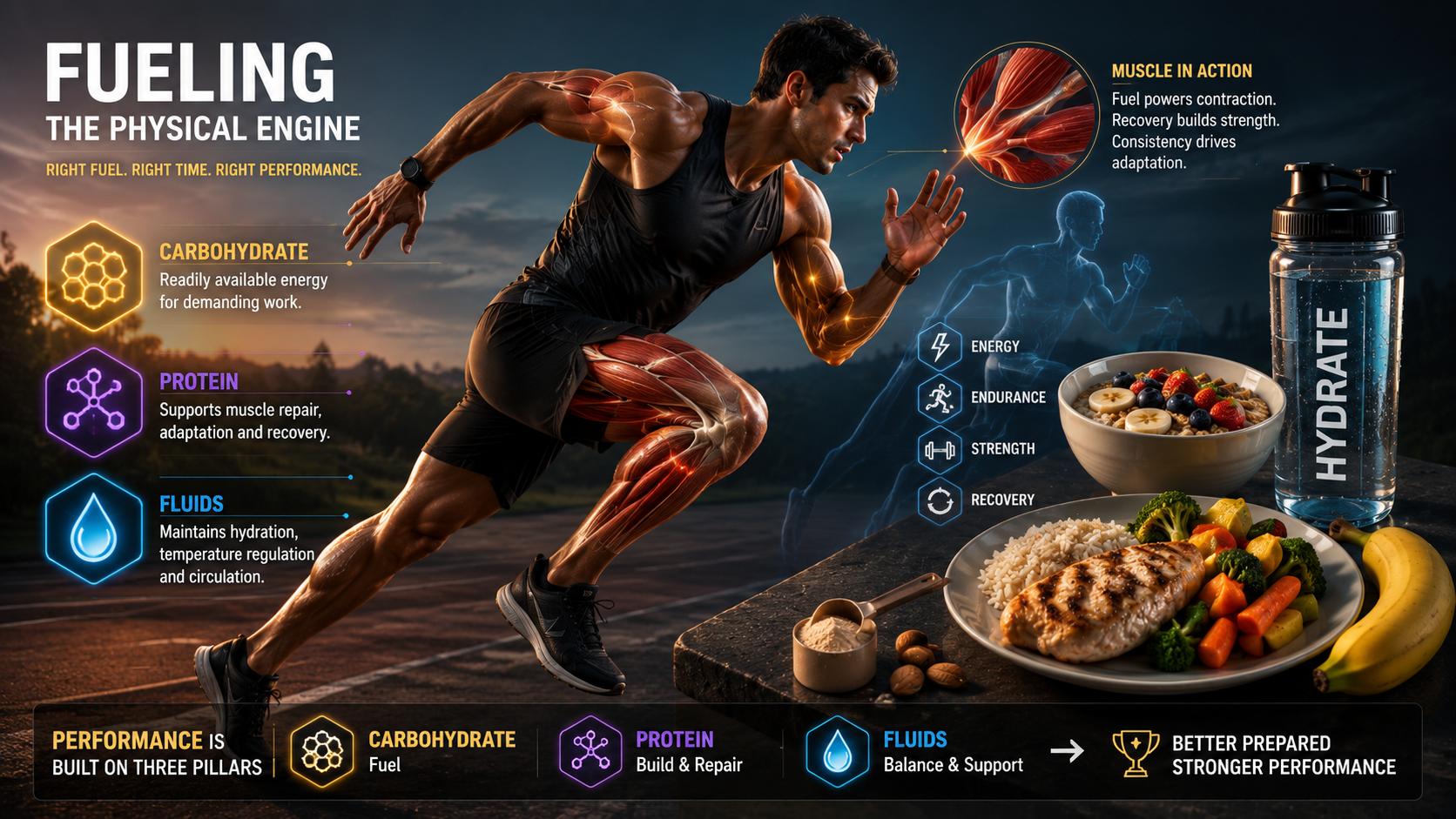
Fueling the Physical Engine
What This Visual Shows
The same breakfast does not have the same value before every session. Demanding endurance work, high-volume training and short familiar sessions create different nutritional problems.
Carbohydrate: Fuel for the Work Ahead
In practical terms, carbohydrate becomes more relevant when the upcoming work creates a meaningful need for readily available fuel. A long endurance session, repeated high-intensity intervals or a second demanding session can create a different problem from a short familiar workout. The goal is not to maximise carbohydrate at every breakfast; it is to avoid arriving under-prepared for work that actually depends on it.
Glycogen and blood glucose help meet exercise energy demand. Evidence is strongest for carbohydrate feeding in endurance contexts, particularly as duration rises; it does not establish that every breakfast improves every sport outcome. A 2022 review found carbohydrate intake alone unlikely to improve typical fed, lower-volume resistance sessions, while higher volume or depleted contexts may differ.
Protein: Building and Repairing the Athlete
Breakfast protein can still be useful even when it does not produce an immediate performance effect. It may help distribute protein intake across the day, support appetite and recovery planning, and make it easier to reach the athlete’s overall target. The important distinction is between a convenient contribution to the daily strategy and a claim that protein at breakfast is a unique performance switch.
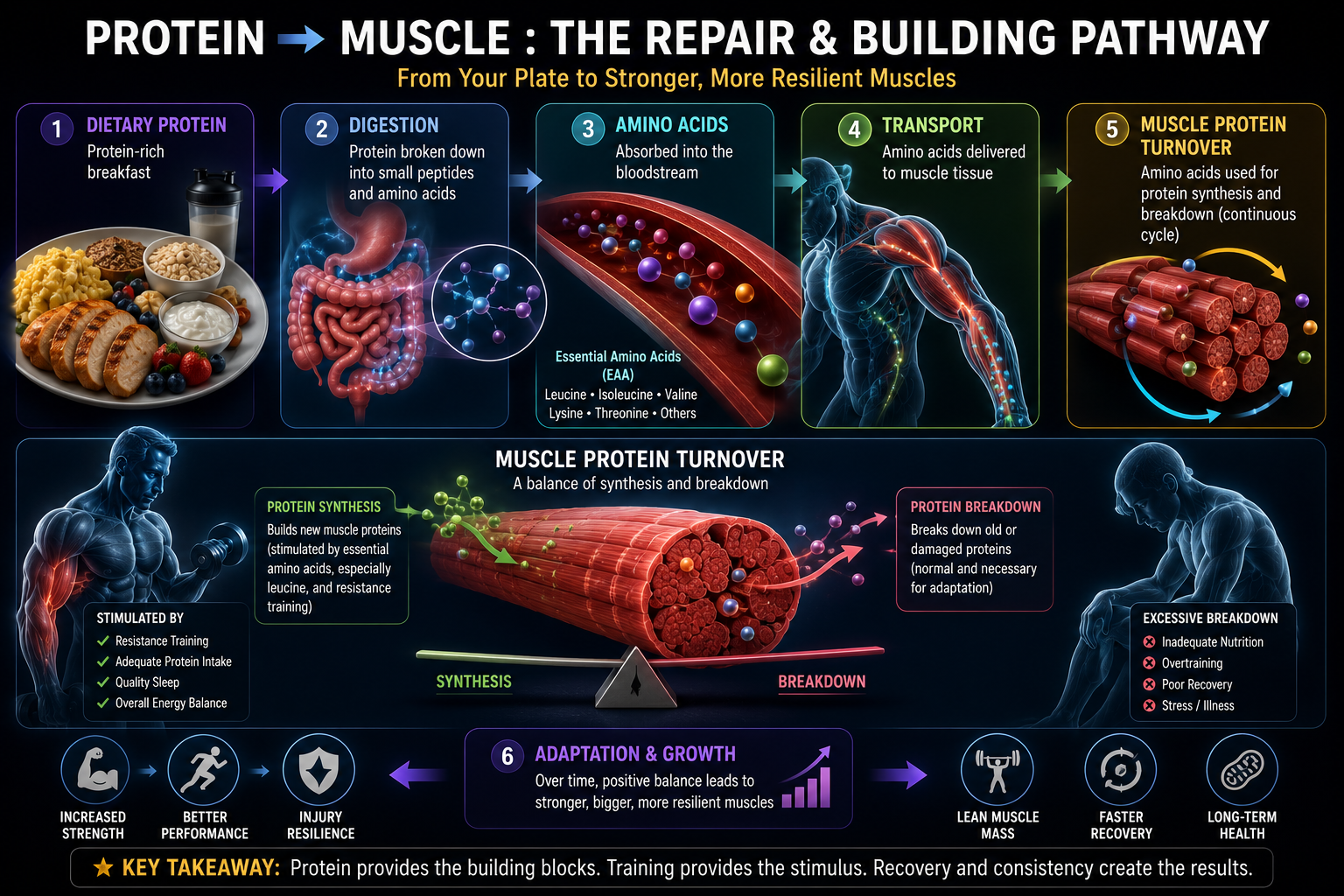
Dietary protein is digested into amino acids that contribute to muscle protein turnover. Resistance exercise and protein ingestion can both stimulate muscle protein synthesis, but total daily protein, distribution across the day, protein quality, training and energy intake matter more than assigning special powers to breakfast.
Hydration: the Quiet Variable
Hydration should also be interpreted as a starting condition rather than a single glass of water. An athlete who begins the morning after heat exposure, heavy sweating, inadequate drinking or poor recovery may have a different practical need from someone who is already well hydrated. Fluid decisions should therefore sit beside—not replace—the broader assessment of session demand and individual tolerance.
Morning fluid intake can help an athlete begin training adequately hydrated, but a universal “breakfast hydration number” would ignore body size, heat, sweat rate, time available and food intake. The practical aim is readiness—not forcing fluid. The ACSM position stand emphasises individualised replacement because sweat rates and electrolyte losses vary.
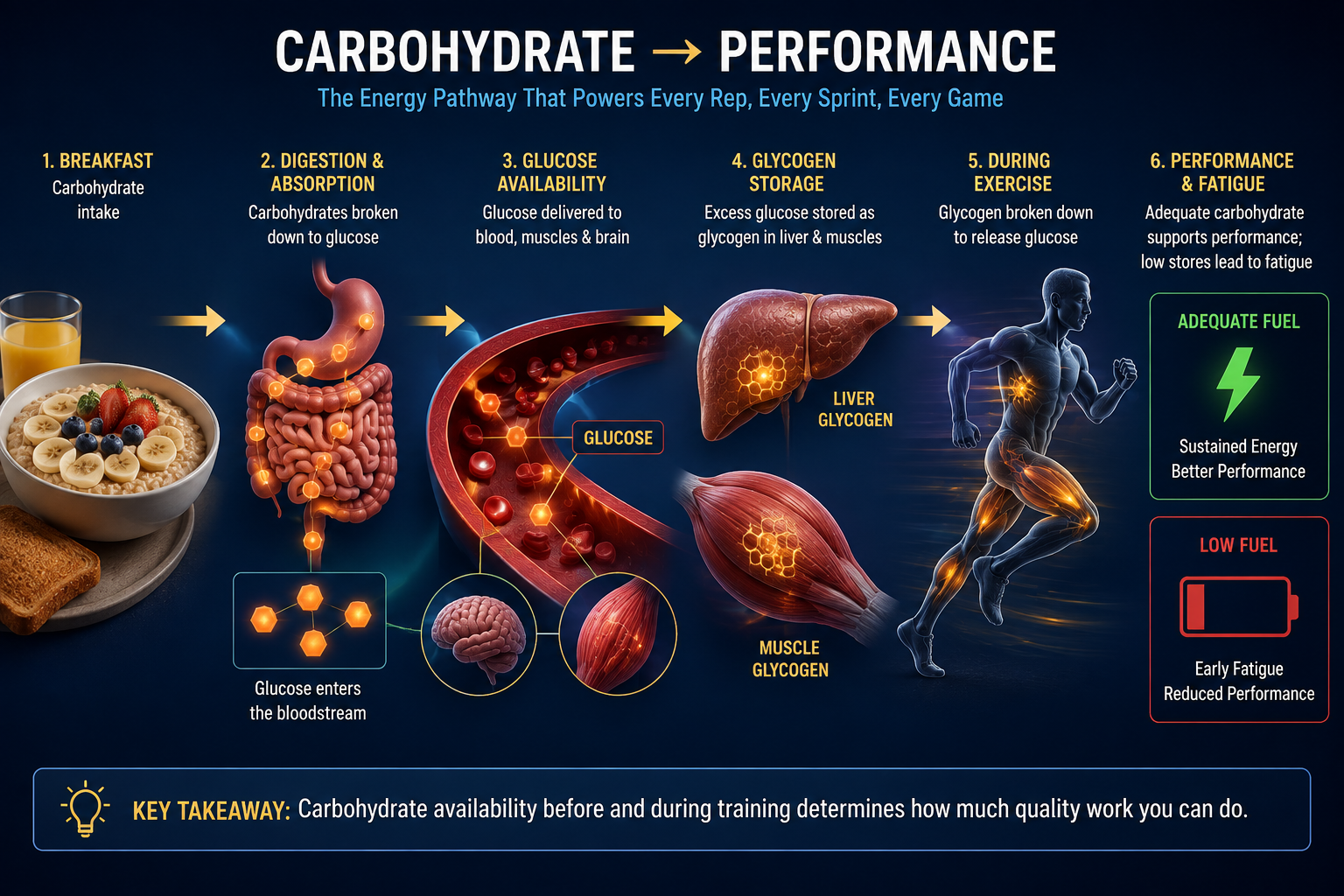
From Breakfast to Exercise Fuel
What This Visual Shows
The diagram is a simplified pathway. It does not imply that breakfast instantly creates new muscle glycogen or that every athlete needs the same carbohydrate strategy.
Protein: Part of Repair and Adaptation
What This Visual Shows
Protein at breakfast can help distribute protein intake across the day, but breakfast is not a standalone muscle-building switch.
The Brain Behind Performance
Sport asks for more than muscles: attention, reaction, working memory, decision-making and mood can all matter. That does not mean a breakfast can be credited with a direct cognitive upgrade.
A useful caution before talking about pathways
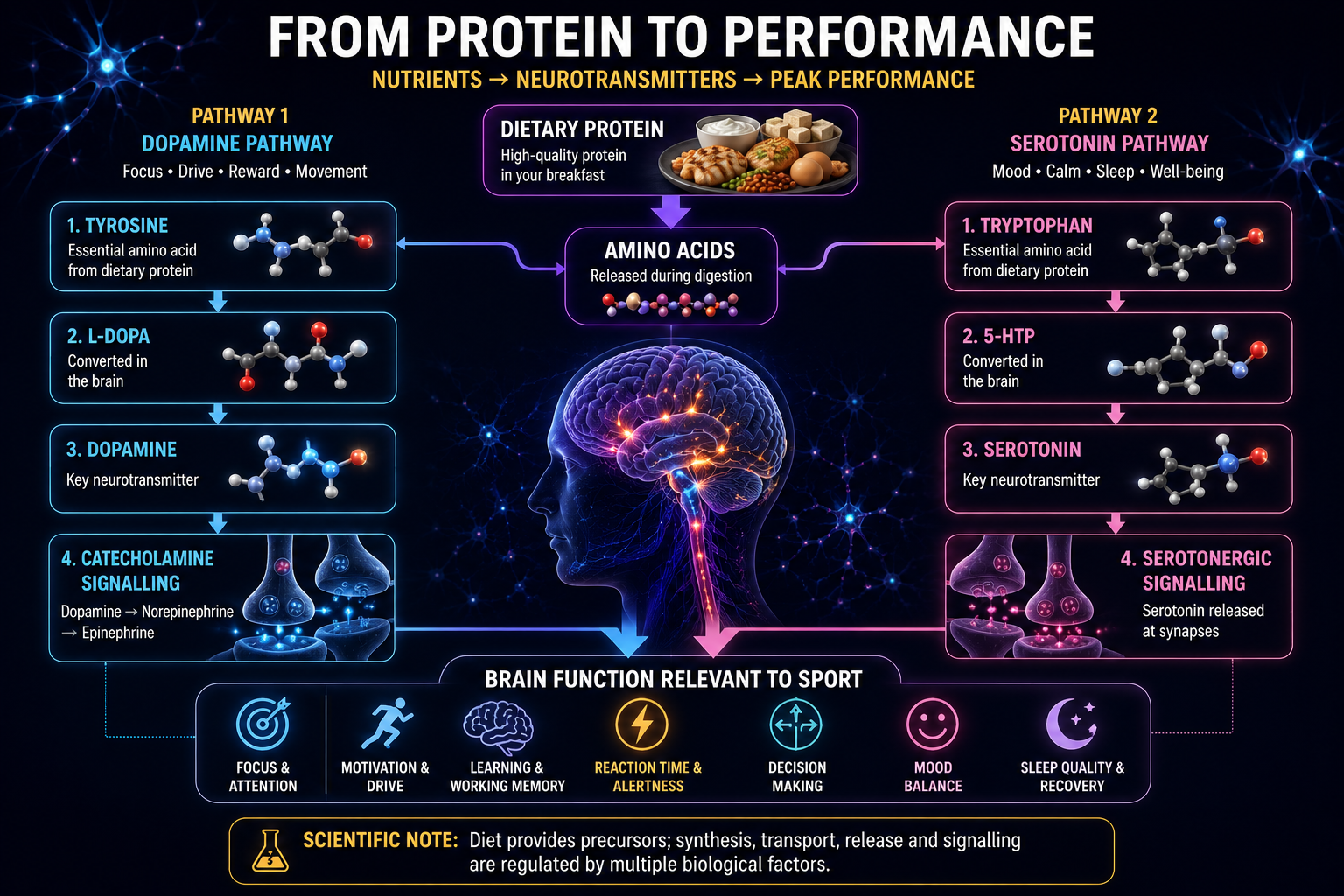
Protein supplies amino acids. Tyrosine and tryptophan participate in neurotransmitter pathways. But precursor availability is only one input: transport across the blood–brain barrier, competition among large neutral amino acids, enzymes, neuronal activity, metabolic state, release and receptor signalling all matter.
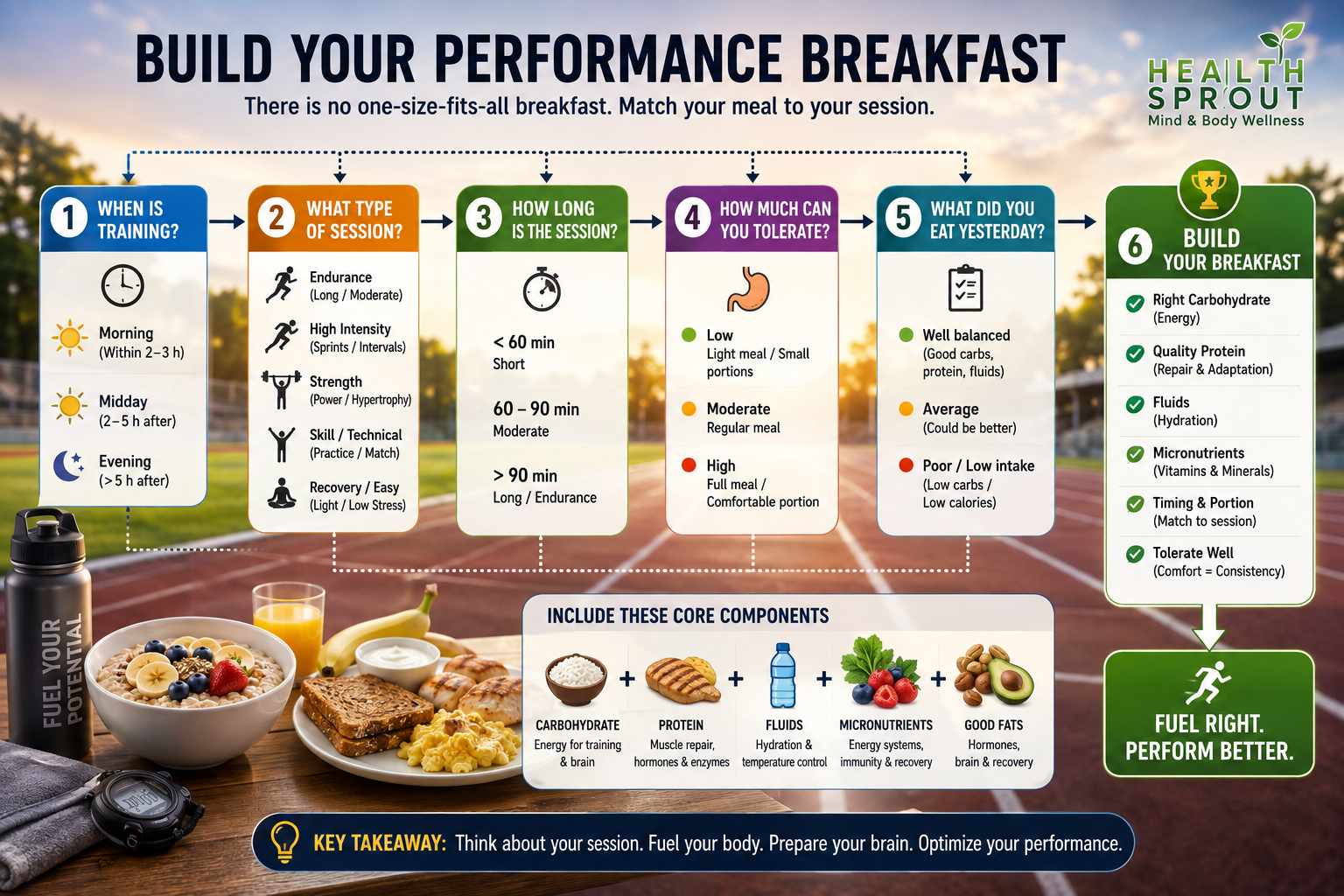
What This Visual Shows
The brain is not a separate performance system. Nutrition, hydration, sleep, stress and the exercise context can interact with cognitive readiness.
The brain section requires the same caution as the body section. A nutrient pathway can be biologically real without creating a predictable performance benefit in every athlete. Attention, reaction time, working memory and mood are influenced by many variables, including sleep, arousal, task difficulty, previous nutrition and the competitive environment. The practical message is therefore not “eat one food to think better,” but “avoid simplistic claims and interpret nutrition inside the whole performance context.”
Neurotransmitter Biology: a Plausible Pathway, Not a Shortcut
What This Visual Shows
The presence of a precursor in food does not mean a direct or guaranteed increase in a sport-relevant neurotransmitter response. The pathway is biologically meaningful, but it is not a simple “eat protein → perform better” equation.
What the Research Actually Shows
Breakfast & endurance
Know: carbohydrate evidence is stronger in prolonged/high-demand endurance settings. Don’t know: one “best” breakfast for all athletes.
Breakfast & resistance
Know: carbohydrate alone is not consistently helpful in typical fed, modest-volume sessions. Don’t know: the precise value in every early workout.
Breakfast & cognition
Know: athlete research is sparse and a carbohydrate-drink meta-analysis found no significant overall executive-function effect. Don’t know: whether breakfast reliably sharpens sport decisions.
Protein & muscle
Know: daily protein adequacy and resistance training support adaptation. Don’t know: that protein at breakfast is uniquely superior.
Hydration
Know: avoiding meaningful dehydration supports physiology and performance. Don’t know: a one-size-fits-all fluid plan.
Low energy availability
Know: persistent mismatch between intake and exercise expenditure may affect health and performance. Don’t know: who can be assessed from one meal alone.
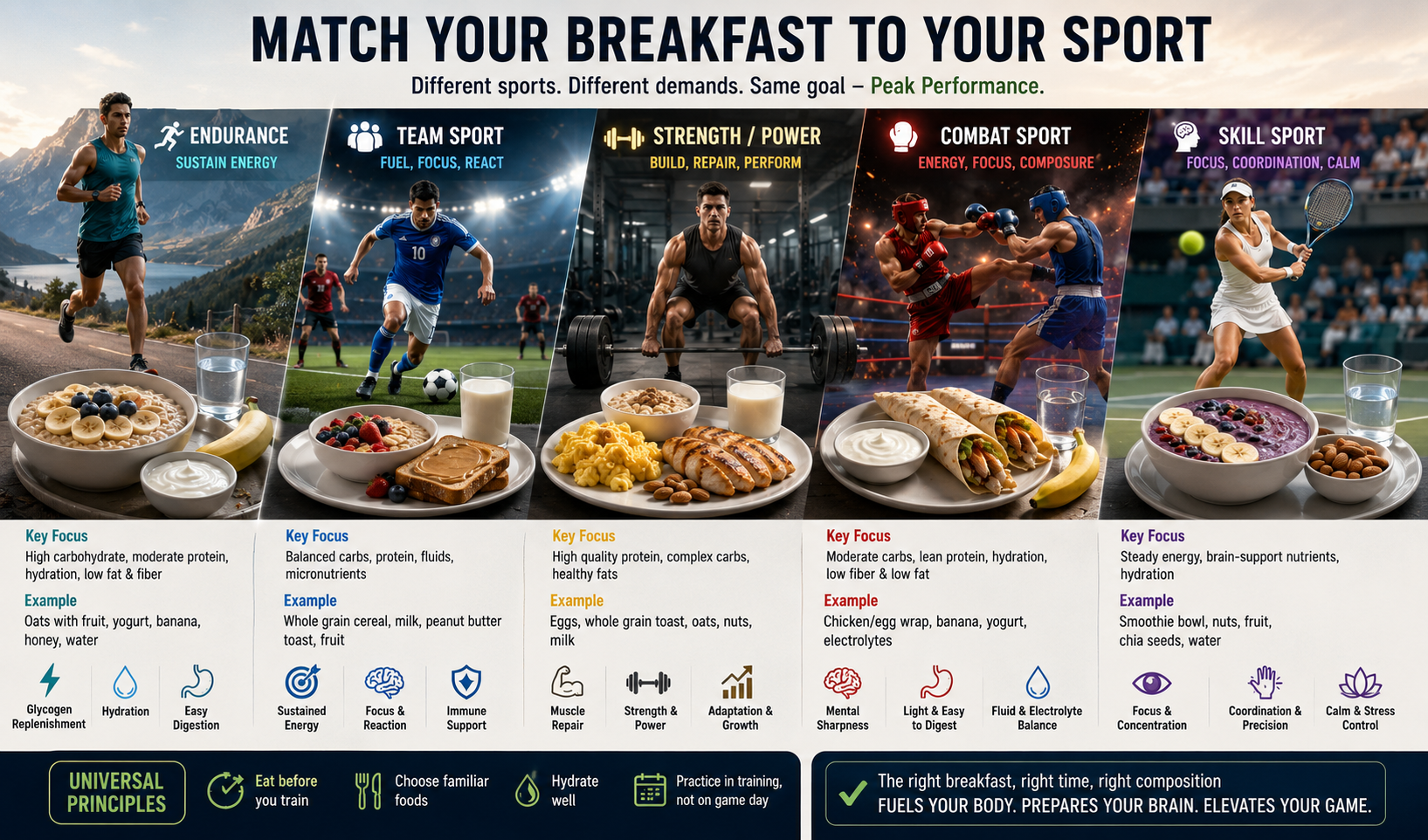
Different Sports Create Different Breakfast Problems
What This Visual Shows
Sport category alone is not enough to prescribe a meal. The exact session and the athlete’s individual response still matter.
Sport-Specific Practical Scenarios
1. 6:00 AM Football Training
2. 8:00 AM Strength Training
3. 10:00 AM Endurance Session
4. Competition Morning
5. Athlete in a Fat-Loss Phase
Build Breakfast From Context
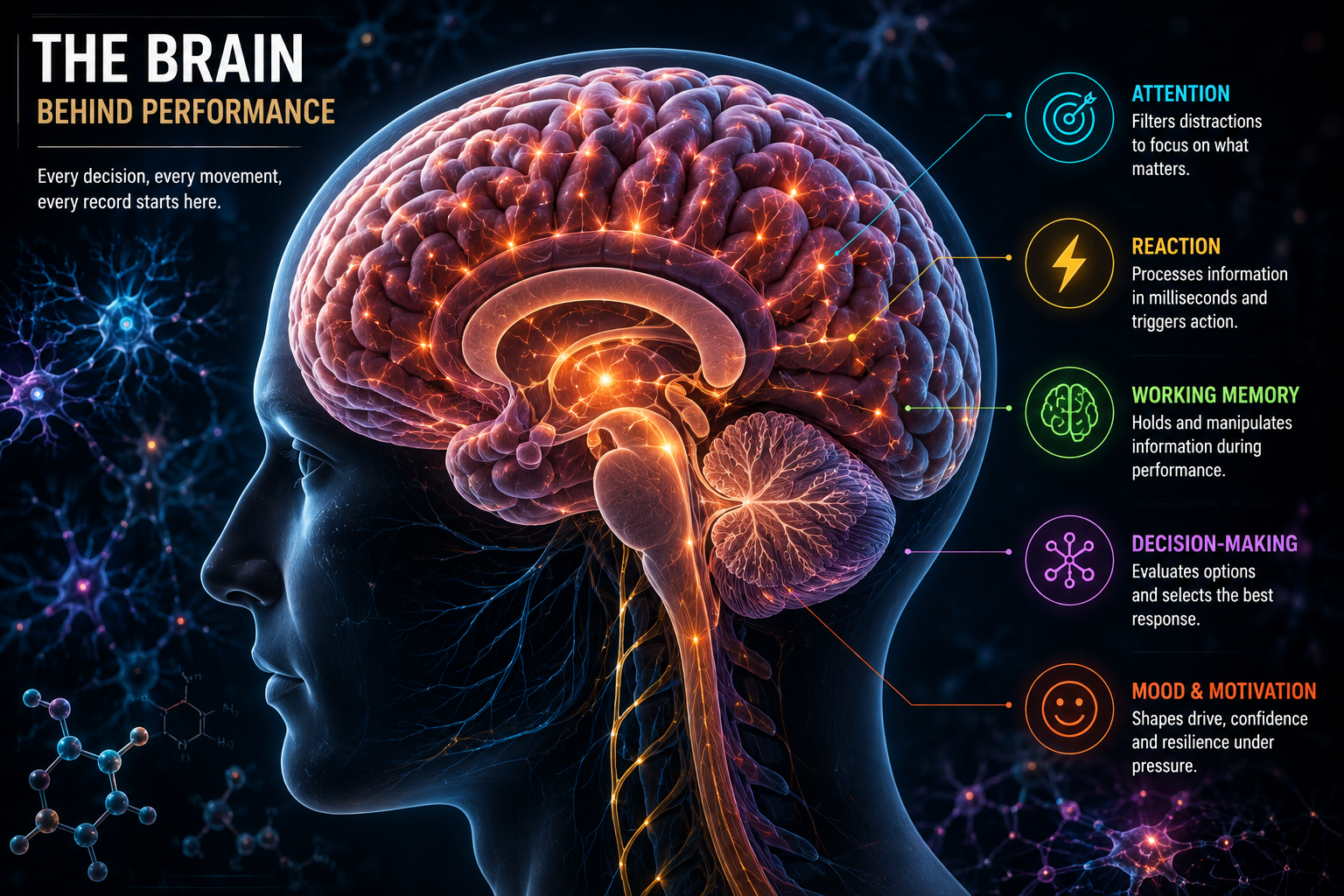
What This Visual Shows
A useful breakfast is one the athlete can tolerate and repeat. Familiarity becomes especially important before demanding or competitive sessions.
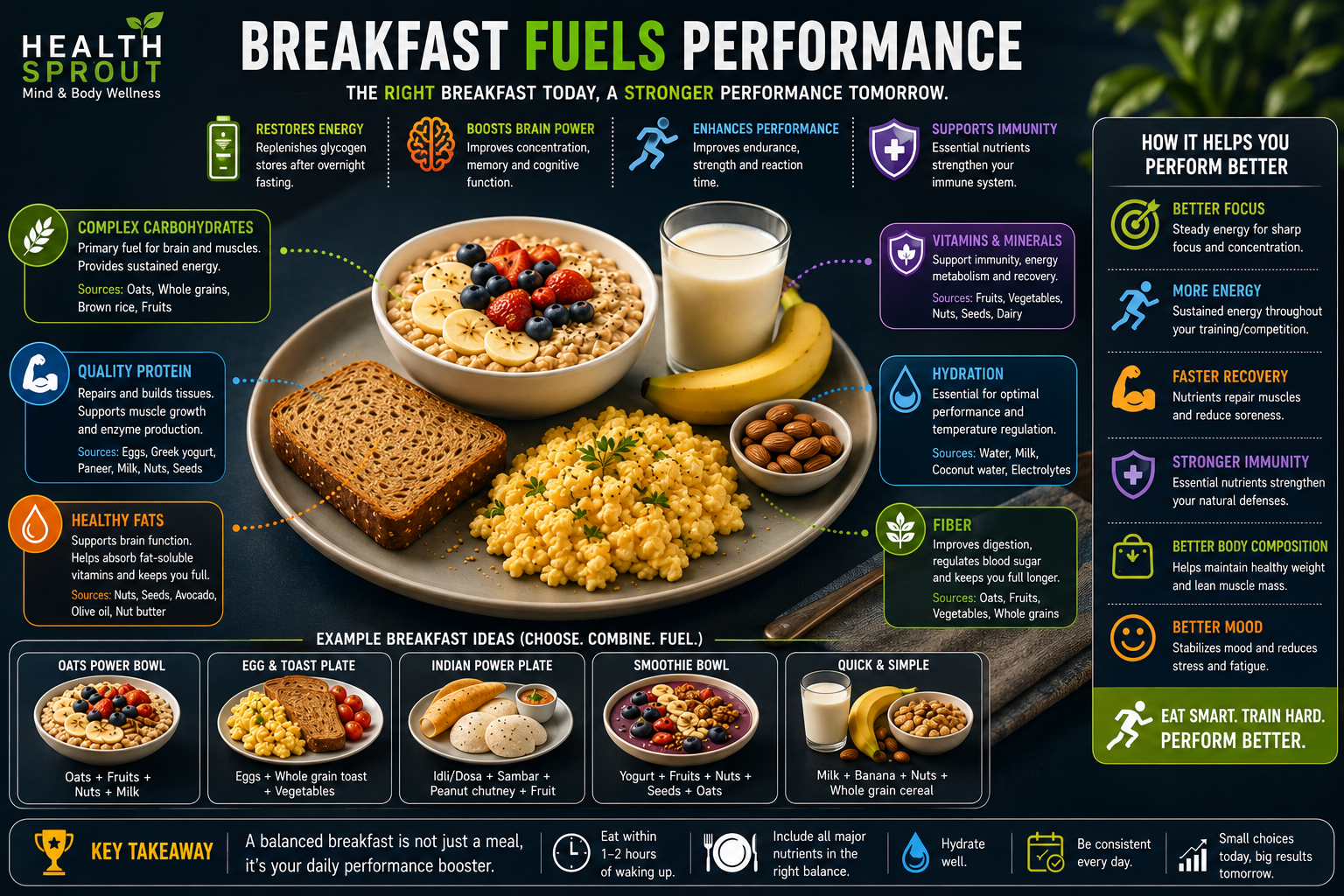
The Health Sprout Breakfast Builder
Indian Practical Application
These are adaptable meal concepts—not rankings. Portion, timing and texture should reflect the training demand and digestive tolerance.
Oats + milk/curd + fruit + nuts
Best for: athletes with time before a moderate or longer session. Consider: fibre/fat may not suit a sensitive gut close to training.
Egg + whole-grain toast + fruit
Best for: a balanced meal when appetite and time allow. Consider: scale carbohydrate to the workload.
Poha + curd + fruit
Best for: a familiar, flexible Indian option. Consider: individual portion and protein adequacy.
Idli + sambar + curd
Best for: athletes who tolerate a traditional meal. Consider: session timing and personal GI response.
Paneer/tofu + grain-based breakfast
Best for: building protein into the day. Consider: it is not automatically better just because it is higher protein.
Rice-based or soy-based breakfast
Best for: athlete preference and local food culture. Consider: meal familiarity before important training or competition.

What This Visual Shows
Portion, timing and texture should reflect the training demand and the athlete’s digestive tolerance. Familiar foods are often easier to rehearse and repeat.
Evidence, Not Ideology
What This Visual Shows
The useful question is not “Which ideology wins?” but “Which approach best fits this athlete, this session and the wider nutrition plan?”
The most useful comparison is not “fasted is bad” versus “fed is good.” The relevant comparison is between different starting conditions. Some athletes can complete certain sessions comfortably with little or no food; others may benefit from eating because the planned workload, the length of the fast, the next session or their individual symptoms make immediate fuel more useful. Evidence should guide the decision without turning either strategy into an identity.
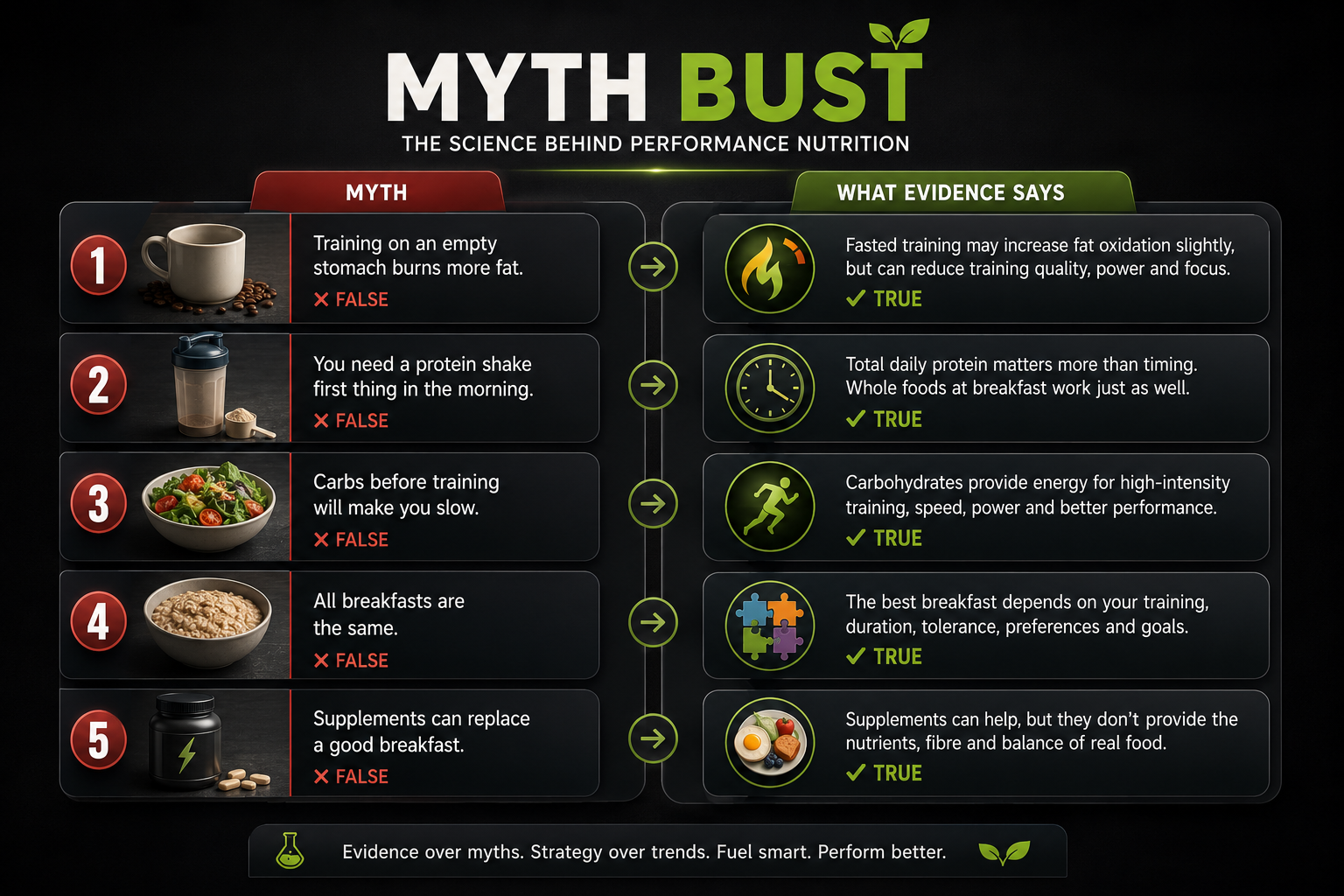
Health Sprout Signature Myth Bust
Five Myths Worth Retiring
“Fasted training is always better for fat loss.”
Evidence: an acute fast does not settle long-term body composition or training quality. Meaning: use a plan that protects the work and overall energy availability.
“More protein automatically means more muscle.”
Evidence: adaptation depends on training and the overall diet. Meaning: seek adequacy and distribution, not a single oversized breakfast.
“Breakfast automatically makes athletes mentally sharper.”
Evidence: direct athlete cognition evidence is heterogeneous. Meaning: avoid brain-boosting certainty.
“A low-GI breakfast is always superior.”
Evidence: meta-analysis found no clear endurance advantage. Meaning: choose for session, timing and tolerance.
“Every athlete needs the same breakfast.”
Evidence: demand, culture, schedule and gut response differ. Meaning: personalise and rehearse.
Why this matters
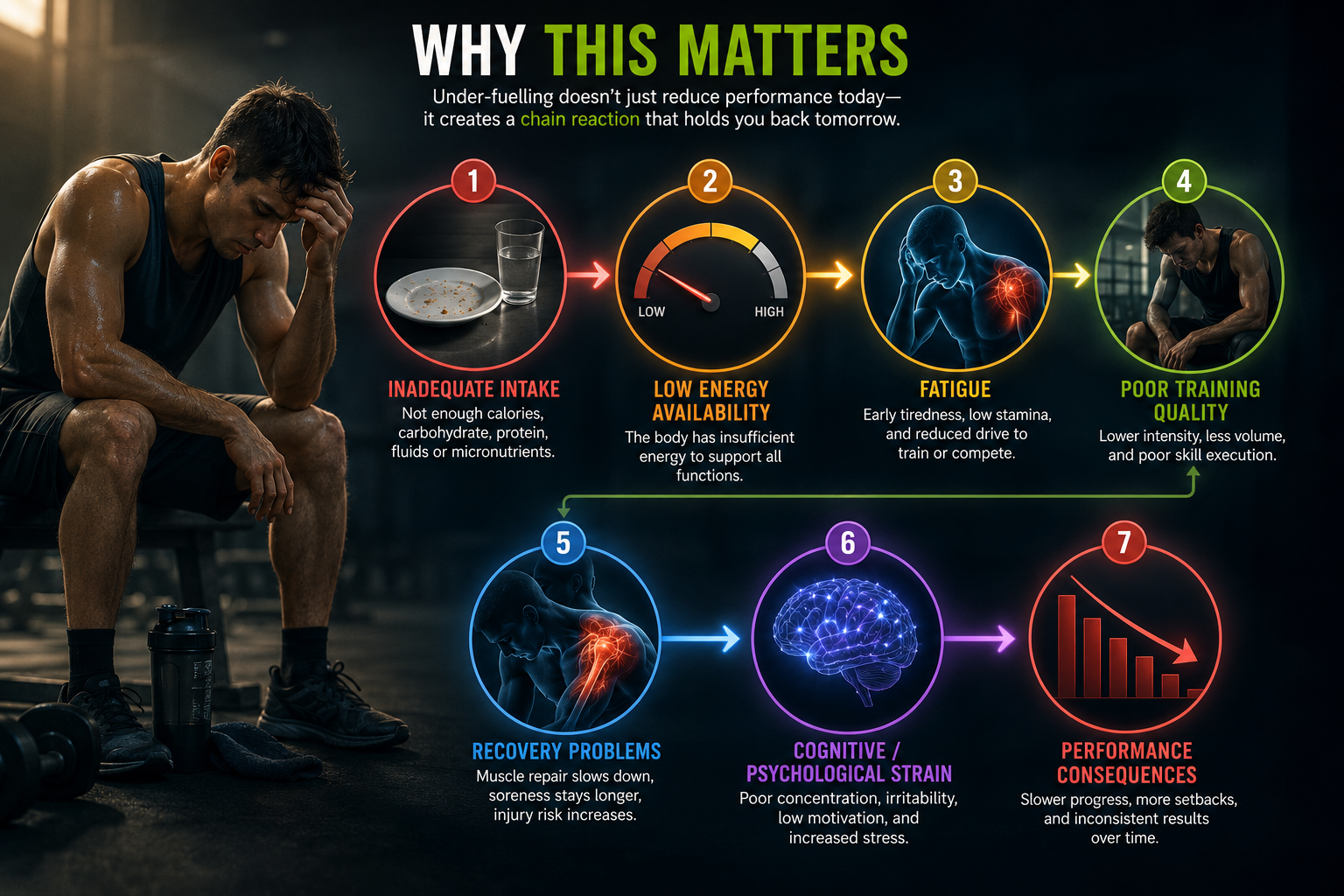
Under-fuelling can become a training-quality problem.
Repeatedly missing the energy needed for training can show up as fatigue, poor session quality and recovery difficulty; it can also coexist with psychological strain. Low energy availability and REDs are important sport-health concerns, but a single breakfast cannot diagnose them. If persistent fatigue, recurrent illness/injury, menstrual disruption, low mood, disordered eating or a decline in performance is present, the appropriate next step is a qualified sports-medicine or sports-dietitian assessment.
What This Visual Shows
This pathway is not a diagnostic checklist. A single breakfast cannot diagnose REDs or low energy availability, but repeated mismatch between intake and training demand deserves attention.
Competition Day: Familiarity Beats Experimentation
What This Visual Shows
Competition-day breakfast should usually be rehearsed before competition. New foods, unfamiliar supplements and last-minute nutrition experiments add avoidable uncertainty.

What This Visual Shows
A good evidence summary does not replace one simple myth with another. It keeps the context, limits and uncertainty visible.
Practical application
“What should I eat before morning training?”
Start with the session, then work through: 1. training time; 2. exercise type; 3. duration; 4. previous-day intake; 5. individual tolerance; 6. hydration status; and 7. total daily nutrition. The useful breakfast is the one that fits these constraints reliably.
Quick takeaways
Match the fuel to the work.
Breakfast should match the session—not the trend.
Fuel the work you are actually about to do.
Protein is part of the daily strategy, not a magic morning trigger.
The brain needs nutrition too—but neuroscience is not a shortcut to certainty.
More food is not always better; better matching is.
What We Still Don’t Know
Direct studies of athlete breakfast and sport-relevant cognition remain limited. Studies use different definitions of breakfast, habitual breakfast behaviour, exercise modes, timing, total energy intake and outcome tests. Small samples are common, and acute findings cannot be assumed to describe chronic adaptation. Mechanistic work on amino-acid precursors is valuable for plausibility, but it does not by itself demonstrate a clinical or athletic performance outcome.
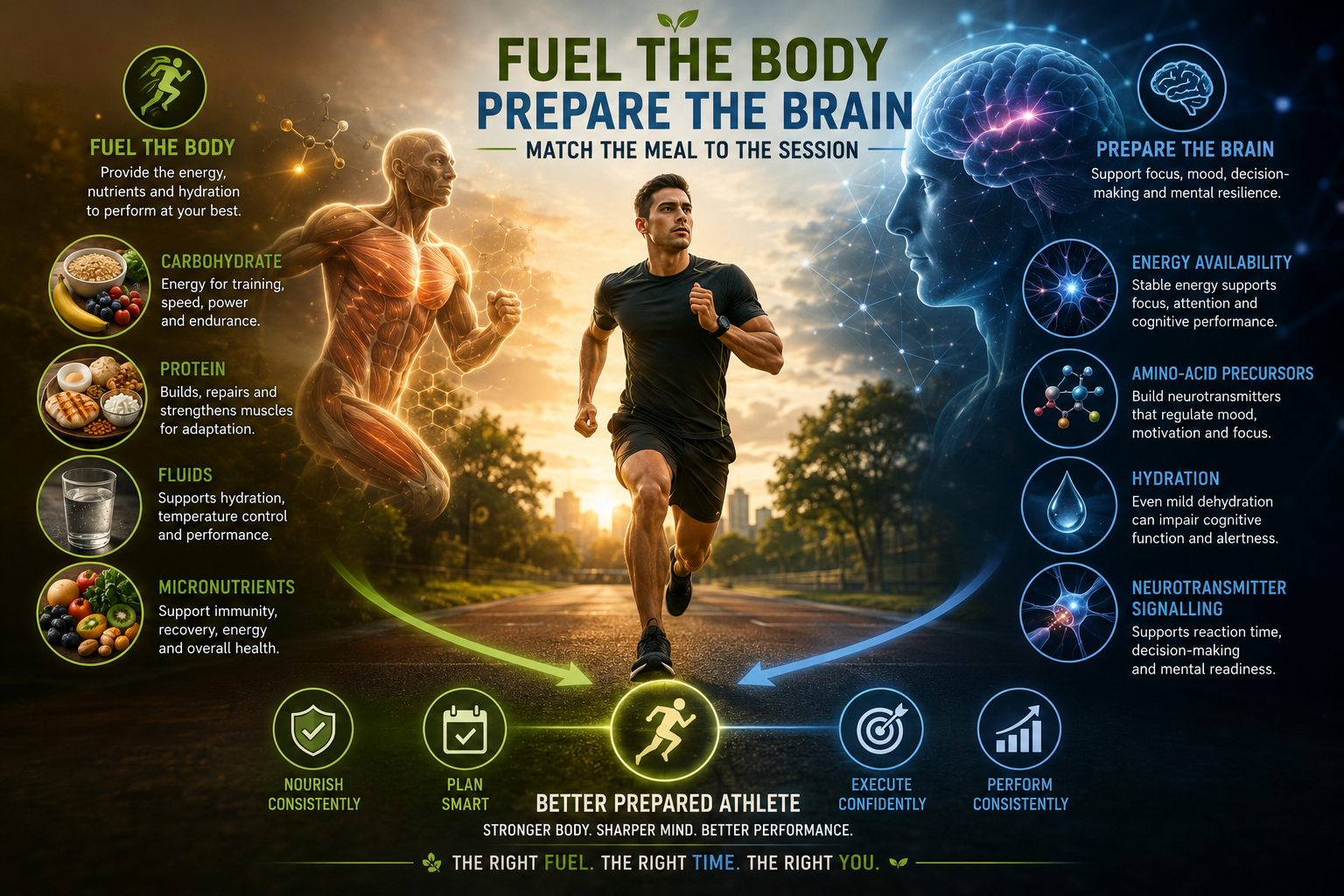
Fuel the Body. Prepare the Brain. Match the Meal to the Session.
What This Visual Shows
The aim is not to create a “perfect breakfast.” It is to reduce mismatch between the athlete’s physiological and psychological needs and the work that follows.
Performance starts before the session—but not with breakfast alone.
Breakfast sits inside a larger performance system: previous-day nutrition, carbohydrate availability, protein distribution, hydration, sleep, psychological state, training demand and individual tolerance. A well-matched meal can support readiness. It cannot substitute for inadequate recovery, chronic under-fuelling or poor training planning.
For practical use, the article can be reduced to a sequence: identify the session, estimate the likely fuel and fluid challenge, choose an amount the athlete can tolerate, then evaluate how the plan works in real training. This is more useful than copying a fashionable breakfast because it links nutrition to the actual physiological and behavioural problem being solved.
Final memory line: THE BEST ATHLETE BREAKFAST IS NOT A FIXED MENU. IT IS A WELL-MATCHED DECISION.
References & Evidence Map
- Systematic reviews / meta-analyses: Ramos-Campo DJ, et al. (2024). The ergogenic effects of acute carbohydrate feeding on endurance performance. Critical Reviews in Food Science and Nutrition. PMID 37449467.
- Henselmans M, et al. (2022). The effect of carbohydrate intake on strength and resistance training performance: a systematic review. Sports Medicine. PMID 35215506.
- Miall A, et al. (2016). Effect of glycemic index of a pre-exercise meal on endurance exercise performance: a systematic review and meta-analysis. Sports Medicine. PMID 27677914.
- Zhang Y, et al. (2023). Effects of carbohydrate drinks ingestion on executive function in athletes: a systematic review and meta-analysis. Frontiers in Nutrition. PMID 37637918.
- Consensus / position statements: Jäger R, et al. (2017). International Society of Sports Nutrition Position Stand: protein and exercise. JISSN, 14, 20. doi:10.1186/s12970-017-0177-8.
- Sawka MN, et al. (2007). American College of Sports Medicine position stand: exercise and fluid replacement. MSSE, 39, 377–390. doi:10.1249/mss.0b013e31802ca597.
- Mountjoy M, et al. (2023). 2023 IOC consensus statement on Relative Energy Deficiency in Sport (REDs). British Journal of Sports Medicine, 57, 1073–1097. doi:10.1136/bjsports-2023-106994.
- Indian / national evidence: ICMR–National Institute of Nutrition (2024). Dietary Guidelines for Indians. Broad dietary guidance; not an athlete-breakfast guideline. Official PDF.
- Neurobiology / mechanistic evidence: Fernstrom JD (1983). Effects of the diet on brain neurotransmitters. Metabolism. PMID 13261.
- Richard DM, et al. (2009). The significance of tryptophan in human nutrition. Nutrition. PMID 24178836.
This article separates three levels of interpretation: established sports-nutrition guidance, direct human performance evidence, and mechanistic biological plausibility. Where direct athlete-breakfast evidence is limited or heterogeneous, the language remains cautious.
- Systematic reviews and meta-analyses for performance and cognition questions.
- International consensus and position statements for sports nutrition and REDs context.
- ICMR–NIN 2024 guidance for Indian dietary context.
- Neurobiology literature for precursor pathways without converting mechanism into guaranteed performance outcomes.